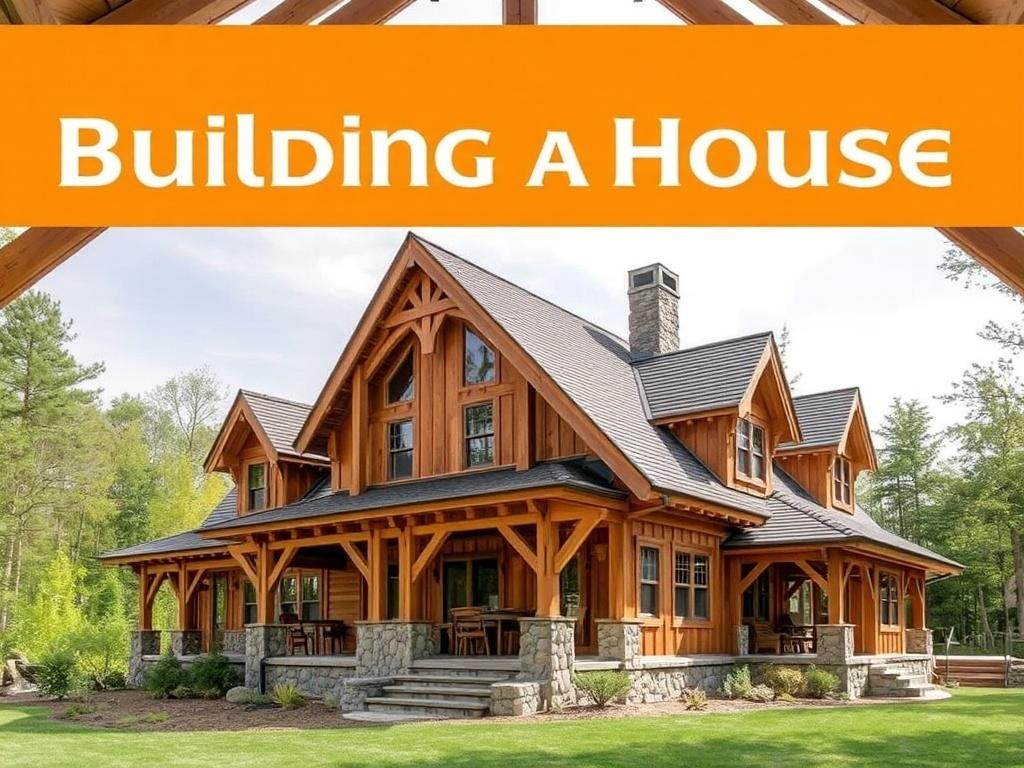
Timber framing feels like a conversation across time—hand-hewn posts and pegged joints that hold up roofs and stories alike. This article walks through the practical, historical, and design aspects of building a timber frame house: traditional craftsmanship, blending old methods with modern needs. Read on for materials, joinery, logistics, costs, and hands-on advice drawn from projects and long afternoons on raised frames.
Where the method comes from: a short history
Timber framing is one of the oldest structural systems humans have used, with variations found on nearly every continent where big trees grow. Medieval European barns, Japanese minka houses, and early American post-and-beam homes all show the same basic idea: using large timbers connected by carefully cut joints rather than relying solely on nails or metal fasteners.
Historic frames speak as much about community as architecture; whole villages would gather for a barn raising, and skills were handed down through apprenticeship. Those social rituals helped ensure quality—experienced hands shaped joints that allowed a house to move with seasons and settle for centuries.
When sawmills and mass-manufactured studs arrived in the 19th and 20th centuries, timber framing receded in many places. The craft, however, never disappeared. In the late 20th century a revival began, driven by people who wanted durable, expressive structures and builders who rediscovered the elegance of traditional joinery.
Why choose timber framing for your house
Timber framing offers architectural warmth you can’t get from standard stick framing: exposed beams, generous open spans, and a visual honesty where structure becomes ornament. Many owners choose timber frames because the building celebrates material and handcraft, making the home feel more rooted and distinctive.
Beyond aesthetics, properly designed timber frames are long-lived and structurally efficient. The large timbers carry loads directly, allowing wide, column-free interior spaces and simpler roof geometries that can reduce the need for interior load-bearing walls.
Finally, timber framing can be a sustainable option when sourced responsibly. Large timbers sequester carbon, and because timber frames often last longer than typical light-frame houses, the long-term environmental footprint can be favorable if forests are managed well.
Choosing timber: species, grading, and seasoning
Picking the right wood is the first technical decision. Common species for timber frames include Douglas fir, oak, pine, spruce, and larch; each has strengths, workability, and aesthetic character. Douglas fir is strong and dimensionally stable, oak is exceptionally durable and beautiful, and softwoods like pine are easier to shape and lighter on budget.
Timber for structural use should be graded and, when possible, kiln-dried to a moisture content suited to your climate. Kiln-dried timbers minimize shrinkage and help ensure tight-fitting joints, while air-dried timbers may continue to move over time. Work with a supplier who understands structural grading symbols and can provide lumber graded for beams and posts.
Large timbers can be sawn, peeled (for round or half-round posts), or hewn to expose the heartwood. Each method affects appearance and moisture behavior. Hewn timber shows tool marks and a handmade look; sawn surfaces are cleaner and more regular for joinery.
Below is a compact comparison of common timbers used in framing for quick reference.
| Species | Strength | Workability | Typical use |
|---|---|---|---|
| Douglas fir | High | Moderate | Beams, rafters, general framing |
| White oak | Very high | Challenging | Long-lasting posts, visible members |
| Pine (Eastern/Yellow) | Medium | Easy | Budget framing, infill timbers |
| Spruce | Medium | Easy | Rafters, purlins |
Design principles and how joints make the frame work
Timber frames rely on joinery that transfers loads through shaped timber-to-timber contact, often secured with pegged hardwood dowels or metal connectors. The joints—mortise-and-tenon, dovetail, scarf, and bridle among them—are not decorative afterthoughts; they define geometry, movement, and resilience.
Mortise-and-tenon joints are the backbone of traditional frames: a rectangular tenon on one member fits into a mortise on the mating member. When pegged with oak or locust pins, these joints lock firmly yet allow slight seasonal movement, preventing stress concentrations that cause splitting.
Scarf joints connect timbers end-to-end when full-length pieces aren’t available. A well-cut scarf can be stronger than the timber itself when reinforced properly. Dovetail and housed joints are used where compression and shear must be resisted, such as in girts and tie beams.
Designing joints requires foresight: consider how timbers will shrink across the grain, how rafter thrust will be resisted, and how the assembly sequence affects access for cutting and pegging. Seek an engineer familiar with heavy timber to size members and validate joint details for modern loads and building codes.
Tools, measuring, and the language of the frame
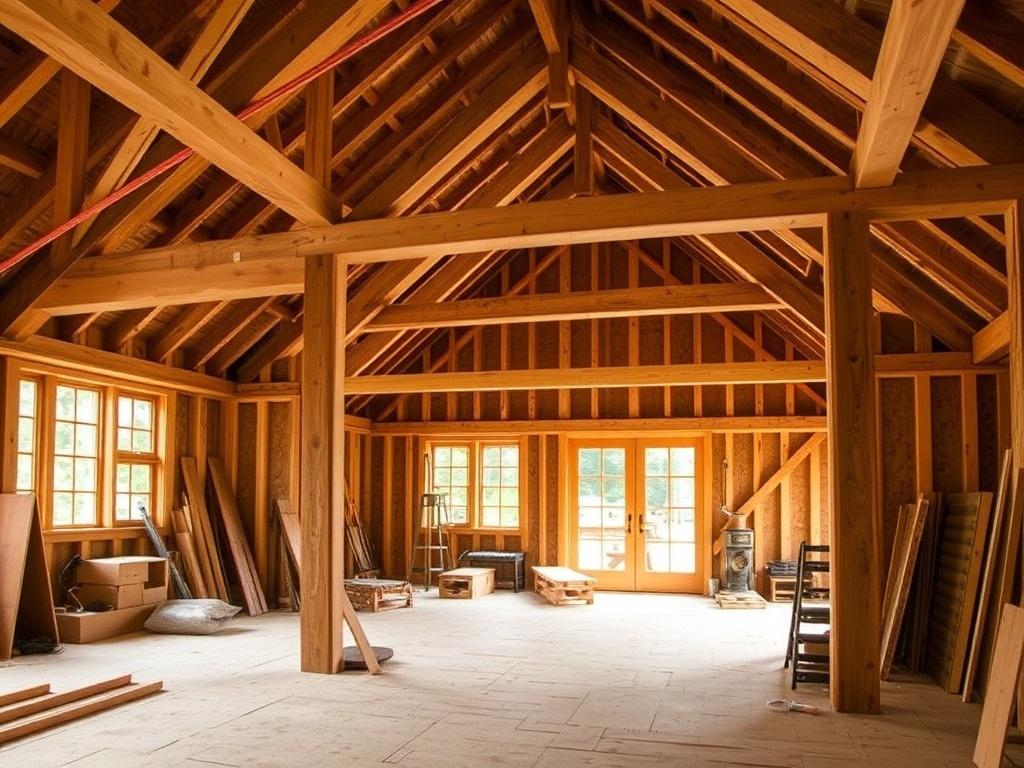
Traditional timber framing uses both hand tools and modern machinery, and your blend depends on budget, skill, and style goals. Chisels, slicks, mallets, and tenon saws remain core tools for detail work, while table saws, band saws, and routers speed repetitive cutting when larger quantities are involved.
Accurate layout is essential. Timber framers use story poles, square nails, plumb bobs, and layout lines along with modern lasers and levels. The “scribe rule” technique matches timbers to irregular logs or hand-hewn members, while “cut-to-size” methods favor uniform, machine-squared lumber.
Learning the terminology helps communication with builders and suppliers: eave purlins, ridge beams, king posts, queen posts, girts, and braces describe the frame’s parts. A small glossary or drawing in your construction documents avoids misunderstandings on the job site.
Foundations and sill systems for heavy timbers
A timber frame transfers concentrated loads to the foundation at post locations, so the foundation design is critical. Common solutions include continuous perimeter footings with isolated concrete piers beneath posts, or a reinforced slab with pocket footings. The key is ensuring each post has a firm, level bearing that prevents uneven settlement.
Post bases and sill timbers must be detailed to resist moisture and rot. Stainless steel or galvanized anchors keep timber off direct concrete contact, and pressure-treated sill plates or chemically treated bottoms extend life. Proper drainage and soil treatment are vital to prevent chronic moisture exposure.
Elevation and drainage around the foundation should direct water away from the frame. Overhangs and roof design can significantly reduce splash-back and keep joinery from being exposed to prolonged wetting, which is often more important than the exact fastening detail.
Cutting, assembling, and raising the frame
Most timber frames are cut in a shop or on-site before the raising. Shop cutting lets teams work efficiently with mechanical jigs and accurate layout tables. Small projects may be scribed and cut in place, but larger frames benefit from off-site preassembly and then transport to the site for erection.
Raising day remains the most visible and social part of the project. With careful planning, a crew of skilled framers can raise a medium-sized house in a day or two—setting bents, connecting girders, and pegging joints. For complex frames, the process may take longer and require cranes to lift heavy timbers into place.
Sequence matters: setting the sill bents, squaring the frame, installing plates and rafters, and then pegging joints in phases ensures stability. Temporary bracing keeps the frame plumb during erection and allows masons, roofers, and other trades to work safely afterward.
On one project I worked on, a thirty-foot ridge beam was set with a small crane while a team of six steadied the ends and tightened the pegs. The beam’s deep shadow lines transformed the interior immediately, and the efficiency of the day underscored why experienced crews are worth their cost.
Infill walls, insulation, and marrying old craft with new performance
Timber frames can be infused with many wall systems: traditional infill like wattle and daub, modern SIPs (structural insulated panels), or conventional stud walls attached between posts. The choice affects thermal performance, detailing complexity, and the way the frame is revealed inside.
If you want exposed interior beams, consider attaching continuous insulation to the exterior of the frame and finishing with rainscreen cladding. Exterior insulation reduces thermal bridging through posts and beams, improving energy performance while keeping timber visible where you want it.
SIPs or foam sheathing create tight building envelopes quickly but require careful detailing at connections, windows, and penetrations to avoid thermal breaks or moisture traps. Mineral wool batts and dense-pack cellulose are alternatives that work well inside framed pockets when attention is paid to air sealing.
Detailing where timber crosses the thermal envelope is an architectural challenge. I’ve seen successful solutions where the timber posts are wrapped with a narrow continuous insulation shim and sealed with flexible flashing that allows the wood to move seasonally without creating a cold bridge.
Roofs, floors, and interior finishes
Roof design on a timber frame often becomes a defining feature—open rafters, exposed purlins, and heavy ridge beams create dramatic interiors. Consider whether you want the structure fully exposed or partially concealed with a ceiling underlay for acoustics and insulation placement.
Floor systems over timber frames can be conventional joists or heavy timber planks. Thick plank floors aging to a honeyed patina pair beautifully with heavy beams, while modern engineered floors lay down more predictably and may be preferred over radiant heating systems.
Finishes require sensitivity to the timber’s behavior. Oil, tung oil, or natural wax finishes bring out grain and age gracefully, while clear UV-blocking varnishes slow color change. Avoid finishes that trap moisture; breathable finishes help preserve timber in many climates.
Building codes, engineers, and modern regulations
Even traditional frames must meet modern structural and fire codes. Work with a structural engineer experienced in heavy timber—many jurisdictions treat timber frames as a distinct category with specific allowable fire resistance ratings and connection requirements. Documented calculations for loads, connections, and bracing simplify permit reviews.
Some regions offer simplified heavy timber code paths that recognize exposed heavy timbers can char predictably in fire, providing inherent fire resistance. Nonetheless, egress, smoke detection, and sprinkler requirements must be addressed like any other home project.
Inspections are a necessary part of the timeline. Coordinate with local building officials early, showing plans, engineered details, and the proposed sequence for raising and enclosing the frame. Early buy-in reduces rework and ensures a smoother construction flow.
Cost considerations and project timeline
Timber framing generally costs more than conventional light-frame construction per square foot, largely due to larger timbers, skilled labor, and potentially longer detailing time. However, the premium buys durability, open interiors, and aesthetic value that can be difficult to price out but meaningful to owners.
Budget items to watch include timber supply, shop time for cutting, crane or heavy-lift rental for raising, specialized fasteners or pegs, and the cost of achieving modern thermal performance. Contingency for seasonal delays and moisture-related work is sensible on timber projects.
Typical timelines vary enormously with scale and complexity. A modest timber frame home might take a few months for the structure and enclosure, while larger custom homes can take a year or more from beginning to finish. Early planning, pre-ordering timbers, and hiring experienced crews shorten the critical path.
Sustainability and carbon considerations
When sourced from well-managed forests, timber can be a low-carbon building material. Large timbers store carbon for the life of the building, and durable frames that remain in use for centuries distribute that benefit over a long time horizon. Forest certification programs like FSC help ensure responsible sourcing.
Consider whole-life carbon accounting when comparing timber frames with other systems: long-term durability and the potential for disassembly and material reuse often favor heavy timber. Design choices that reduce embodied energy—local species, minimal machining, passive heating and cooling—improve sustainability further.
Salvaged timbers present another sustainable avenue. Reclaimed beams from old barns or industrial buildings often feature tight-growth rings and character worth celebrating, but they require careful inspection for hidden damage, beetle entry, or embedded metal.
Maintenance, weathering, and aging gracefully
Timber frames demand less regular maintenance than many assume, but long life requires attention to detail. Protecting timber from prolonged moisture exposure, ensuring gutters and overhangs work, and periodic inspections for insect activity or decay keep frames healthy for decades.
Re-tightening pegs, renewing surface finishes, and repairing flashing are routine tasks. Exterior timbers may silver with UV exposure; many owners prefer that patina, but a periodic oil or stain can preserve color and slow surface checking.
Document your frame: label members, keep shop drawings, and photograph joints during assembly. This record helps future stewards understand the structure, makes maintenance easier, and assists in any repair or modification work that may occur generations hence.
Comparing DIY and hiring a professional timber framer
Some homeowners with woodworking skills successfully build their own timber frames, especially smaller structures like studios or cabins. DIY projects require time to learn joinery, invest in tools, and accept a learning curve that can extend schedules significantly.
Hiring a professional framer brings speed, precision, and a team experienced in safe raising techniques and efficient shop workflows. Pros will also help you liaise with engineers and inspectors and anticipate construction interface issues with other trades.
A hybrid approach often works well: hire a framer for cutting and raising, then handle interior finishes and nonstructural work yourself. This mixes professional speed with personal involvement and can be cost-effective if you contribute skilled labor where it’s safe and permitted.
Case study: a two-story oak frame that became a family home
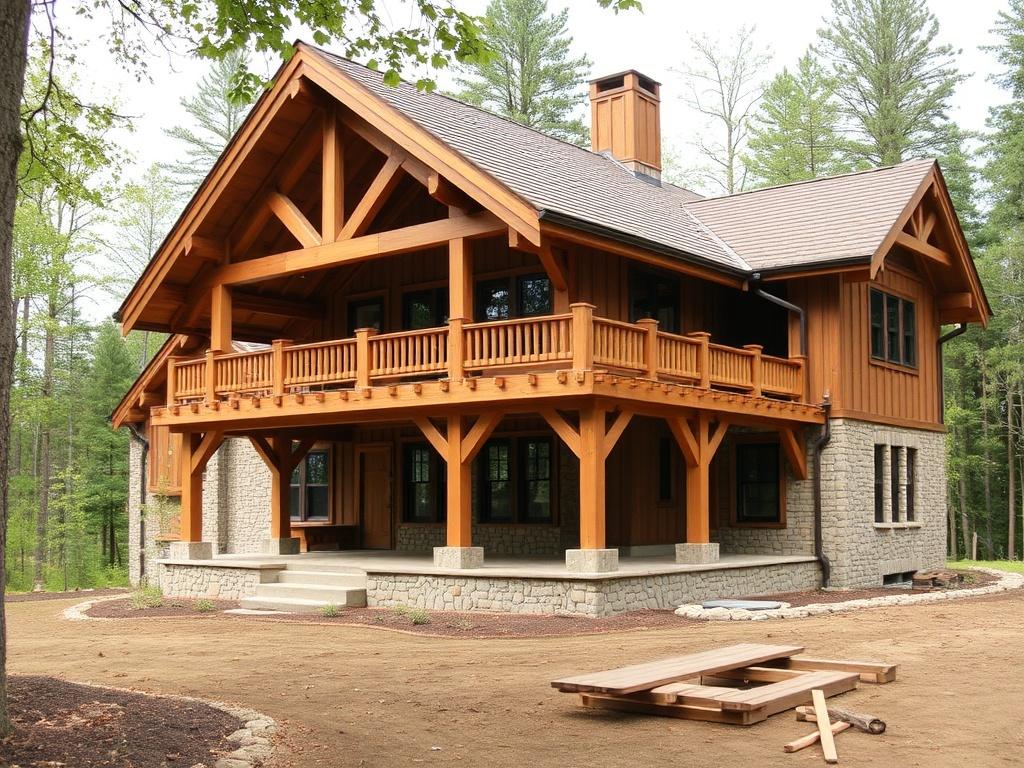
On a project I helped with, a young family wanted a durable, low-maintenance home with a visible structure. We chose locally milled white oak for the main posts and Douglas fir for secondary members to balance cost and beauty. The oak posts were hewn on two faces to display tool marks inside the living room while keeping the exterior planed for precise joints and weather resistance.
The framing was cut in a rural workshop, preassembled for fit-checks, and transported in sections to the site. Raising day took two long days and involved a rented crane and a crew of eight; neighbors came out to watch, and the raised frame felt like an instant home even before the roof was on. We installed exterior insulation and a rainscreen to preserve the timber while achieving modern energy targets.
The family valued the low interior maintenance: the open plan, timber warmth, and the way the frame aged with light made the house feel settled quickly. Ten years later the structure has required only minor sealing at ends and an oil refresh for interior beams, a testament to the materials and detailing chosen early on.
This example highlights the benefits of combining craftsmanship, thoughtful material choices, and modern enclosure strategies to create a timber frame house that meets 21st-century expectations while honoring tradition.
Common joints and where to use them
Knowing which joint fits a condition speeds design and helps with estimation. Below is a concise list of common joints and typical applications to give you a quick reference while planning or discussing with framers.
- Through mortise-and-tenon: used for major connections like posts to sills that need continuity.
- Haunched tenon: employed under beams supporting joists to resist twisting and shear.
- Scarf joint: connects beam ends when long members are required but unavailable.
- Dovetail tenon: resists withdrawal and is useful where tensile forces may pull a joint apart.
- Bridle joint: good for open frames and where a simple, strong connection is needed.
Permits, professionals, and finding the right team
Finding the right professionals—engineers, framers, contractors—makes the difference between a good build and a great one. Look for experience with heavy timber and a portfolio that reflects the scale and style you want, and ask for references from completed projects.
Permitting varies significantly by locality; some places encourage traditional materials, others require modern fire and egress systems. Bring your structural engineer into early meetings with the building department to avoid redesigns that add time and cost.
Contracts should clearly define scope: who supplies timber, who cuts, who raises, and who integrates the frame with the envelope and finish trades. A phased payment plan tied to milestones—delivery, raising, enclosure—helps manage cash flow and aligns incentives.
Practical checklist before you start
Preparing thoroughly reduces surprises on a timber-frame project. Use the checklist below to ensure you’ve covered essential items before cutting timber or signing a raise-day contract.
- Obtain site survey and soils report for foundation design.
- Choose timber species and confirm available sizes and grades with supplier.
- Contract a structural engineer experienced in heavy timber.
- Decide on wall system and insulation strategy to coordinate with framing details.
- Schedule raising date, crane, and crew, and arrange temporary bracing materials.
- Secure all required permits and inspections sequence from local authority.
Resources: where to learn more and find suppliers
There are excellent timber framing schools, regional guilds, and online communities that offer hands-on workshops and detailed resources. Seek a local guild or a workshop at a university extension program to try joint cutting on real timber before committing to a large project.
Suppliers of heavy timber vary by region; small local mills often provide the best combination of traceability and reasonable costs. For exotic or reclaimed timbers, specialized dealers or brokers can locate material but expect higher lead times and inspection needs.
Final thoughts on blending craft and modern needs
Timber framing is fundamentally a craft that rewards patience, precision, and good design judgment. It asks the builder to think about structure as form and to balance historical joinery with modern performance expectations. When done well, a timber frame house is more than shelter: it is a living assembly that will serve families, age gracefully, and tell a quiet story of skill across generations.
Whatever path you choose—DIY, contractor-led, or a hybrid—invest time in planning, sourcing, and the people who will shape your home. The payoff is a durable structure with warmth, character, and the satisfaction of a building made with intention and care.