Designing and constructing buildings where the weather seems determined to test every decision is a specialized art. From blistering deserts to frozen tundra, extreme climates push materials, systems, and people to their limits. This article examines practical strategies, common pitfalls, and real-world lessons to help architects, engineers, contractors, and owners make resilient choices when the environment refuses to cooperate.
Understanding what “extreme” means for a building
“Extreme” is not just a temperature statistic; it’s a set of forces acting on a building over time. Extreme climates bring combinations of heat, cold, moisture, wind, solar radiation, precipitation, abrasion (sand or ice), and seismic or freeze-related ground movement. Each force affects materials, occupant comfort, and maintenance in distinct ways.
Before any design decisions are made, you must quantify the extremes: maximum and minimum temperatures, humidity ranges, wind speeds and directions, precipitation intensity, solar exposure, and historical events like 100-year storms or record cold snaps. Those numbers translate into loads, service-life expectations, and risk tolerances for the project.
Risk is also a human problem. Occupant needs, available maintenance budgets, supply chains, and local skills shape what’s practical. A technically elegant solution that requires rare parts or specialist installers might fail in deployment. Good design balances physics with logistics.
Classifying extreme climates and primary challenges
Extreme climates fall into recognizable categories, and each category suggests distinct interventions. Broadly speaking, consider: hot-arid (desert), hot-humid (tropical), cold-dry (continental), cold-wet (maritime cold), alpine/high-altitude, and permafrost zones. Coastal and monsoon-influenced regions add salt and heavy precipitation to the mix.
Mapping problems to solutions is easier when you can see them side-by-side. The table below summarizes common challenges and primary design concerns for each climate type. Use it as a quick reference during early project planning.
| Climate type | Primary challenges | Design priorities |
|---|---|---|
| Hot-arid (desert) | Extreme heat, diurnal swings, solar gain, sand abrasion | Thermal mass, shading, robust glazing, dust seals |
| Hot-humid (tropical) | High humidity, mold, heavy rain, corrosion | Ventilation, moisture control, durable finishes |
| Cold-dry (continental) | Extreme cold, low humidity, heating loads | Insulation, high-performance windows, airtightness |
| Cold-wet (maritime cold) | Moisture infiltration, freeze-thaw cycles | Drainage planes, breathable membranes, robust cladding |
| Alpine / high-altitude | High UV, snow loads, thin air for combustion | Strong roof structure, UV-resistant materials, HVAC tuning |
| Permafrost | Ground thaw, differential settlement, frost heave | Thermal isolation of foundations, adjustable supports |
Site analysis and orientation: first defenses against the elements
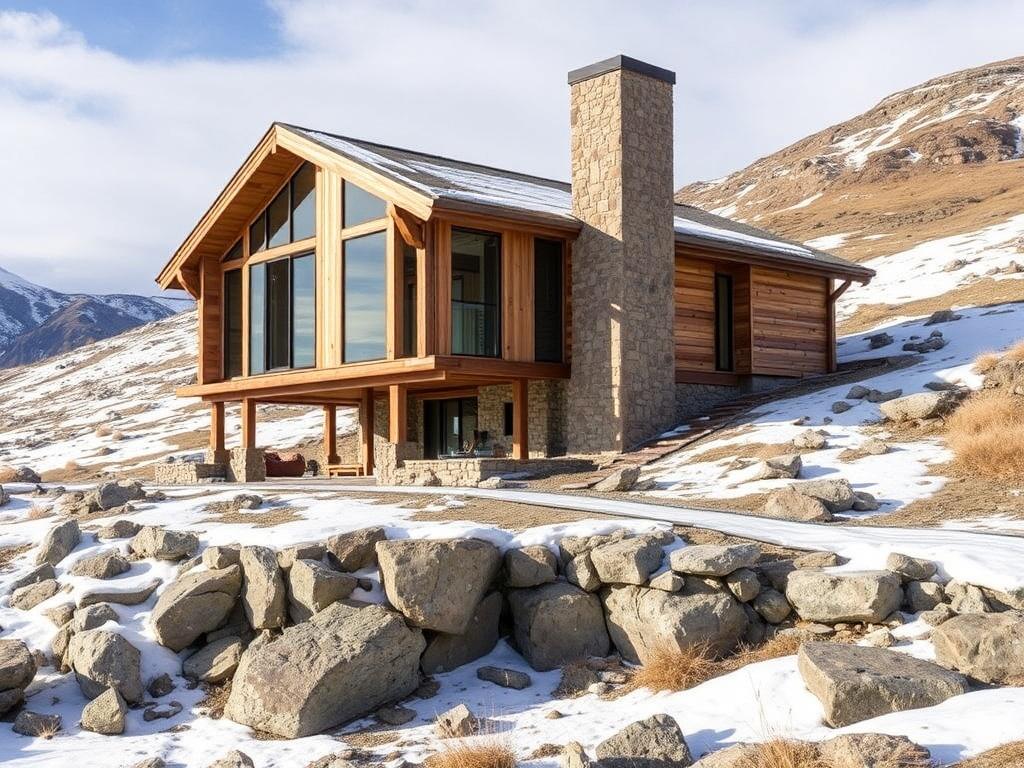
Siting and orientation are among the most cost-effective ways to reduce environmental stress on a building. Careful placement can cut cooling loads in a desert or use solar gain for passive heating in cold regions. Microclimates around the site—vegetation, terrain, and bodies of water—alter wind and sun exposure and must be measured, not guessed.
Wind direction and speed influence building shape, openings, and landscaping. In high-wind areas, a compact plan with minimized exposed roof edges will perform better. In hot regions, orienting narrow facades to east-west reduces solar exposure. In cold climates, siting to take advantage of southern sun and sheltering from prevailing winds saves energy.
Pay attention to drainage and access. Runoff paths, frost-susceptible soils, and snow-loading patterns all start at site planning. A raised entrance, a graded driveway, or a swale in the right place can prevent years of maintenance headaches and premature material failures.
Foundations and structural systems for shifting conditions
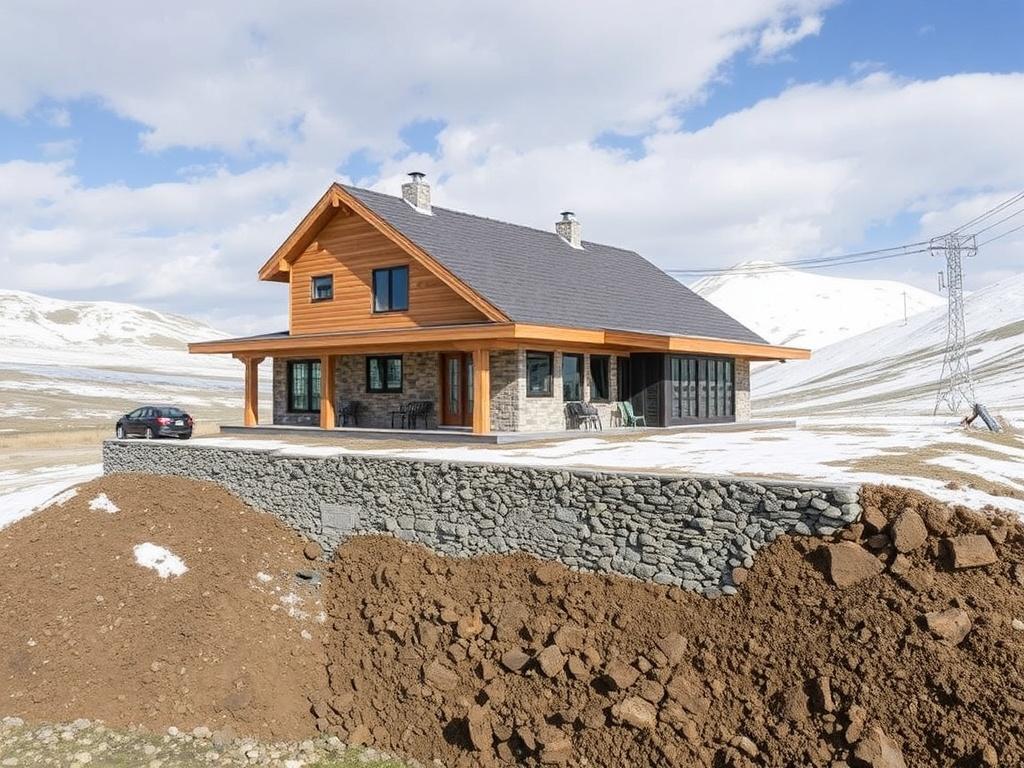
Foundations in extreme climates must reconcile load-bearing needs with variable ground behavior. In permafrost or frost-susceptible soils, thermal interaction between the building and ground is critical. Passive thawing beneath shallow footings can lead to settlement; active warming from a heated building can cause widespread differential movement.
Common solutions include deep piles to transfer loads below the active layer, thermally isolated pads, or adjustable pier systems that allow post-construction leveling. In flood-prone areas, elevate structures above expected water levels and design for lateral scour and buoyancy pressures. Each approach has costs and maintenance implications—choose with an eye to long-term monitoring.
Structural systems must also resist dynamic forces: wind uplift, seismic shaking, and heavy snow loads. Connections are where failures begin, so use continuous load paths, corrosion-resistant fasteners, and redundancy. For temporary or remote projects, modular systems can reduce time on site while providing predictable performance.
Building envelope: materials, assemblies, and detailing
The envelope is your primary control point for energy, moisture, and durability. In extreme climates the envelope needs to be forgiving—able to manage moisture, thermal gradients, and material movement without losing performance. That requires careful sequencing of layers and robust detailing at transitions and penetrations.
Select materials for their whole-life behavior, not just initial cost. Metals expand and contract more than masonry; some insulations absorb moisture and lose effectiveness when wet. Cladding must resist local agents like sand abrasion, salt spray, or UV degradation. In my work on a coastal retrofit, swapping to fiber-cement siding instead of painted wood reduced maintenance cycles dramatically.
Air barriers, vapor control, and drainage planes must be applied according to the climate. In cold climates, keep vapor control on the warm side of insulation and create an interior air barrier that limits warm, moist indoor air from reaching cold sheathing. In hot-humid climates, allow assemblies to dry outward and prioritize ventilation over tight vapor seals where needed. Detailing at windows, doors, and roof-wall intersections is critical—most envelope failures begin at those junctures.
Thermal performance, insulation, and windows
Managing heat flow is both a science and an economy problem. Adding insulation is effective until you encounter diminishing returns or unintended side effects like trapping moisture. Choose insulation type and placement to protect structural elements and maintain continuous thermal control where possible. Continuous exterior insulation often simplifies thermal bridging issues in demanding climates.
Windows are the weak link thermally but the key to daylight and occupant satisfaction. In cold climates, high-performance triple glazing with insulated frames reduces heating loads and perimeter condensation. In hot climates, low-e coatings, window orientation, and shading devices are priorities. Consider operable windows for mixed-mode ventilation where conditions permit.
Thermal mass is a powerful tool in places with large diurnal swings. Heavy interior mass absorbs daytime heat and releases it at night, smoothing temperature swings. In humid environments, thermal mass can be counterproductive unless paired with dehumidification strategies. Simulation tools help determine the right balance for each location.
HVAC and energy systems: right-sizing and redundancy
Mechanical systems in extreme climates must be robust, maintainable, and sometimes redundant. Oversized equipment cycles inefficiently and fails prematurely, but undersized systems leave occupants exposed to unsafe conditions. Use load calculations informed by accurate weather data and plan for occasional extreme events beyond design loads.
Redundancy matters for critical facilities. Generators, backup heat sources, and redundant distribution loops keep hospitals, shelters, and data centers operational during grid outages. In remote projects, fuel logistics and storage safety become design drivers—on-site fuel must be protected from freezing or degradation and stored in doubled containment where environmental risk is high.
Consider passive and low-energy systems first. Earth tubes, ground-source heat pumps, night flushing, and carefully controlled natural ventilation can reduce mechanical loads. In a high-desert community center I helped design, night-time ventilation and deep thermal mass cut peak cooling demand by nearly half without complex controls.
Moisture management: the invisible threat
Moisture is the slow, invisible architect that can undermine the best structures. Whether from rain, condensation, ground capillarity, or plumbing failures, moisture reduces insulation performance, corroded metals, and fosters mold. Robust moisture management is non-negotiable in extreme climates where drying opportunities are limited.
Design a clear drainage strategy: keep liquid water out with flashing, sealed transitions, and sloped surfaces; control vapor diffusion with appropriate vapor retarders; and allow assemblies to dry using ventilated cavities or permeable layers where practical. Small testing details—like weep holes at cladding bases—prevent decades of problems.
Ventilation must be balanced with humidity control. In humid climates, dehumidification is often as important as cooling. In cold climates, controlled ventilation with heat recovery protects indoor air quality while limiting moisture-laden air entering wall cavities. Commissioning and seasonal testing ensure that systems perform when conditions change.
Wind, hurricanes, and airborne loads
Wind is a structural and envelope challenge. High pressures, suction on leeward faces, and vortexing at corners create concentrated loads that can rip roofs and lift cladding. In hurricane zones, codes dictate specific anchorage and connection details, but even outside those zones, wind-tuned design reduces damage risk.
Roof geometry and overhangs matter. Low-profile roofs with continuous edge connections reduce uplift. Break up large wall planes with staggered geometry or screened porches to reduce suction. Windows and openings need impact-resistant glazing or shutters in storm-prone areas. For temporary or remote projects, sacrificial exterior elements can protect critical interiors.
Wind-driven rain adds a moisture dimension. Rain penetration occurs at openings, joints, and under eaves; so design both for structural resistance and for water-control layers. Perform wind-wash and pressure-equalization testing on cladding systems where exposure and high driving rain coincide.
Snow, ice, and cold weather hazards
In snow country, roof form, slope, and drainage determine whether snow will shed or accumulate. Flat roofs require structural depth and reliable melting and drainage systems to prevent ponding and collapse. Sloped roofs that shed snow can cause sudden mass slides onto entrances or lower roofs, so design for safe shedding paths and snow guards.
Ice formation at eaves and gutters indicates heat loss at the roof edge. Improve insulation and air sealing to prevent warm attics from melting snow that refreezes at cold eaves. Heated gutters and roof edge systems are sometimes necessary, but they add energy use and maintenance; insulation-first strategies are often better long-term.
Cold starts create brittle material behavior. Plastics and sealants become less flexible; adhesives fail; metal connections can embrittle. Specify cold-rated materials for low-temperature performance and adjust construction tolerances to allow for shrinkage and contraction during seasonal cycles.
Sand, dust, and abrasive environments
Desert and arid environments bring micro-abrasion that degrades finishes and clogs mechanical systems. Sand-laden winds abrade paint, wear through seals, and scour glazing. HVAC filters load rapidly and require a maintenance plan that is realistic for the project’s operation model.
Design strategies include minimizing exposed moving parts, using tight seals, and specifying abrasion-resistant coatings and glazing. Mechanical intake paths should have pre-filters with easy access. In many desert installations, a sacrificial, replaceable screen reduces long-term maintenance on more expensive components.
Landscape design can help. Windbreaks, crushed stone buffers, and intentional grading redirect sand movement away from the building. These passive measures extend the longevity of mechanical systems and finishes at a modest initial cost.
Permafrost and frost heave: managing shifting ground
Permafrost presents unique thermal and structural challenges. Buildings that warm underlying permafrost create thaw settlements; solutions must either isolate heat from the ground or transfer loads to stable layers below. Mechanical systems and underground utilities must account for seasonal ground movement and thermal sensitivity.
Common approaches include elevating structures on piles driven into permafrost, thermosyphons that remove heat from the ground, and adjustable foundations that can be realigned as movement occurs. For small or temporary structures, lightweight foundations that minimize thermal disturbance are often the most cost-effective choice.
In frost-susceptible soils, frost heave can lift slabs and utilities. Insulating footings below the frost line, using non-frost-susceptible backfill, and providing controlled drainage reduce the risk. Local geotechnical data and instrumentation during construction save money compared to guessing and fixing later.
Construction logistics and workforce considerations
Extreme climates make construction more expensive and slower. Short building seasons, limited daylight, frozen ground, or haboob events can compress schedules and increase risk. Plan for weather windows, pre-fabrication offsite, and material storage that protects components from the elements during construction.
Worker safety and productivity decline under extreme heat or cold. Schedule heavy labor during cooler morning shifts in hot sites; provide heated shelters and warm-up breaks in cold projects. Tools and adhesives often have temperature limits—review manufacturer guidance and plan contingency methods for cold or hot-weather installation.
Remote sites require extra logistics planning: shipping lanes, fuel supply, spare parts, and trained installers. Modular construction or fully fabricated assemblies reduce time on site and limit exposure risks. In one arctic project I worked on, pre-assembling bathroom pods offsite cut winter installation time by weeks and reduced on-site welding in subzero temperatures.
Resilience, redundancy, and lifecycle planning
Designing for resilience means anticipating failures and ensuring systems fail gracefully. Redundancy in critical systems, surge protection, and physical hardening of infrastructure pay dividends when extreme events happen. Resilience planning should be explicit and quantified: what outages are acceptable, which systems must stay live, and how quickly must service be restored?
Maintenance plans need to be realistic. In many extreme locations, skilled labor is scarce and parts are delayed. Choose widely available components, design for modular replacement, and document systems thoroughly. Remote monitoring and diagnostics reduce trips and enable targeted interventions.
Lifecycle thinking also addresses adaptability. Buildings may need upgrades as climate patterns shift. Provide access points for future insulation, capacity for additional HVAC, and defined modification zones to improve performance without large-scale demolition.
Sustainability and passive strategies in harsh environments
Extreme climates do not preclude sustainable design; they demand it. Passive solar heating, cross-ventilation, high-performance envelopes, and locally sourced materials reduce operational energy and often improve resilience. But sustainability in these environments must be pragmatic: balance embodied carbon with reliability and service life.
On-site renewable energy can be valuable where grid reliability is poor. Photovoltaics perform well in high-sun deserts, while combined heat and power can be effective in cold, remote communities. Energy storage and microgrids provide resilience, but add complexity—design them with operational simplicity in mind.
Water is often the scarcest resource in extreme climates. Collect rainwater where feasible, use greywater for irrigation, and specify low-flow fixtures. Landscape strategies that match native species to local rainfall reduce irrigation needs and create buffers against erosion and sand movement.
Codes, testing, commissioning, and monitoring
Codes provide minimum safety standards, but extreme projects often need performance testing beyond code requirements. Wind tunnel testing, snow load modeling, and thermal bridging analysis uncover vulnerabilities that prescriptive codes can miss. Include specialized consultants early for better outcomes.
Commissioning is crucial; systems installed correctly in a benign season can fail under extremes if not tested under load. Perform seasonal commissioning where possible and set up a commissioning plan that includes emergency scenarios. Provide operator training tailored to extreme-event procedures.
Long-term monitoring catches slow-moving problems like settlement or moisture accumulation. Install thermistors, strain gauges, and moisture sensors in critical areas to track trends. Remote monitoring reduces the need for costly field visits and gives owners objective data for maintenance decisions.
Practical checklists and design strategies
Below are targeted lists to use during design and early construction to reduce surprises. These are practical, not exhaustive, and should be adapted to the specific climate and project type.
- Early site assessment: gather 30+ years of weather data, map microclimates, and perform geotechnical borings.
- Envelope design: specify continuous air barriers, appropriate vapor control, and durable cladding suited to local agents.
- Mechanical systems: size for peak and occasional extremes, add redundancy for critical loads, and plan for remote diagnostics.
- Foundations: choose deep piles or thermal isolation in permafrost; design for uplift and scour in flood zones.
- Construction planning: prefabricate where possible, plan for short seasons, and prioritize worker safety protocols.
For a quick project readiness check, consider these three questions: Can the building survive a worst-case weather event for 72 hours without external support? Are key systems replaceable within the supply-chain realities of the site? Is the maintenance plan realistic for local skills and budget?
Real-world examples and lessons learned
Practical experience highlights patterns codebooks miss. In a midsize clinic we retrofitted in a coastal cold region, poor flashing and inward-directed drainage led to repeating envelope failures. Reworking the drainage plane and providing external maintenance access solved the problem and reduced repair costs in the first winter.
Conversely, a community center in a desert town showed how modest passive moves can reduce operating costs: broad overhangs, a high-mass masonry core, and night ventilation lowered peak cooling demand and made the building comfortable with minimal mechanical intervention. The investment in good shading returned in lower utility bills and happier occupants.
These projects taught a common lesson: pay attention to the small details—flashing, seals, and joints—because the big systems depend on them. Also, invest in simple, maintainable designs. Complex solutions often underperform where skilled upkeep is limited.
Cost considerations: balancing upfront and lifecycle costs
Extreme-climate projects often have higher upfront costs for foundations, envelopes, and specialized systems. Owners frequently balk at those numbers, but lifecycle costing usually favors more robust initial investment. Reduced repair cycles, lower energy use, and fewer emergency interventions add up over decades.
Value engineering should not mean stripping critical resilience. If budgets are tight, prioritize interventions that protect structure and envelope before amenities. Structural failure and moisture-driven decay are expensive to repair and often lead to functional obsolescence if deferred.
Financial tools such as energy performance contracting, phased construction, and grants for resilience or remote infrastructure can make better solutions affordable. Present owners with clear cost-benefit scenarios, including risk assessments for extreme events, to support wise choices.
Final guidance for practitioners
Building in extreme climates rewards careful planning, respect for local conditions, and modesty about what a single design can change. Start with rigorous site data, engage geotechnical and envelope specialists early, and design for maintainability as much as performance. Small, well-sealed details, reliable connections, and proven materials often matter more than novel technologies.
Document assumptions and create a monitoring plan. Weather patterns evolve, and what was sufficient at handover may need adaptation. A building that anticipates adjustment—thermal capacity for future insulation upgrades, stub-outs for expanded mechanical systems, or easily accessible monitoring points—remains useful as conditions change.
Experience shows that collaboration across disciplines—architects, structural and mechanical engineers, geotechnical experts, and builders—yields the best outcomes. When extreme weather becomes part of the team’s design vocabulary, projects become less about reacting and more about resilient, durable choices that stand up to whatever nature sends.