
Concrete has a reputation for being cold and heavy, but when molded into insulated forms it becomes a surprisingly adaptable material for modern construction. This article walks through the nuts and bolts of using insulated forms to cast walls that combine thermal performance, structural strength, and long-term durability.
I’ll explain how the system works, compare it to conventional methods, highlight design and construction details, and share real-world observations from projects and job sites. Wherever useful, you’ll find practical tips for architects, builders, and homeowners thinking about insulated concrete forms as a way to build smarter.
What insulated concrete forms are and why they matter
Insulated concrete forms are hollow, stay-in-place forms made from insulating materials that are stacked like Lego blocks, reinforced, and filled with concrete to create a solid structural wall. The forms remain in place after the concrete cures, providing continuous insulation on both sides of the concrete core.
That combination—thermal insulation plus a reinforced concrete core—creates a wall system with unique properties: high R-values, thermal mass, airtightness, excellent sound attenuation, and strong resistance to wind and fire. These attributes make insulated forms attractive for energy-efficient homes, resilient buildings in high-wind zones, and projects seeking long-term durability with low maintenance.
Brief history and development of the technology
The idea of casting concrete into permanent insulating forms emerged mid-20th century, but it gained traction in the 1970s and 1980s as energy efficiency became a priority. Early systems were rudimentary; over decades manufacturers refined materials, webs (ties), and connection details to meet modern building codes.
Today, the industry offers a range of proprietary form geometries, recycled or improved foams, and integrated accessories for electrical, plumbing, and finishes. That maturation means designers can work with experienced manufacturers and trained installers to achieve predictable results on projects from small houses to multi-story commercial buildings.
How the system works: science and mechanics
At its core the method relies on three components acting together: the insulating form, the poured concrete core, and the embedded reinforcement. The foam forms hold the wet concrete in place, the reinforcement (usually rebar) handles tensile forces, and the concrete provides compressive strength and thermal mass.
Because the forms stay in place, they create a continuous thermal envelope and eliminate many thermal bridges that occur in conventional framing. Airtightness is achieved through careful detailing at corners, openings, and penetrations, often with gaskets, sealants, and proper stacking techniques.
Thermal mass, insulation, and airtightness
Thermal mass is one of the most misunderstood benefits. The concrete core stores heat and releases it slowly, damping indoor temperature swings and reducing HVAC cycling. When used with continuous insulation on both faces, walls achieve low heat transfer and stable interior temperatures.
Airtightness complements thermal mass; minimizing uncontrolled air movement preserves the stored energy and reduces heat loss. In my experience on renovation projects, ICF walls often show blower-door results that outperform comparable framed assemblies when labor and detailing are done correctly.
Structural behavior and reinforcement
The concrete core is the primary structural element, designed to carry gravity and lateral loads. Rebar cages or single rebars are placed according to engineering requirements and concrete is poured into the forms in lifts, sometimes with vibrators to consolidate the mix.
For multi-story structures, proper connection of floor diaphragms to the ICF walls and continuity of reinforcement are critical. Structural engineers tailor reinforcement layouts to local seismic or wind demands, and modern design codes include provisions for engineered ICF systems.
Types of ICF systems and materials
ICF products vary by geometry, foam type, and the way the internal ties are arranged. The three main form categories are block systems, panel systems, and plank or tilt-up alternatives, each with different benefits for speed, adaptability, and finish options.
Manufacturers use expanded polystyrene (EPS), extruded polystyrene (XPS), or other insulating foams. The choice affects compressive strength, moisture performance, and compatibility with adhesives and finishes.
Block-style versus panel-style systems
Block-style forms resemble oversized Lego blocks with interlocking profiles and internal webs to hold rebar. They are versatile for curved walls and corners and are popular for residential work because crews can stack them quickly.
Panel systems are larger, usually delivered in big sheets or panels that fasten together. They speed up installation on large projects and reduce the number of seams, but they require cranes or lift equipment on taller walls and can be less flexible in tight or irregular layouts.
Foam types, ties, and inserts
EPS is the workhorse material—affordable, easy to cut, and compatible with many finishes. XPS offers better moisture resistance and slightly higher compressive strength but is more expensive. Some systems use mineral wool inserts for fire resistance near openings.
Ties or webs hold the inner and outer foam faces apart and provide alignment and rebar seats. They are typically plastic, metal, or composite, and the tie pattern affects how utilities are run and how finishes are anchored to the foam surface.
Design and engineering considerations
Designing with insulated forms requires thinking like a concrete designer and an envelope designer simultaneously. Walls are structural elements and thermal boundaries, so coordination between architect and structural engineer at the earliest stages is vital.
Considerations include foam thickness and R-value, concrete strength and casting sequence, reinforcement spacing, continuous air barriers, window and door jamb detailing, and roof-to-wall connections. Each of these influences cost, constructability, and final performance.
Footings, foundations, and below-grade details
ICF walls often sit on conventional footings or slab-on-grade foundations, but designers must ensure a proper bond beam and anchorage of the first form course. Waterproofing or damp-proofing below grade and drainage are critical to prevent moisture accumulation at the foam interface.
In cold climates, designers typically include a thermal break at the foundation and continuous insulation at the slab edge to prevent heat loss and reduce the risk of frost-related movement. Detailing here pays big dividends in long-term performance.
Openings, anchorage, and roof connections
Window and door bucks are installed into the forms before concrete placement, and proper bracing prevents deformation from hydrostatic pressure during the pour. Buck materials vary: wood, composite, or proprietary foam components designed to accept fasteners.
Roof tie-ins must transfer lateral loads into the ICF walls. For conventional roofs, rim boards or truss anchors fastened to embedded plates or blocking in the concrete are common. For heavier roof systems, continuous shear connectors and through-bolts are used per engineering instructions.
Step-by-step construction process
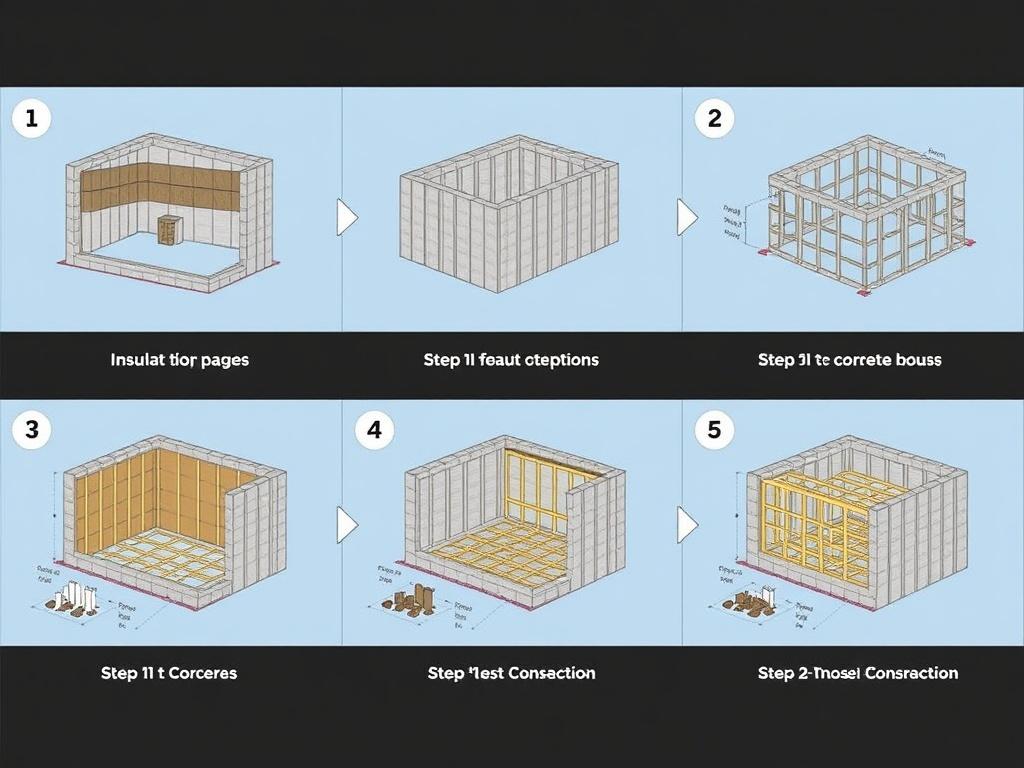
Building with insulated forms is straightforward but requires attention to sequencing. Each step must be executed with an eye toward alignment, reinforcement placement, and concrete consolidation.
Below is a typical workflow that I have observed on multiple projects. Variations exist, but the sequence captures the usual flow from foundation through to exterior finishes.
- Site preparation and footing excavation
- Footing formwork, reinforcement, and pour
- First ICF course placement and alignment
- Stacking forms, installing rebar, and placing bucks
- Embedding utilities and conduits where needed
- Final inspection of rebar and forms
- Concrete pour in lifts with consolidation
- Finishing top of wall, installing ties or anchors
- Applying interior and exterior finishes
Each pour requires careful bracing, especially on higher walls, to maintain plumb and prevent bulging. On residential jobs, pours are often completed in a single day; on larger walls, pours are staged in lifts with curing time between phases.
Inspection of reinforcement and form alignment before loading the wall with concrete is a critical checkpoint. I recommend a pre-pour checklist that includes tie spacing, rebar cover, form alignment, and installed bucks to avoid costly corrections.
Finishing, utilities, and trades coordination
Because the forms stay in place, interior and exterior trades address a foam substrate. This changes how finishes are attached and how utilities are routed, requiring coordination and sometimes special fasteners or inserts.
Electrical and plumbing trades typically chase or run conduits in the concrete core where permitted, or they route services within the foam on the interior face. In either case, planning ahead reduces conflict and keeps the project on schedule.
Interior finishes and drywall backing
Interior drywall can be attached directly to the foam with special fasteners and a variety of anchoring methods. Many builders prefer applying a thin coat of plaster or using furring strips anchored into the concrete for heavy loads such as cabinets or stair stringers.
Embedding blocking or using commercial-grade anchors in the concrete gives the most reliable support for heavy items. For lighter loads, adhesive systems designed for foam substrates work well and speed up finishing.
Exterior finishes and cladding options
Exterior finishes range from standard stucco to stone veneer, siding, brick veneer, or rain screen systems. Each finish requires specific substrate prep, drainage layers, and attachment strategies; the foam’s compressive strength and the tie pattern inform which methods are appropriate.
When applying heavy veneers like masonry, designers either build a masonry backup or use anchors into the concrete core. In my experience, using a drainage plane behind the cladding prevents moisture problems and protects the foam longevity.
Performance: energy, sound, fire, and moisture
ICF walls deliver a performance package that suits climates with wide temperature swings, noisy environments, or high fire-risk zones. The combination of continuous insulation and a dense concrete core produces measurable gains in comfort and safety.
Understanding the specifics—how much energy you save, what decibel reduction you get, or the exact fire-resistance rating—depends on system choice, detailing, and climate. Below are common performance attributes to expect.
Energy efficiency and modeling
ICF walls frequently achieve high effective R-values because of continuous insulation and reduced thermal bridging. Combined with airtight construction and efficient windows, they substantially lower heating and cooling loads compared to conventional framed assemblies in many climates.
Energy models on small homes I’ve reviewed showed reductions in annual energy use between 20% and 40% compared to a typical wood-framed house with cavity insulation, depending on the local climate and HVAC sizing. That kind of savings can justify higher initial costs over a building’s life.
Acoustic and fire performance
The dense concrete core blocks airborne sound effectively, and the foam faces help isolate vibrations. Many ICF walls easily achieve high STC (sound transmission class) ratings, making them popular for multifamily buildings and houses near busy roads.
Fire performance depends on the foam type and the applied finishes. Concrete itself is noncombustible and provides excellent fire resistance, and with properly chosen foams and protective finishes, walls can attain multi-hour fire-resistance ratings under code testing.
Moisture control and durability
Because the foam sits outside the concrete core, water management is crucial at the exterior finish and foundation transitions. Proper drainage, flashing, and a ventilated cladding cavity where needed prevent trapped moisture.
When detailed correctly, ICF walls resist mold and decay far better than wood-framed walls. The concrete core is impervious to rot, and the continuous insulation reduces cold spots where condensation might form.
Cost, lifecycle, and sustainability
Upfront costs for an ICF wall are usually higher than for conventional wood framing, but lifecycle costs often narrow the gap through energy savings, lower maintenance, and resilience to extreme events. The break-even point depends on energy prices, climate, and financing.
Many owners find the extra cost reasonable when factoring in reduced utility bills, insurance discounts in some regions, and the expectation of lower repair needs over decades. For owners focused on long-term value, the investment can make sense.
| Metric | ICF wall | Wood frame (insulated) | Concrete block (CMU) |
|---|---|---|---|
| Thermal performance | High (continuous insulation + thermal mass) | Moderate (cavity insulation, thermal bridging) | Moderate to low (usually needs added insulation) |
| Air tightness | High with proper detailing | Variable, depends on detailing | Moderate, requires sealing |
| Initial cost | Higher | Lower | Variable |
| Durability | Very high | Moderate | High |
| Acoustic performance | High | Moderate | High |
| Fire resistance | High | Low to moderate | High |
This table is a high-level comparison; specific manufacturer systems and project details will affect the results. Consider commissioning a simple lifecycle analysis that includes energy modeling, maintenance assumptions, and regional hazard risks to help make decisions.
Also think about embodied carbon. Concrete has a larger embodied carbon footprint than wood, but improved insulation, reduced operational energy, and potential use of low-carbon cements or supplementary cementitious materials can mitigate that difference over a building’s life.
Applications and suitability
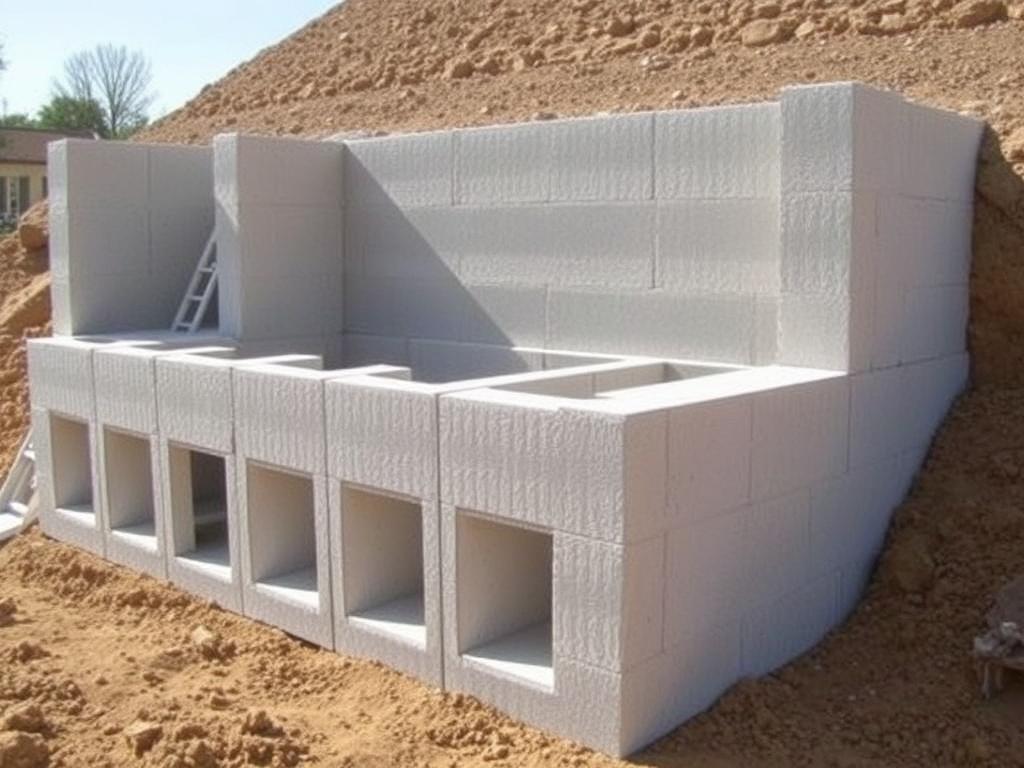
ICF is not a one-size-fits-all solution, but it fits broadly across residential, commercial, institutional, and specialized buildings. Its strengths—thermal performance, sound insulation, and resilience—match many project priorities.
Common applications include single-family homes, multifamily buildings, schools, emergency shelters, and even warehouses. Regions prone to hurricanes, tornados, or wildfires value the robustness that concrete walls deliver.
Residential projects
Homeowners choose ICF for energy savings, quiet interiors, and peace of mind about long-term durability. The system supports diverse architectural styles and can be combined with traditional roof framing and interior layouts.
I have worked with owners who prioritized a low-maintenance envelope and who appreciated the ability to size HVAC systems smaller after energy modeling revealed reduced loads. For those clients, the slightly higher upfront investment paid off in comfort and monthly cost savings.
Commercial and community buildings
Multifamily developments benefit from sound separation and fire resistance, while schools and community centers appreciate low maintenance and enhanced indoor comfort. Larger panel systems accelerate timelines on these projects.
Municipalities sometimes favor ICF for shelters and emergency facilities because the walls resist extreme weather and can function as a protective structure without adding expensive retrofits later.
Common challenges and best practices
Like any construction system, insulated forms bring their own learning curve. The most common issues relate to poor bracing during pours, incomplete rebar placement, inadequate detailing at openings, and insufficient coordination with finish trades.
Addressing these challenges proactively—through training, pre-pour checklists, and experienced installers—avoids expensive rework and yields the best performance.
Bracing and pour control
Too much lateral pressure from the wet concrete can bow the foam faces or misalign the wall. Proper bracing spacing, pour rates, and mechanical vibrators that are used judiciously keep the concrete consolidated without overstressing the forms.
On a job where I observed an inexperienced crew, a single poorly braced section required cutting out portions of cured concrete and rebuilding the blockwork. That taught me the value of hiring crews with ICF experience and following manufacturer bracing guides strictly.
Detailing at openings and penetrations
Window and door bucks must be square and rigid during the pour. Electrical and plumbing penetrations need planned routings, and sealants or sleeve systems are used to maintain airtightness where services pass through the wall.
Use of pre-manufactured bucks and coordination meetings before the pour reduces surprises. It’s a small investment that saves hours of corrective work after the concrete has set.
Codes, permits, and inspection tips
ICF systems are covered under standard building codes, but details vary by jurisdiction. Manufacturers often provide evaluation reports or listings that facilitate plan review and approval, showing compliance with structural and fire requirements.
During permitting, provide plans that show reinforcement, concrete compressive strength, and wall-thickness details. Include manufacturer installation manuals and any special testing documentation to streamline inspection.
Working with inspectors
Inspectors want to see reinforcement placement, correct form alignment, and proper bracing before the pour. Have documentation and a pre-pour checklist ready; it reduces delays and builds confidence in the system.
If your local code requires it, test reports for fire resistance, acoustics, or energy performance can be submitted during plan review. Many jurisdictions accept manufacturer-certified assemblies that have already gone through rigorous testing.
Case studies and personal experience
A local project I visited involved a two-story house built with block-style forms. The crew completed the ICF walls faster than the owner expected, and the blower-door test after finishes showed exceptional airtightness. The owner later reported quieter interiors and lower-than-projected energy bills in the first winter.
On another site, a small multifamily building used panel systems to accelerate the schedule. The panels required a crane, but the speed and reduced labor cost balanced the equipment expense. The building achieved a higher rental premium due to superior sound separation and the owner’s marketing of energy efficiency.
Lessons from the field
First, invest in training or hire a crew with ICF experience. The skill sets around bracing, rebar placement, and finishing on foam substrates differ from traditional framing. Second, coordinate trades early; electrical and plumbing are easier to integrate when planned during form stacking.
Finally, test early. A pre-drywall blower-door test and a mock-up detail for a window flashing can avoid expensive failures later. These steps cost little compared to solving problems after concrete has been poured.
Getting started: finding contractors, training, and resources
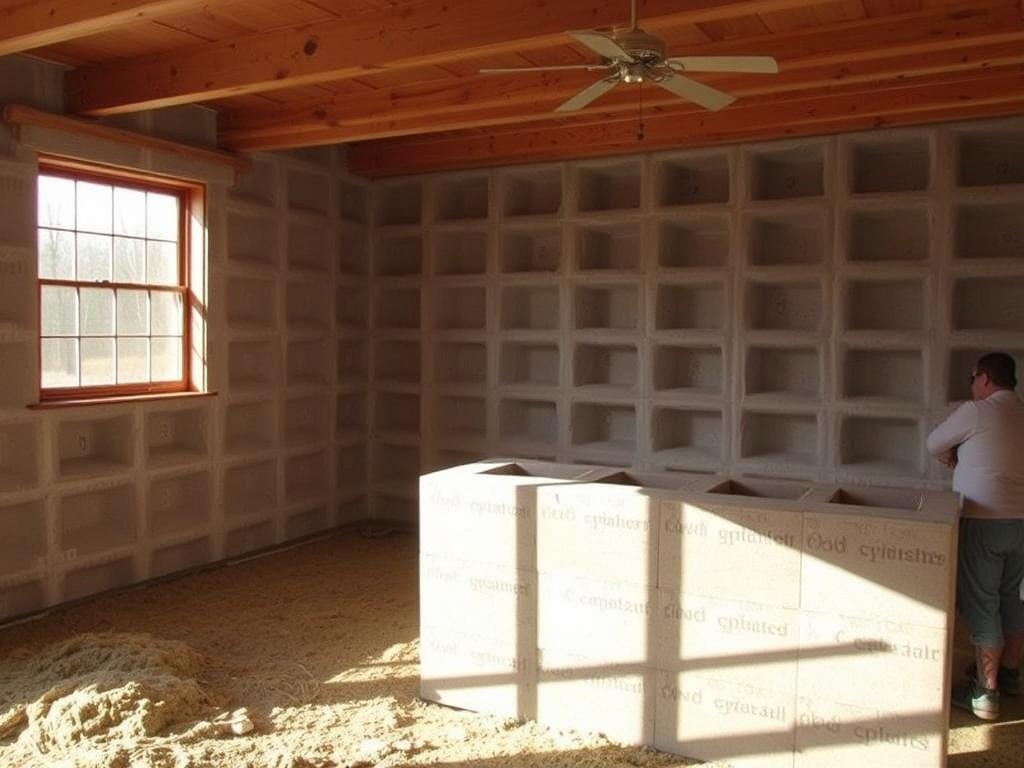
Not every contractor has hands-on experience with insulated forms, so look for firms with specific ICF project portfolios or seek manufacturer-certified installers. Training sessions and jobsite supervision from the manufacturer can accelerate the learning curve for a general contractor.
Industry organizations, technical bulletins, and manufacturer installation guides provide design details, bracing tables, and finishing recommendations. Local building departments can point to accepted product listings and any regional amendments to codes you should consider.
Questions to ask potential contractors
Ask about past ICF projects, references, and whether the crew has been trained by an ICF manufacturer. Request a sample of their pre-pour checklist and examples of how they coordinate with electrical, plumbing, and finish trades.
Also confirm who will be responsible for foam repairs, exterior finish attachment strategies, and warranty coverage. Clear expectations up front reduce friction during the build and after occupancy.
Insulated concrete forms present a compelling option for those seeking a durable, energy-efficient, and resilient building envelope. The system blends the permanence of concrete with the comfort of continuous insulation, producing walls that perform well across multiple metrics.
If your priorities include long-term operational savings, sound attenuation, and durable protection against weather extremes, ICFs deserve a close look during the earliest planning stages. With proper design, quality installation, and thoughtful coordination among trades, the method delivers reliable results that stand the test of time.