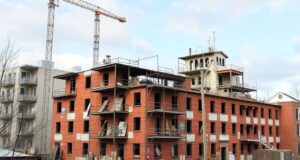
When you drive over a span of steel or roll smoothly along a freshly paved highway, you’re using decades of planning, engineering, and politics distilled into asphalt and concrete.
Infrastructure Projects: Building Roads and Bridges are more than lines on a map; they are economic lifelines, safety systems, and daily reminders of how public investment translates into movement, commerce, and connection.
This article walks through the life of a road or bridge project from first idea to decades of maintenance, mixing technical detail with the practical decisions that determine whether a project succeeds or fails.
Why roads and bridges still matter
Roads and bridges are the physical networks that support almost every other sector: freight, emergency response, commuting, tourism, and even utilities that run along corridors.
Beyond transport, high-quality routes reduce vehicle operating costs, lower travel time variability, and enable regional economic development by linking producers to markets and workers to jobs.
When these systems are neglected, the costs compound: accidents, supply chain delays, and lost productivity grow quietly until a crisis forces expensive catch-up spending.
Setting priorities: how projects get chosen
Picking which bridges to build or which roads to widen rarely comes down to engineering alone; equally important are policy goals, demographics, and projected growth patterns.
Planners use data—traffic counts, crash histories, freight forecasts, land-use models—to rank needs, but political appetite, funding availability, and community acceptance steer many decisions.
Early-stage screening often filters dozens of potential projects to a handful that enter feasibility studies, where technical, environmental, and economic tests determine whether a project is viable.
Transparent criteria and clear communication with stakeholders during this phase reduce surprises later, and improve the odds that the chosen project will deliver measurable benefits.
Feasibility and environmental review
A thorough feasibility assessment evaluates alignment options, right-of-way needs, soil and geotechnical constraints, and basic cost estimates to inform decision-makers and the public.
Environmental reviews identify impacts on wetlands, wildlife, historic sites, and communities, and they determine mitigation measures that may alter the project’s scope or budget.
Modern reviews also consider air quality, noise, stormwater management, and climate resilience, so projects avoid creating vulnerabilities that must be corrected after construction.
Funding the work: finding the dollars
Funding a major corridor or bridge can combine federal grants, state funds, local bonds, user fees, and private capital; the mix shapes both design choices and delivery timelines.
Public-private partnerships shift some risk to private firms in exchange for faster delivery or innovative financing, but they also require careful contracts to protect public interests.
Smaller jurisdictions often rely on creative blends—transportation sales taxes, tolling, or federal competitive programs—to bring projects to life without overburdening a single revenue stream.
| Funding source | Pros | Cons |
|---|---|---|
| Federal grants | Large sums, broad eligibility | Competitive, slow application process |
| State funds | Stable annual funding | May be politically constrained |
| Local bonds/taxes | Local control, predictable | Requires voter approval, raises taxes |
| Public-private partnerships | Private capital and expertise | Complex contracts, long-term obligations |
Economic assessment and benefit analysis
Cost-benefit analysis quantifies time savings, reduced vehicle operating costs, accident reduction, and wider economic impacts to justify investments to stakeholders and funders.
Benefit estimates must be realistic about demand forecasts and sensitive to changes in behavior—telecommuting, freight shifts, or new competing routes can alter expected returns.
Equity analysis is increasingly common, measuring how benefits and burdens distribute across communities so projects don’t reinforce disadvantage or displace vulnerable populations.
Design principles: balancing form, function, and context
Good road and bridge design begins with purpose: safety, capacity, freight needs, and the surrounding urban or rural context all feed the design brief.
Designers weigh alignment, grade, sight distances, and structural systems against landscape, right-of-way, and utility constraints to arrive at a feasible, cost-effective solution.
Context-sensitive solutions—streets that slow traffic and support pedestrians in towns, and high-speed designs on intercity routes—help projects fit their environment rather than impose a one-size-fits-all standard.
Incorporating multimodal access—transit lanes, bike paths, and safe crossings—preserves long-term flexibility and often boosts a project’s social license to build.
Geotechnical and structural considerations
Detailed geotechnical work informs foundation design for both roads and bridges; soil type, groundwater, and seismic hazards dictate piling, embankment design, or soil stabilization techniques.
For bridges, engineers choose structural systems—beam, truss, arch, suspension—based on span length, clearance needs, and budget, balancing construction complexity against lifecycle costs.
Design must anticipate long-term issues: scour at bridge piers, frost heave in colder climates, and drainage for road subgrades all affect durability and maintenance needs.
Road construction techniques
Pavement choice—flexible asphalt, rigid concrete, or composite systems—depends on traffic loading, climate, maintenance capacity, and initial budget constraints.
Modern asphalt mixes incorporate polymers and recycled materials for improved durability, while concrete pavements excel in heavy-load corridors and require different construction sequencing.
Proper subgrade preparation and drainage are the unsung heroes of lasting roads; failures here show up as potholes, rutting, and structural distress within a few years.
Accelerated construction techniques—precast concrete elements, full-depth reclamation, and nighttime work—limit traffic disruption and can reduce total project duration and cost.
Bridge construction methods
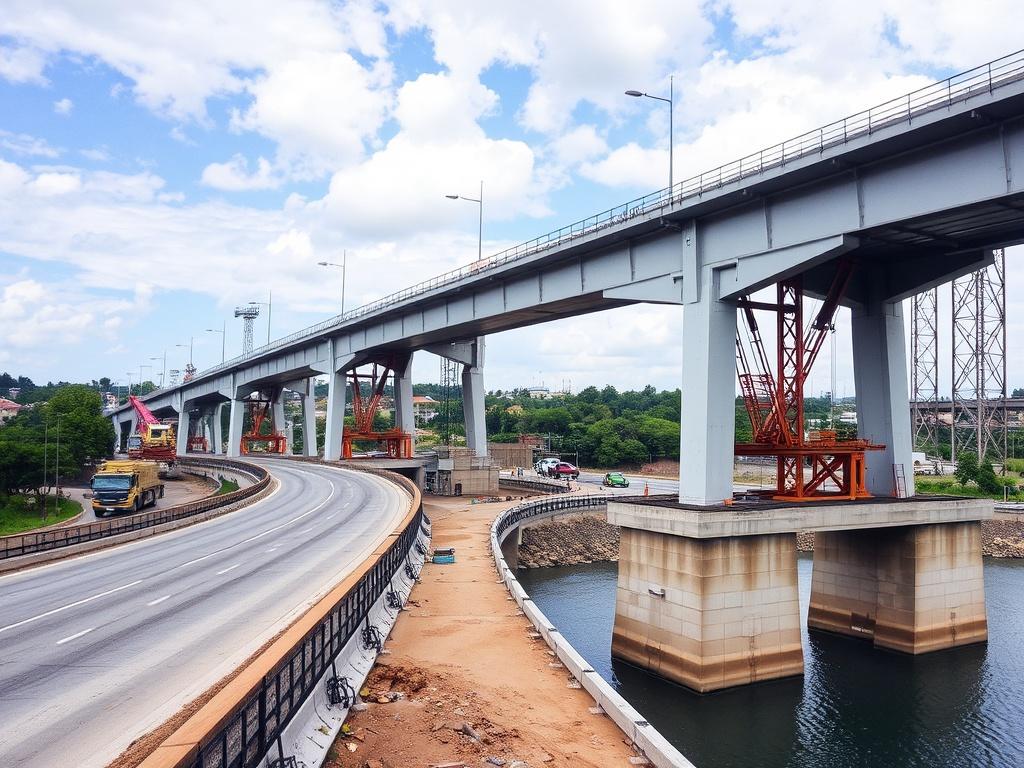
Bridge building ranges from simple short-span slab bridges placed on cast-in-place abutments to massive cable-stayed or suspension structures that redefine skylines.
Common methods include cast-in-place construction, where formwork and falsework support poured concrete, and segmental construction, where precast segments are joined sequentially.
For long spans, balanced cantilever and cable-stayed approaches allow building without extensive scaffolding, reducing environmental footprint in sensitive waterways.
Construction sequencing, erection tolerance, and temporary works design are as critical as the final structural calculations; missteps during erection can be expensive or dangerous to correct.
Materials and their role in durability
Material choice influences everything from initial cost to maintenance frequency; high-quality aggregates, proper cement chemistry, and corrosion-resistant reinforcement extend service life.
Corrosion of reinforcing steel and prestressing strands is a leading cause of premature bridge deterioration, so protective measures—coatings, cathodic protection, and concrete cover—are essential.
Recycled content, such as reclaimed asphalt pavement (RAP) and recycled concrete aggregate, reduces environmental impact and can perform comparably when properly specified and tested.
| Material | Typical use | Durability notes |
|---|---|---|
| Asphalt | Pavement surface | Flexible, needs resurfacing every 10–20 years |
| Portland cement concrete | Pavement and bridge decks | High stiffness, longer service life but can crack |
| Prestressed steel | Bridge girders | High strength, sensitive to corrosion protection |
Project delivery models and procurement
How a project is procured affects risk allocation, innovation, and schedule; common models include design-bid-build, design-build, and design-build-finance-operate-maintain.
Design-bid-build preserves separation between designer and contractor, often favored for sign-off control, whereas design-build allows faster integration of design and construction expertise.
Public-private partnerships can accelerate projects and introduce private management practices, but they require strong contract management to align incentives and protect taxpayers.
- Design-bid-build
- Design-build
- Construction manager at risk (CMAR)
- Public-private partnership (P3)
Choosing the right delivery model hinges on project complexity, funding certainty, and the public agency’s capacity to manage contracts and performance over the project’s life.
Risk management and quality control
Large civil projects face schedule, cost, geotechnical, and environmental risks; a formal risk register with assigned owners helps keep surprises manageable.
Quality control on materials and workmanship reduces rework and long-term maintenance; accepting a low bid without rigorous QC protocols can lead to higher life-cycle costs.
Independent technical reviews and constructability input during design stages catch issues early and often prevent costly field changes during construction.
Traffic management and public communication
Keeping traffic moving safely around construction is both a technical and social challenge; detour design, phased construction, and clear signage are essential elements.
Proactive communication—regular updates, realistic schedules, and explaining why work is needed—builds public patience and reduces frustration that can derail projects politically.
Digital tools—real-time congestion maps, social media updates, and traffic camera feeds—help road users plan and reduce the perceived inconvenience of construction.
Safety on site and for users
Worker safety measures—temporary barriers, mandated training, and night work illumination—reduce the most serious on-site risks and help projects stay on schedule.
Designing for user safety includes adequate shoulders, clear sightlines, median barriers where appropriate, and bridge railings that meet crash-test standards.
Post-construction safety audits validate that as-built conditions match design intent and that traffic controls and signage are adequate for the operating environment.
Resilience and adapting to climate change
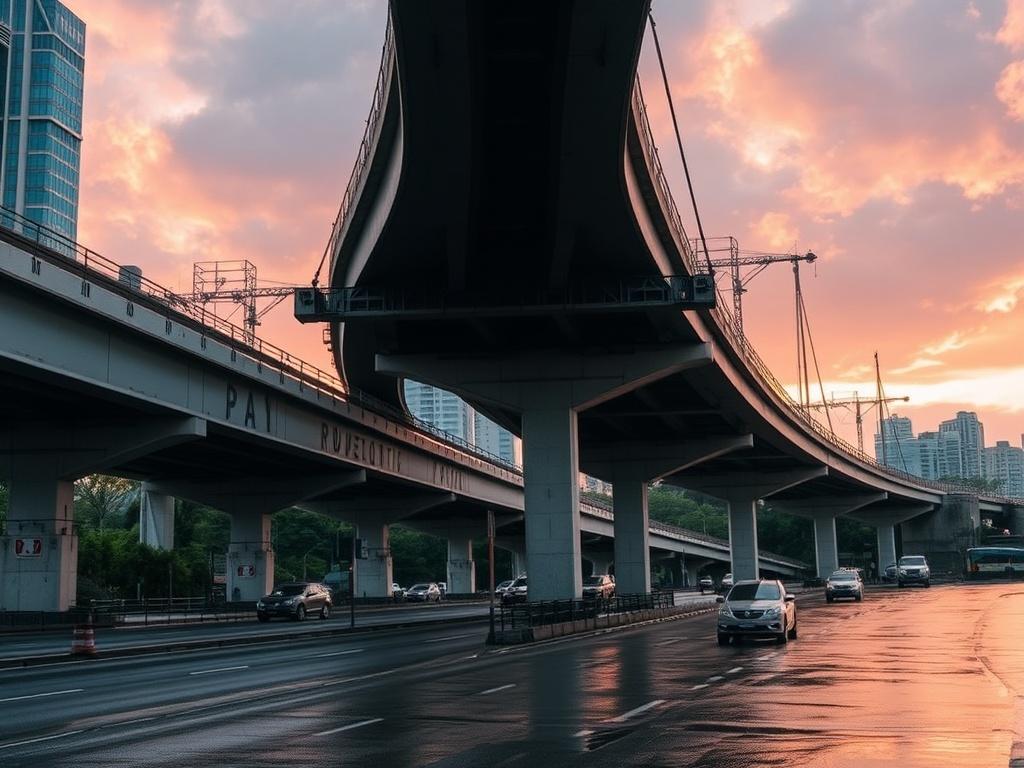
Designing for resilience means accounting for more intense storms, higher flood levels, and temperature extremes that affect material performance and subgrade stability.
Options include higher bridge clearances, improved drainage, corrosion-resistant materials, and redundancy in key network links to maintain access when one route fails.
Building resilience often increases upfront cost but reduces the likelihood and severity of future disruptions and repair bills, an appealing trade-off for communities vulnerable to climate impacts.
Environmental mitigation and enhancement
Mitigation measures can be straightforward—wetland replacement, erosion control, and wildlife crossings—or creative, such as daylighting streams and restoring habitat corridors.
Green infrastructure along rights-of-way—bioswales, permeable pavements, and native plantings—improves stormwater management and can enhance the aesthetics of a corridor.
Sometimes a project offers an opportunity to improve environmental quality beyond mitigation, turning a necessary corridor into a community asset that supports biodiversity and recreation.
Community and stakeholder engagement
Effective engagement starts early and listens more than it lectures: understanding local concerns about noise, access, and displacement often leads to better design outcomes.
Working with neighborhood groups, businesses, and emergency services helps tailor construction schedules and keeps critical access open during works that would otherwise isolate communities.
Equity-focused outreach—translation services, meetings at convenient times and locations, and targeted mitigation—ensures that benefits and burdens are fairly shared.
Maintenance practices and asset management
Longevity depends on proactive maintenance: pavement preservation, timely deck sealing, and joint replacement extend service life and reduce lifecycle costs compared with reactive repairs.
Asset management systems store condition data, prioritize interventions, and help agencies allocate scarce funds to the maintenance activities with the largest returns.
Routine inspections—visual, nondestructive testing, and underwater inspections for piers—catch deterioration early and prevent catastrophic failures that can close corridors for months.
A long-term funding plan for maintenance is often the difference between a short-lived flashy project and an enduring public investment that pays dividends for decades.
Legal, permitting, and regulatory hurdles
Permits—water crossings, endangered species, historic preservation, and air quality—add time and cost and must be accounted for in schedules and budgets.
Coordination among local, state, and federal agencies creates complexity but also opportunities for cost-sharing and technical support that smaller jurisdictions may need.
Clear legal review of property acquisition, easements, and utility relocations prevents disputes that can halt projects and drive costs far beyond initial estimates.
Case study: a highway widening that balanced trade-offs
In one mid-sized city I followed during reporting, a congested interstate segment needed capacity but also passed through established neighborhoods with limited right-of-way.
The final design combined targeted lane additions with improved transit options, sound walls, and reconstructed local crossings to minimize displacement while reducing bottlenecks.
The project lost time in environmental reviews but gained public support through design changes and community benefits agreements that funded local pedestrian improvements.
Case study: a coastal bridge rebuilt for resilience
I visited a coastal county where a 60-year-old bridge had been repeatedly closed after storms; engineers proposed a higher, longer-span replacement to resist future storm surge.
Construction used precast elements to accelerate work and reduce in-water operations, while the project included tidal restoration work that improved adjacent marsh health.
The new bridge cost more upfront but virtually eliminated seasonal closures and dramatically cut emergency detours that had been a major expense to local businesses.
Innovation in construction: digital design and automation
Building Information Modeling (BIM) and 3D design tools help detect clashes, optimize quantities, and provide a digital record that supports later maintenance and inspections.
Drones and lidar surveys speed up topographic mapping and progress monitoring, while automated machinery—pavers, milling machines, and guided graders—improves precision on repetitive tasks.
Robotics and sensors embedded in materials allow early detection of distress, turning structures into smarter assets that report their condition before visible failure occurs.
Workforce and skills development
Construction productivity depends on skilled trades—ironworkers, heavy equipment operators, concrete finishers—whose training pipeline must keep pace with project demand.
Apprenticeship programs and partnerships with technical colleges expand workforce capacity while providing local employment opportunities tied to long-term projects.
Investing in training pays off in safety, quality, and the ability to adopt new technologies such as automated equipment and digital quality control tools.
Procurement ethics and transparency
Transparent procurement processes guard against favoritism and cost escalation; public agencies that publish bid evaluations and performance metrics build trust with citizens.
Ethical practices include clear conflict-of-interest rules, independent oversight, and open lines of accountability for any subcontracting chains that handle critical work.
When procurement is clear and fair, bidders compete on innovation and value, which often yields better designs and stronger bids from experienced firms.
Measuring success: performance metrics and outcomes
Success is measured not only by on-time, on-budget delivery but by long-term performance: reduced congestion, lower crash rates, and improved economic activity in the corridor.
Key performance indicators—fatality and serious injury counts, pavement condition index, travel time reliability, and maintenance backlog—provide objective assessments over time.
Post-occupancy evaluations and community satisfaction surveys add qualitative insights that inform future projects and show whether design objectives translated into real benefits.
Challenges that keep projects from delivering value
Common barriers include underestimated geotechnical risks, unrealistic schedules, insufficient public engagement, and unstable funding streams that stall work midstream.
Political changes can shift priorities and funding; projects that lack bipartisan or multi-jurisdictional support are more vulnerable to cancellation or scope cuts.
Addressing these issues requires solid technical preparation, rigorous risk allocation, and continuous stakeholder outreach to build durable consensus.
Practical tips for practitioners and community leaders
Start small when building public trust: early quick wins—improved intersections, pedestrian crossings, or beautification—demonstrate competence and earn patience for larger works.
Integrate maintenance funding into the budget from day one; a durable asset must be affordable to maintain or its benefits will erode as deterioration accelerates.
Use pilots and phased deployment where possible to test new materials, tolling methods, or operational strategies without committing the full capital cost at once.
Looking ahead: the next generation of corridors
Future corridors will likely emphasize resilience, multimodal access, and digital integration so roads and bridges are safe, adaptable, and useful in an increasingly connected world.
Connected vehicle infrastructure, smart sensors, and materials that self-heal or signal distress will reduce maintenance surprises and improve safety outcomes.
Investment choices made now—toward durable materials, redundancy, and community-centered designs—will determine whether infrastructure remains a drag on future budgets or an engine for prosperity.
Roads and bridges are technical feats, yes, but they are also civic choices; each project reflects a set of priorities about mobility, equity, and stewardship of public funds.
By focusing on thorough planning, honest cost forecasting, community engagement, and long-term maintenance, agencies can deliver projects that move people, support economies, and age gracefully.
When a new stretch of highway opens or a bridge rises above a river, what matters most is that it serves people reliably for decades—quietly doing its job while the world keeps moving forward.