Picking a foundation is more than a line item in a budget; it determines how a structure will stand, move, and age. This guide walks through the main foundation types, the soil and load factors that drive decisions, and practical strategies to match a foundation to a site and program. If you are weighing options for a new home, an addition, or a commercial structure, the goal here is clear: give you the tools to choose the best foundation for your structure with confidence.
Why foundation choice matters
The foundation transfers building loads safely into the ground and controls settlement, moisture, and thermal performance. A poor choice creates cracked floors, uneven doors, expensive repairs, and a shortened building lifespan.
Beyond structural safety, foundation decisions affect cost, schedule, and sustainability. An efficient, well-matched foundation can lower construction time, reduce material waste, and avoid costly remediation later.
Basic principles of foundations
Foundations work by distributing the weight of a building to soil that can carry it without excessive settlement. Engineers think in terms of bearing capacity, allowable settlement, and how loads are spread across footings, mats, or piles.
Two features matter most: how deep the foundation bears and how it spreads load horizontally. Shallow foundations sit near-grade and spread loads wide, while deep foundations transfer loads to stronger strata well below surface soils.
Moisture, frost, and lateral earth pressures are additional forces a foundation must resist. Good detailing for drainage, moisture barriers, and frost protection keeps soils stable and foundations performing as intended.
Soil and site investigation
Soil is the single most influential factor for foundation selection. A geotechnical report—obtained early—describes soil layers, bearing capacity, groundwater depth, and compressibility, all essential inputs for design.
Simple visual observations are helpful but insufficient. You might see roots, fill, or standing water, but a borings log or test pits quantify what’s below and how it will behave under load.
On sloping or reclaimed sites, expect additional work: retaining systems, deeper footings, or piles. Plan for unexpected finds like buried utilities, old foundations, or soft organic deposits that could change the recommended solution.
Load and structural considerations
Different structures impose different loads. A light single-story home can often rely on slab-on-grade or shallow footings, while a multi-story office or industrial building may require deep foundations. Engineers calculate dead loads, live loads, wind, and seismic forces to size foundations appropriately.
Point loads from columns concentrate stress and often need isolated footings or piles. Continuous loads, like load-bearing walls, suit strip footings. For high loads or differential loading conditions, a mat or raft foundation spreads load across the entire footprint.
Seismic zones and expansive soils add complexity. In earthquake-prone regions, foundations must resist uplift, lateral sliding, and torsion. In clay soils that swell and shrink, flexible connections and deeper foundations may be necessary to avoid movement transfer to the superstructure.
Shallow foundations: the common choices
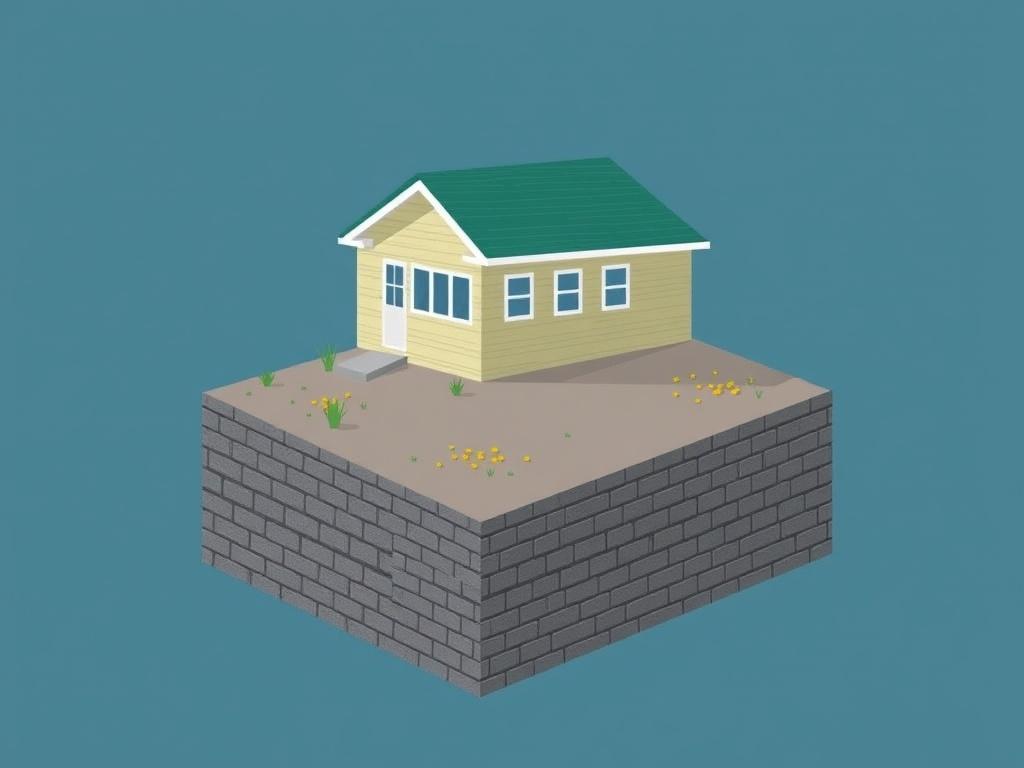
Shallow foundations are used where competent soil lies near the surface. They are generally less expensive and quicker to construct than deep systems, making them common for residential and light commercial work.
Typical shallow foundation types include spread footings, strip footings, and slab-on-grade. Selection among these depends on load distribution, frost depth, and construction preferences.
Spread footings (isolated footings)
Spread footings support individual columns by spreading loads to a wider area of soil. They’re straightforward to design and build and are common in framed buildings with regular column grids.
They work well when bearing capacity is reasonable and building loads are not extreme. However, if groundwater is high or soils are weak, spread footings may require soil improvement or increased depth.
Strip footings (continuous footings)
Strip footings run under load-bearing walls, taking the wall load and distributing it along a strip of soil. They’re an economical choice for masonry or framed walls with continuous loads.
Continuous footings are sensitive to frost action, so they often must be placed below frost depth or insulated. They also need consistent soil conditions along their length to avoid differential settlement between sections.
Slab-on-grade (monolithic slabs)
Slab-on-grade is a single concrete slab poured directly on prepared ground. It can act as both the floor and the foundation in one element, saving time and materials for many residential projects.
Proper subgrade preparation and vapor barriers are crucial to control moisture and prevent cracking. Slabs can be thickened under load-bearing points or reinforced with a grid of rebar or mesh to handle concentrated loads.
Mat and raft foundations
When loads are heavy or soils have low bearing capacity, a mat or raft foundation spreads building loads over a large area. These are often used for large commercial or industrial buildings and for structures on soft soils.
Raft foundations can reduce differential settlement between closely spaced columns and can be combined with piles in a piled raft design. They require careful structural design and often thicker concrete with significant reinforcement.
Deep foundations: piles and drilled shafts
Deep foundations transfer loads to deeper, stronger strata when surface soils cannot carry the building. They are the go-to solution for tall buildings, bridges, and sites with soft or highly compressible soils.
Two common deep systems are driven piles and drilled shafts (caissons). Each has pros and cons related to installation noise, vibration, capacity, and suitability for obstructions or groundwater.
Driven piles
Driven piles are precast concrete, timber, or steel elements hammered into the ground. They achieve capacity through end-bearing on rock or resistance along the pile shaft in dense soils.
They are fast and can be tested dynamically during installation, but the hammering causes vibration and noise that may not be acceptable in dense urban environments. Corrosion protection is important for steel piles in certain soils.
Drilled shafts (bored piles, caissons)
Drilled shafts are made by excavating a hole and filling it with concrete and reinforcement. They are suitable where vibration must be minimized and can be installed to great depths with high load capacity.
Wet or unstable boreholes may require temporary casing or drilling fluids. Drilled shafts are commonly used for bridge piers and high-rise columns where substantial axial and lateral capacities are needed.
Special systems and retrofit methods
Some circumstances call for alternative systems: helical piles, micropiles, underpinning, and grade beams. These solutions often shine during repair work, tight access jobs, or when minimizing disturbance is a priority.
Helical piles are screwed into the ground and can be load-tested during installation. They’re excellent for small additions, decks, and underpinning because they are relatively clean and quick to install.
Pier and beam (crawlspace) foundations
Pier and beam systems elevate the building on piers with beams carrying the floor structure. They provide easy access to utilities and can be useful on sloped sites or where frost protection is needed without deep excavation.
Crawlspace foundations require careful moisture control and ventilation to prevent rot and mold. Insulating and sealing the crawlspace can improve energy performance and indoor air quality.
Underpinning and soil improvement
Underpinning strengthens or replaces an existing foundation to increase capacity or repair movement. Techniques include mass concrete underpinning, mini-piles, and jet grouting depending on access and soil conditions.
Soil improvement methods—like compaction, lime or cement stabilization, and geosynthetics—can allow the use of shallow foundations in otherwise unsuitable soils. These options may be cost-effective compared to deep foundations.
Comparing foundation types at a glance
Below is a compact comparison to help visualize trade-offs among common foundation systems. Use it as a starting point, not a substitute for a geotechnical and structural design.
| Foundation type | Typical uses | Pros | Cons |
|---|---|---|---|
| Slab-on-grade | Residential, light commercial | Cost-effective, fast | Poor for very soft soils, moisture management required |
| Spread/strip footings | Low-rise buildings | Simple design and construction | Needs competent near-surface soils |
| Mat/raft | Heavy loads, poor soils | Reduces differential settlement | High concrete and reinforcement costs |
| Driven piles | Deep weak soils, heavy loads | High capacity, fast | Noise, vibration, potential corrosion |
| Drilled shafts | High loads, urban sites | Minimal vibration, high capacity | Slower, requires specialized equipment |
Materials and construction methods
Concrete is the dominant foundation material thanks to its compressive strength, durability, and ease of forming. Reinforcing steel (rebar) adds tensile capacity where needed, especially in mats and footings spanning weak soil zones.
Timber foundations are rare for primary structural use in modern construction but remain common for temporary works and some rural, low-load applications. Timber must be treated and protected from moisture and pests.
Steel is frequently used for piles and grade beams where prefabrication, speed, or high capacity is desired. Corrosion protection and connections to concrete elements require attention during detailing.
Water management, drainage, and frost protection
Water is a foundation’s adversary. Poor drainage raises pore pressures, reduces soil strength, causes heave, and accelerates material decay. A proper drainage plan around the perimeter and below slabs prevents many problems.
For frost-prone climates, foundations must sit below the local frost line or include insulation to prevent freeze-thaw movement. Frost heave can lift and crack foundations if not addressed at the design stage.
Install perimeter drains, slope grades away from the building, and use capillary breaks under slabs. These straightforward measures vastly increase a foundation’s longevity and performance.
Insulation and energy considerations
Foundations are part of the building thermal envelope. Uninsulated slabs and crawlspaces can create large heat losses and become a source of cold floors and condensation in winter.
Rigid foam insulation under slabs or along foundations reduces thermal bridging and can help prevent frost heave in shallow-footing designs. Continuous insulation and sealed crawlspaces also reduce energy bills and improve occupant comfort.
Cost, schedule, and risk factors
Budget and schedule often constrain foundation decisions. Shallow systems generally cost less and are quicker, but may demand extensive soil work if conditions are poor. Deep foundations cost more and require specialized crews and equipment.
Risk management favors solutions that address worst-case soil conditions with a margin. For example, a slightly larger footing or additional piles can prevent costly surprises if subsurface conditions vary across the site.
Always include contingency for unknowns in early budgets. Delays for unforeseen obstructions or groundwater can cascade into added mobilization costs, so prudent planning and early testing pay off.
Retrofit, repair, and signs of foundation distress
Foundations rarely fail catastrophically; they show signs: cracking in walls and floors, sticking doors and windows, and uneven floors. Early detection can allow economical repairs instead of full replacement.
Common repair techniques include slab jacking (lifting and filling voids under slabs), installing underpinning or piles, and improving drainage to stop active movement. The chosen fix depends on the root cause identified by a structural or geotechnical engineer.
Before buying a property or starting renovation, have visible defects evaluated. A focused investigation may reveal a simple fix that restores performance without dramatic expense.
Design process and working with professionals
A good foundation begins with a geotechnical investigation and an engineer who synthesizes those findings into a design that balances cost, constructability, and longevity. Architects, structural engineers, and contractors should coordinate early to avoid redesigns.
Review local code requirements, frost depths, and seismic provisions with your engineer. Permit authorities will require specific details; early compliance reduces back-and-forth and keeps schedules on track.
Ask potential contractors about their experience with the chosen foundation type, equipment availability for piles or shafts, and references for similar work. A capable contractor identifies constructability issues before breaking ground.
Decision-making checklist
Use the checklist below to structure conversations and site assessments. It helps translate site observations into foundation decisions and contract provisions.
- Obtain a geotechnical report: boreholes, groundwater, bearing capacity, and compressibility.
- Define building loads: dead, live, wind, seismic, and concentrated loads.
- Consider climate: frost depth, drainage needs, and freeze-thaw cycles.
- Assess site constraints: access, utilities, slopes, and existing structures.
- Compare foundation options by cost, schedule, and impact on structure.
- Plan for moisture control: perimeter drains, vapor barriers, and grading.
- Factor in long-term maintenance and inspectability for crawlspaces and basements.
- Evaluate energy and insulation needs as part of the envelope strategy.
- Solicit contractor input on constructability and sequencing.
- Include contingency for unknown subsurface conditions and weather-related delays.
Real-life examples and lessons learned
On a renovation I managed, a 1950s bungalow sat on shallow footings over undocumented fill. The house exhibited settlement and cracks; adding perimeter drains and underpinning select corners corrected movements without a full foundation replacement.
In another project—a small apartment building on silty clay—early geotechnical work showed low bearing capacity. Switching to a piled raft system raised costs but avoided months of costly soil replacement and provided uniform settlement for the structure.
These projects taught a recurring lesson: time spent in investigation and conservative planning reduces surprises. Scheduling the geotechnical work early and keeping communication tight between designer and contractor made both projects smoother.
Regulatory, environmental, and sustainability considerations
Local building codes dictate many foundation details—from minimum footing sizes to damp-proofing and frost protection requirements. Always verify code requirements early; noncompliance can stall permits and construction.
Environmental concerns include minimizing excavation spoil, controlling erosion during construction, and avoiding contamination spread when working in previously industrial sites. Sustainable choices—like reuse of treated excavated material or optimized concrete mixes—reduce a project’s footprint.
Design choices can also affect life-cycle emissions: thinner, well-reinforced slabs may use less concrete overall than a heavy mat, while longer-lasting deep foundations can avoid future repairs that have their own carbon cost.
Common misconceptions and pitfalls
One common misconception is that a heavier foundation is always better. Overdetailed foundations add unnecessary cost and embodied carbon. The right foundation is the one sized to meet loads and soil conditions, not simply the largest one you can build.
Another pitfall is deferring geotechnical work to late in the design. Waiting until framing or slab subcontractors are on site leaves little room to change foundation plans without expensive rework.
Finally, don’t underestimate moisture control. Many foundation failures trace back to poor site drainage or a missing vapor barrier rather than structural miscalculation.
Maintenance and long-term monitoring
Routine checks for signs of movement—cracks, doors that stick, sloping floors, or new wall separation—catch problems early. Simple fixes often suffice when detected promptly.
For critical structures, consider installing settlement monitoring points or inclinometers to track movement. These tools provide early warnings and data that help engineers decide on interventions before damage escalates.
When to consider alternative or hybrid solutions
Hybrid approaches combine shallow elements with deep supports, such as a piled raft or slab on grade with isolated piles under heavy loads. These systems often optimize materials and reduce settlement risk without the cost of a fully deep foundation.
Alternative methods also become attractive on sites with limited access, sensitive surroundings, or strict vibration limits. Speak with foundation specialists early to explore these options rather than defaulting to a standard approach.
Preparing the contract and scope for foundation work
Clear contract language about expected subsurface conditions, allowances for unexpected finds, and responsibility for repair helps prevent disputes. Include provisions for differing site conditions and define acceptable tolerances for settlement and alignment.
Specifying test reports, material standards, and required certifications for specialized installation (like pile driving logs or shaft integrity testing) protects both owner and contractor and improves quality assurance.
Innovations and emerging trends
Advances in ground improvement—such as low-vibration jet grouting, soil mixing, and geopolymers—allow builders to adapt foundations to difficult soils without traditional deep piling. These methods reduce noise, disruption, and in some cases cost.
Digital tools like 3D site models, BIM integration with geotechnical data, and real-time monitoring are becoming standard on complex projects. They facilitate coordination between disciplines and provide better predictability for foundation work.
Choosing the best foundation for your structure
Selecting the optimal foundation is a balance between geology, structural requirements, budget, schedule, and long-term performance. Start with a geotechnical report, quantify loads, and consult experienced structural and geotechnical engineers to develop options tailored to the site.
Where possible, choose solutions that address the worst reasonable site condition with a margin for safety. Factor in long-term maintenance, energy implications, and local regulations when weighing alternatives.
Next steps for homeowners and project teams
Commission a geotechnical investigation as a priority step on any new build or major addition. Use the findings to narrow foundation options and obtain realistic cost estimates from contractors experienced with the chosen system.
Build redundancy into early budgets for unforeseen subsurface conditions, and maintain open communication among designer, owner, and contractor to manage change efficiently. With the right approach, the foundation you choose becomes a durable, unobtrusive partner in your building’s life.