
Designing and installing electrical systems in new buildings is a blend of engineering, careful planning, and field craftsmanship. The work touches every occupant’s daily life, from the lights that come on when you flip a switch to the data networks that move information across floors.
Why the electrical plan matters before the first wall goes up
An electrical layout created early in the project prevents expensive rework and clashes with other trades. When power, lighting, communications, and safety systems are coordinated ahead of time, the site moves faster and with fewer surprises.
Beyond schedule and cost, a thoughtful design sets the stage for flexibility, energy efficiency, and occupant comfort. Buildings that anticipate future loads and technology changes avoid painful retrofits later on.
Planning and design: the architectural and technical foundation
Good installations start with clear requirements: intended use of spaces, special equipment, and projected occupancy. These inputs shape load calculations, panel sizing, and conduit routing in ways that are not apparent from a floor plan alone.
Early involvement of electrical engineers, contractors, and the owner helps resolve conflicts and identify opportunities for savings. I’ve seen simple coordination meetings save weeks of rework by shifting a riser location before concrete was poured.
At this stage you also choose standards and codes to govern the project. National codes, local amendments, and project-specific standards dictate conductor types, grounding, emergency systems, and life-safety installations.
Understanding codes, standards, and permits
Plans must reference the National Electrical Code and any state or local variations that apply to the job. Permit reviewers look for compliance in service sizing, AFCI/GFCI placement, and emergency power provisions, so drawing code compliance into the design avoids rejection during review.
Aside from NEC, projects may require compliance with NFPA 70E for arc flash, NEC Article 645 for data centers, or LEED standards for efficiency and metering. Listing applicable standards on the cover sheet helps keep design and installation aligned.
Load calculations and system sizing
Accurate load calculations set transformer, service, and feeder sizes and dictate reserve capacity for future expansion. Engineers use connected loads, diversity factors, and expected duty cycles to size equipment that won’t be overtaxed on day one.
It’s wise to plan for future growth—adding a modest transformer capacity or spare conduits is usually far cheaper during construction than after occupancy. I often recommend owners budget for a 10–25 percent growth allowance depending on building type.
Single-line diagrams and coordination
Single-line drawings provide a simplified, essential view of feeders, panels, protective devices, and their interactions. They are the backbone for short-circuit and coordination studies and tell electrical contractors exactly how systems should connect.
Proper coordination studies ensure that protective devices operate selectively during faults, minimizing outages and limiting damage. This is particularly important in mixed-use buildings where an upstream trip could shut down critical services.
Components and materials: choosing the right hardware
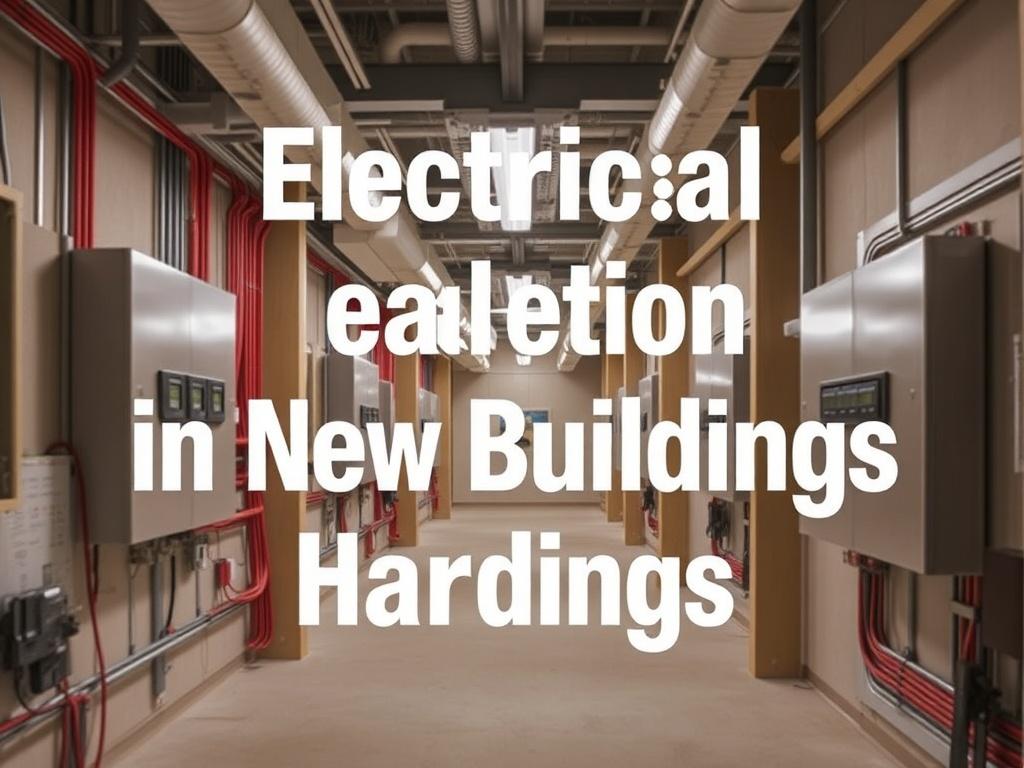
Materials selection affects safety, longevity, and ease of maintenance. From service equipment and panelboards to conduits and switches, every choice influences installation labor and future operational costs.
Durability and maintainability should guide decisions—stainless steel enclosures in corrosive environments or accessible routed cabling in tech-heavy spaces pay dividends in the long run. It’s better to specify the right grade up front than to manage chronic failures later.
Service entrance, transformers, and distribution
The service point is where utility responsibility ends and the building’s system begins. Proper metering, main protective devices, and grounding at this interface are crucial for safety and regulatory compliance.
Transformers and switchgear choices hinge on load profile and space constraints. Pad-mounted transformers, rooftop units, or indoor dry-type transformers all have trade-offs in cooling, maintenance access, and cost.
Panelboards, breakers, and protective devices
Panelboards must be laid out logically with clear labeling to simplify maintenance and emergency response. Grouping circuits by use and providing spare spaces in panels makes future changes cleaner and faster.
Selecting breakers and fuses involves matching interrupting ratings to available fault currents and ensuring coordination with upstream devices. A misunderstanding here can lead to nuisance trips or, worse, inadequate protection.
Wiring methods and conductor choices
Conductor insulation, size, and routing method—whether conduit, armored cable, or cable tray—depend on environment, code, and budget. Heat, moisture, and chemical exposure should drive choices that prevent early degradation.
Use copper conductors where flexibility and longevity are priorities; aluminum is acceptable for larger feeders when properly terminated. Selecting the correct insulation rating for temperature and voltage ensures reliable performance.
Lighting systems and controls
Lighting design no longer stops at fixture selection—controls, dimming, color temperature, and occupant sensors play a huge role in comfort and energy use. Integrating lighting controls with building automation yields additional savings and nuanced occupant experiences.
LED fixtures paired with daylight harvesting and occupancy sensors are now standard in many projects, delivering both maintenance and energy benefits. Planning control wiring and zones early reduces commissioning headaches.
Emergency power, exit lighting, and life-safety systems
Emergency lighting, exit signs, fire alarm power supplies, and standby generators are life-safety elements that demand robust design and redundancy. Code often prescribes separate emergency feeders and transfer switch arrangements for critical loads.
Testing and regular maintenance plans for life-safety systems must be in place at turnover. Owners should receive clear manuals and schedules so inspections and tests occur reliably after occupancy.
Communications, security, and low-voltage systems
Data, voice, security, and audio-visual systems have different cabling standards and often require separate routing and grounding considerations. Poor coordination here can lead to interference, performance issues, or costly re-cabling.
It’s common to run backbone fiber and reserve conduit for future capacity during the build. When possible, coordinate head-end equipment rooms and floor distribution closets with HVAC and access control needs.
| Conductor type | Typical use | Notes |
|---|---|---|
| THHN/THWN | General-purpose building wiring | Good for conduit; widely used |
| MC (metal-clad) | Branch circuits and feeders | Saves conduit labor; requires proper fittings |
| Fiber optic | Data backbone | Low attenuation; future-proofing recommended |
The table above represents common conductor choices and their roles in a new build. Each project may require specialty cables for hazardous areas, high-temperature applications, or EMI-sensitive equipment.
Installation practices and sequencing on site
Well-sequenced electrical work improves safety and minimizes clashes. A typical flow moves from service and main feeders to rough-in, then distribution, fixtures, and final connections prior to commissioning.
Locking in conduit pathways and pull box locations early reduces drywall patchwork and preserves the architectural finish. When trades work from a coordinated 3D model, conflicts are spotted before trenching or slab pours.
Rough-in work: conduits, boxes, and routing
Rough-in is the time to get pathways right—conduit placement, box depths, and sleeve locations should reflect final finishes. Install conduit with spare capacity where future additions are likely.
Labeling during rough-in saves hours during final terminations; mark each conduit with origin and destination. I once supervised a job where clear marking prevented a 48-hour delay caused by misrouted conference room feeds.
Coordination with mechanical and structural trades
Electrical installers must coordinate with mechanical, plumbing, and structural teams to prevent collisions with ductwork, piping, and rebar. Early cross-discipline meetings prevent last-minute reroutes that cost both time and money.
Use shared BIM models or clash-detection workflows to reduce on-site surprises. When a change is unavoidable, document it immediately and update the as-built drawings so future work has an accurate baseline.
Grounding, bonding, and protection strategies
Reliable grounding and bonding protect people and equipment while stabilizing voltages across the electrical system. A poor bond point can cause nuisance currents, stray voltages, or compromised protection coordination.
Establish an earth electrode system and bond all conductive components—service enclosures, water piping, and structural steel—according to code. Include surge protective devices for sensitive equipment and life-safety loads.
Overcurrent protection, AFCI, and GFCI placement
Modern codes require Arc-Fault Circuit Interrupters in living spaces and GFCI protection in wet or unfinished areas. Properly applying these devices reduces fire risk and protects occupants from electrical shock.
Careful selection of breaker types and settings ensures selective tripping and minimizes disruption during fault conditions. Coordination studies help determine proper time-current curves and reduce the risk of cascading outages.
Testing, commissioning, and inspections

Testing verifies that the installed system matches design intent and performs safely under expected conditions. Commissioning verifies sequences, control logic, and interoperability between systems such as lighting and HVAC controls.
Inspections by local authorities validate code compliance; internal commissioning checks measure insulation resistance, continuity, and protective device settings. A documented test report is essential before turning systems over to the owner.
Inspection checklist and documentation
- Service and meter installation compliance
- Panel labeling and circuit identification
- GFCI/AFCI placement and testing
- Grounding resistance and continuity
- Emergency lighting and generator transfer tests
Use a written checklist to ensure nothing is missed during inspections. Deliver a complete commissioning packet to the owner that includes as-built drawings, test results, and maintenance instructions.
Commissioning tests: what to run and why
Critical commissioning tests include megger testing for insulation integrity, phase rotation checks, and load tests on generators and UPS systems. These tests expose wiring mistakes and hidden faults before occupancy.
Additionally, exercise control sequences and verify that automation points respond correctly to setpoints and schedules. Faulty logic or incorrect I/O labeling can leave systems behaving unpredictably if not checked thoroughly.
Safety and risk management during installation
Construction sites are hazardous and electrical work compounds the risks. Robust safety programs, qualified supervision, and consistent use of PPE reduce incidents and keep projects on schedule.
Project managers should enforce lockout/tagout procedures, hot-work permits, and clear emergency protocols. Daily safety briefings focused on electrical hazards keep awareness high among crews and subcontractors.
PPE, lockout/tagout, and live-work policies
Personal protective equipment must match the risk—arc-rated clothing for live work and insulated tools for exposed conductors. Lockout/tagout procedures must be documented and strictly followed when circuits are de-energized for service.
Where live testing is unavoidable, use test barriers, restricted access zones, and a buddy system. Never allow ad hoc practices that place workers or occupants at unnecessary risk.
Fire protection and arc flash analysis
Arc flash studies identify incident energy levels and appropriate PPE categories, while determining labeling requirements at panels. These studies also inform breaker settings and potential engineering changes to reduce hazard levels.
Fire alarm systems and sprinklers must be coordinated with electrical room layouts and cable routing. Keep clear access and ventilation in electrical rooms to reduce the risk of heat buildup and simplify emergency response.
Energy efficiency and smart building integration

Energy-conscious design reduces operational cost and improves occupant experience. Metering, efficient lighting, and intelligent controls allow optimization of energy use while maintaining comfort.
Consider whole-building strategies such as submetering by tenant, demand response readiness, and integration with building management systems. These features support sustainability goals and may qualify for incentives.
Lighting controls, daylight harvesting, and occupancy sensing
Advanced lighting controls save energy and tailor illumination to actual use patterns. Daylight sensors and zoning reduce artificial lighting when natural light is sufficient, and occupancy sensors cut power in unused areas.
Proper commissioning of control sequences is essential—uncommissioned systems can revert to full power and wipe out expected savings. An energy audit post-occupancy validates performance and helps tune settings.
Renewables, storage, and EV charging
Integrating solar arrays or battery storage impacts the electrical one-line and requires coordination with inverters, bi-directional metering, and interconnection agreements. Early planning simplifies permitting and utility negotiations.
EV charging infrastructure is increasingly a required amenity; sizing electrical capacity, providing dedicated feeders, and allowing for future charger expansion should be considered at initial design. Dedicated conduits and stub-ups avoid expensive retrofits.
Common pitfalls and how to avoid them
Mistakes often arise from insufficient coordination, such as undersized conduits, inaccurate load assumptions, or unclear labeling. These issues typically manifest as schedule delays, additive change orders, or operational headaches for building staff.
On one project I managed, a miscommunication about a rooftop mechanical platform location forced rerouting of major feeders through a longer path. We mitigated the cost by reassigning staging and adding a single splice point early, but the episode underlined why site coordination matters.
To avoid similar pitfalls, maintain clear, updated drawings, hold weekly coordination meetings, and insist on as-built updates from subcontractors as changes occur. A disciplined change control process prevents small decisions from escalating into big problems.
Cost considerations and budgeting strategies
Electrical cost drivers include equipment selection, labor intensity, site logistics, and the degree of finishing required in mechanical and electrical rooms. High-density buildings with sophisticated controls will naturally have higher electrical budgets.
Owners should budget for contingencies and for features that reduce long-term operating costs, such as energy-efficient motors, meters, and accessible distribution layouts. Often a modest increase in first cost produces significant lifecycle savings.
Value engineering exercises can identify cost-effective substitutions that retain performance. However, trimming safety margins or eliminating spare capacity for future expansion creates risk and should be approached cautiously.
Cost drivers to watch
Major drivers include conductor lengths, conduit routing complexity, transformer and switchgear capacity, and the need for special enclosures or environmental protections. Site accessibility and sequence changes can also inflate labor costs.
Contractor selection based on demonstrated experience rather than lowest bid often reduces hidden costs. Experienced teams anticipate problems and execute with fewer change orders.
Value engineering without compromise
Value engineering should preserve safety, code compliance, and maintainability while simplifying design and reducing cost. Examples include selecting standardized panel layouts or consolidating control networks to reduce wiring and termination labor.
Make any savings reversible—don’t eliminate spare conduit or pull points unless you’re certain they won’t be needed. Adding the capability for painless upgrades is a hallmark of mature value engineering.
Future trends affecting new building electrical systems
Buildings are becoming more electrified, smarter, and more connected. Heat pumps, electrified transportation, and distributed energy resources will increase electrical loads and require more sophisticated load management.
Edge computing, IoT sensors, and AI-driven building automation will change how we think about power, grounding practices, and resiliency. Systems that can adapt and be reprogrammed remotely will offer owners more flexibility and control.
Putting it together: delivering a reliable, maintainable system
Successful electrical installations combine rigorous design, coordinated sequencing, quality materials, and disciplined testing. The final product is a system that supports occupants, protects assets, and minimizes interruptions.
Provide the owner with clear documentation, a training session for maintenance staff, and a practical maintenance plan. Those last steps transform a technically sound installation into a dependable building resource the owner can manage with confidence.