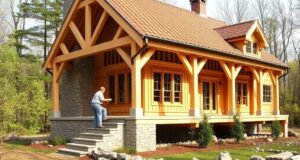
Every building, whether a humble storefront or a glass-clad tower, follows a path that begins as an idea and ends as material and memory. In this article I trace that arc, examining decisions, technologies, and human forces that shape the life of a structure from its first sketch through reuse, maintenance, and eventual teardown. Along the way you’ll see how economics, design, regulation, and sustainability intersect to create buildings that endure—or don’t.
Why lifecycle thinking matters
Thinking of a building as a lifecycle shifts the focus from isolated stages to a continuum of consequences. Design choices affect future energy use, maintenance costs, and even how easy it will be to repurpose or dismantle the structure decades later. When owners and designers adopt lifecycle thinking they often save money, reduce environmental impact, and create more flexible spaces.
Lifecycle thinking also highlights the value of embodied materials—concrete, steel, timber—and the energy invested to produce them. Those embedded impacts can dwarf operational energy in short-lived buildings, so decisions about materials and construction methods deserve the same attention as insulation or HVAC systems. Treating a building as a series of connected decisions helps align short-term budgets with long-term value.
Stage 1: concept and feasibility
Every project starts with a need: housing, retail, office, or community space. Early-stage feasibility analyzes market demand, zoning restrictions, site constraints, and high-level costs to determine whether the idea should proceed. This is where developers decide if the project is financially viable and where architects first sketch programmatic ideas.
Feasibility studies typically include site surveys, basic environmental assessments, and preliminary cost estimates. These early inputs shape the scale and scope of a project and inform the stakeholder conversations that will follow. In my experience, projects that invest in thorough feasibility avoid expensive scope changes later during construction.
Stage 2: site selection and due diligence
Choosing a site is more than picking an address—it’s balancing transport access, utilities, soil conditions, regulatory context, and community impact. Environmental due diligence can reveal contamination, flood risk, or protected habitats that dramatically alter project cost and design. Good surveys and early engagement with local authorities reduce surprises.
Neighborhood context also matters: understanding local fabric, heritage concerns, and civic priorities can unlock smoother permitting and stronger community support. I once worked on a small adaptive-reuse project where an early meeting with the historical commission saved months of redesign by simply shifting the entrance and preserving a façade element.
Stage 3: programming and schematic design
Programming defines what the building must do: how many occupants, the spatial relationships, and performance targets. Architects translate program into schematic designs—massing, circulation, and general layout—while engineers begin to outline systems. This collaborative phase sets the character and major constraints for the entire project.
Schematic design is a time for testing alternatives: different structural systems, daylighting strategies, and façade concepts. Decisions made here influence cost, energy performance, and adaptability. A well-run schematic phase balances creativity with practical constraints, and it should always revisit lifecycle goals like durability and ease of maintenance.
Stage 4: design development and construction documents
Design development refines systems and materials, and construction documents turn designs into buildable instructions. Structural, mechanical, electrical, and plumbing engineers produce coordinated drawings that contractors will use for pricing and construction. The detail level here determines how predictable construction will be.
Building Information Modeling (BIM) has become central in this phase, enabling clash detection and precise quantity takeoffs. Using BIM early reduces costly field changes and helps plan for future maintenance by embedding asset data into models. On larger projects I’ve seen BIM reduce RFIs and schedule slippage significantly.
Stage 5: permitting and approvals
Securing permits requires demonstrating compliance with codes, zoning, environmental regulations, and sometimes design review boards. This administrative gauntlet can be straightforward or it can add months, depending on the jurisdiction and project sensitivity. Proactive engagement with regulators smooths the path.
Community outreach often accompanies permitting for high-profile projects. Early transparency, design adjustments to address concerns, and community benefits can turn opponents into allies. Projects that treat permitting as a technicality rather than an opportunity for dialogue risk delays and costly revisions.
Stage 6: financing and procurement
With approvals in hand, the project needs capital. Financing structures vary: developers may use debt, equity partners, tax credits, or public-private partnerships. Lenders scrutinize projected cash flows, lease-up assumptions, and replacement reserves. Realistic projections reduce the chance of funding gaps during construction or operation.
Procurement method—whether design-bid-build, design-build, construction manager at risk, or integrated project delivery—affects risk allocation and collaboration. Design-build can speed schedules and concentrate responsibility; integrated delivery fosters stronger teamwork but requires trust. Choosing the right approach depends on project complexity and stakeholder appetite for shared risk.
Stage 7: preconstruction and mobilization
Preconstruction sets the project for a successful build: contractors finalize schedules, logistics plans, and subcontractor selections. Site mobilization brings trailers, temporary utilities, and erosion control measures in preparation for heavy work. Thoughtful planning at this stage reduces disruptions and safety risks.
Logistics are often underestimated in urban projects where staging areas are limited. Sequencing deliveries, planning crane lifts, and coordinating with neighbors become critical problems to solve. On a downtown renovation I worked on, an early delivery embargo and night-time crane lifts kept the surrounding businesses operational and the schedule on track.
Stage 8: construction
Construction is where drawings become reality: foundations, structure, enclosure, and systems installation progress in sequence. Quality control, site safety, and schedule adherence are constant priorities. Regular inspections and a collaborative approach between design and construction teams reduce rework and cost overruns.
Construction also marks the first time the lifecycle choices face practical constraints: material availability, labor skill, and on-site conditions shape final outcomes. Sustainable strategies like prefabrication, offsite modular construction, and waste reduction programs are easier to implement when owners and contractors commit to them early.
Stage 9: commissioning and handover
Commissioning tests systems to ensure they meet design intent and performance targets. Mechanical tuning, controls calibration, and functional testing guarantee that HVAC, lighting, and safety systems operate efficiently. A formal handover package—drawings, warranties, and maintenance manuals—helps owners manage the building going forward.
Proper commissioning can reduce energy use and occupant complaints in the first months of occupancy. I recall a retrofit where commissioning revealed improper sensor wiring that, once fixed, cut nighttime energy use in half. Those early adjustments repay the investment many times over.
Stage 10: occupancy and operations
Once tenants move in, operational practices determine comfort, cost, and environmental impact. Routine maintenance, janitorial protocols, and occupant behavior shape a building’s performance. Owners who invest in staff training and clear maintenance schedules preserve value and reduce long-term expenses.
Operational data—energy meters, BMS logs, and occupant feedback—inform continuous improvement. Analytics platforms can spot inefficiencies early and support targeted retrofits. Buildings with active performance monitoring are more resilient and often enjoy higher tenant satisfaction and retention.
Stage 11: maintenance and repair
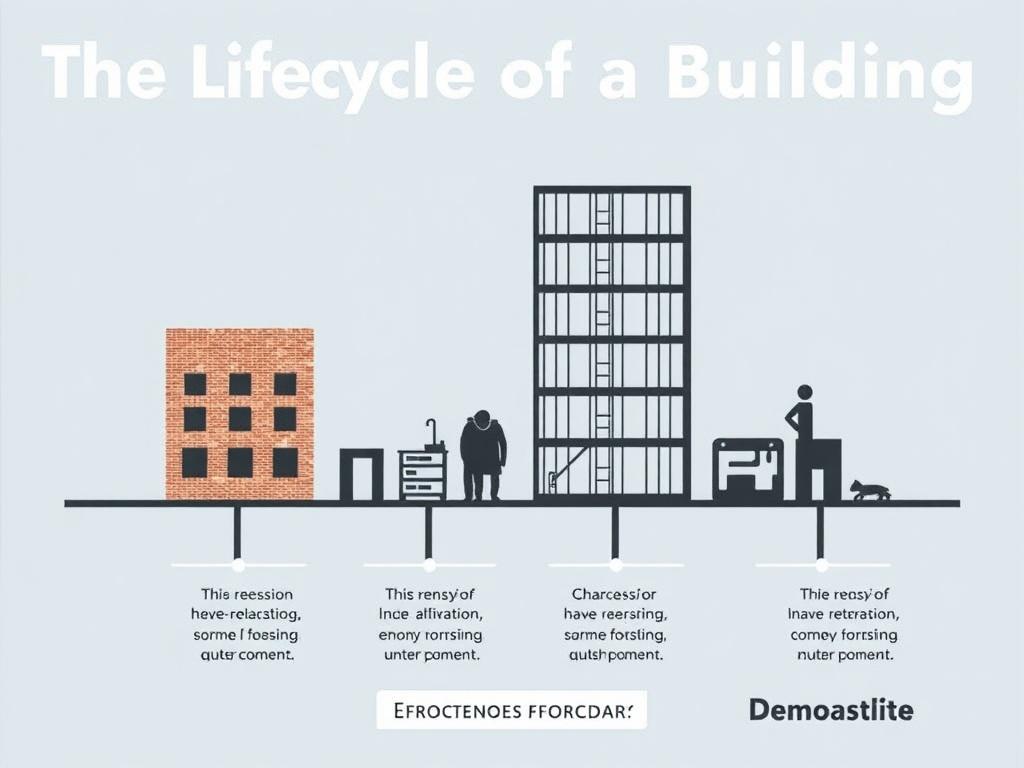
Routine maintenance extends asset life: roof inspections, HVAC filter changes, façade cleaning, and plumbing repairs are part of the daily rhythm. Adequate capital reserves for replacement items—roofs, elevators, heating equipment—prevent deferred maintenance from becoming a crisis. A preventive mindset is more economical than reactive repairs.
Maintenance records form a living account of the building’s health and inform future interventions. Digitizing these records into an asset management system improves planning and budgeting for replacements. In one apartment complex I managed, an organized CMMS reduced emergency calls and informed a cost-effective elevator modernization plan.
Stage 12: adaptation and renovation
Buildings rarely remain static; market shifts, technological change, and evolving codes prompt renovations. Adaptive reuse—turning warehouses into lofts or offices into labs—can extend a building’s useful life and conserve embodied energy. Thoughtful upgrades make older buildings competitive without starting from scratch.
Renovation decisions balance historical value, structural capacity, and modern performance needs. Sometimes minor interventions—improved insulation, new windows, or upgraded HVAC—deliver major gains. Other times, whole-floor reconfigurations or seismic retrofits are necessary to meet contemporary requirements.
Stage 13: performance improvement and retrofits
As energy codes tighten and sustainability goals deepen, retrofits become a central strategy. Upgrading lighting to LEDs, installing efficient chillers, and improving building controls can dramatically lower operating costs. Deep energy retrofits combine envelope improvements, system replacements, and renewable integration for maximal impact.
Financing options exist specifically for retrofits, including green loans, energy performance contracts, and incentives from utilities. These mechanisms can align owner interests with long-term performance improvements and make ambitious upgrades financially feasible. Successful retrofits often start with clear benchmarking and measurable targets.
Stage 14: monitoring and post-occupancy evaluation
Post-occupancy evaluation (POE) assesses how well a building meets occupant needs and performance goals. Surveys, sensor data, and utility analysis reveal both successes and shortcomings. Conducting POEs closes the feedback loop between design intent and actual use, informing future projects and operational tweaks.
Long-term monitoring also supports claims about sustainability and resilience, which matter to investors and regulators. Data-driven decisions—like adjusting setpoints or replacing systems based on measured performance—reduce waste and improve occupant comfort. Owners who ignore this data miss opportunities for improvement and savings.
Stage 15: decision point—reuse, retrofit, or demolition
Eventually, every building confronts a fork in the road: adapt and modernize, mothball, or demolish. This decision depends on economics, structural condition, zoning, and cultural value. Adaptive reuse preserves embodied carbon and community fabric, but it can be costly if structural or code upgrades are extensive.
Demolition may be preferable when the building is unsafe, functionally obsolete, or when land value justifies replacement. However, thoughtful analysis often uncovers hybrid options like partial deconstruction or façade retention that preserve character while enabling new development. Evaluating all options requires lifecycle cost analysis and stakeholder input.
Deconstruction versus demolition: an informed comparison
Demolition is the rapid teardown of a building, usually with heavy machinery, minimizing labor but producing mixed waste. Deconstruction is a slower, more labor-intensive process that salvages materials and components for reuse or recycling. The choice between them affects waste streams, embodied carbon outcomes, and local job creation.
| Aspect | Demolition | Deconstruction |
|---|---|---|
| Speed | Fast | Slower |
| Labor intensity | Lower | Higher |
| Material recovery | Low | High |
| Embodied carbon impact | Higher | Lower |
| Cost | Usually lower upfront | Often higher upfront, potential resale recovery |
Choosing deconstruction can divert substantial materials from landfills—doors, timber, fixtures, and masonry bricks are often reusable. Some jurisdictions incentivize salvage, and resale of reclaimed materials can offset part of the cost. But deconstruction requires staging, careful sequencing, and markets for recovered components.
Environmental and social considerations at end of life
End-of-life choices carry environmental consequences: demolition debris contributes to landfill volume and requires energy to dispose, while material reuse reduces demand for virgin resources. Social impacts also matter—historic preservation maintains cultural identity, and salvaging materials can create local jobs. These human dimensions should factor into demolition planning.
Onsite recycling and careful waste management can mitigate impacts even when demolition is necessary. Crushing concrete for aggregate, separating metals for recycling, and salvaging fixtures reduce total embodied impacts. Planning for waste diversion should be part of the demolition contract, not an afterthought.
Lifecycle assessment and tools for decision-making
Lifecycle assessment (LCA) quantifies environmental impacts over a building’s life, from material extraction through construction, operation, and demolition. LCA tools help compare scenarios—new construction versus retrofit, demolition versus deconstruction—by translating choices into carbon, energy, and resource metrics. This data-driven approach clarifies trade-offs.
Integrating LCA into early design and procurement can change material choices and justify higher upfront costs when long-term benefits are clear. Several software platforms provide environmental product declarations (EPDs) and whole-building LCA outputs, and some jurisdictions now require LCA for major projects. Using these tools increases transparency and accountability.
Regulatory environment and policy levers
Codes and policies shape building lifecycles by setting minimum performance requirements and offering incentives for sustainable choices. Energy codes, green building certifications, and demolition ordinances nudgestakeholders toward more efficient or less wasteful practices. Policy evolution has accelerated demand for low-carbon and resilient buildings.
Tax policies and subsidies also influence decisions: historic tax credits encourage preservation, while brownfield grants can spur cleanup and redevelopment. Municipalities can require salvage plans for demolition or offer expedited permitting for adaptive reuse projects. Policy design matters because small regulatory changes lead to large shifts in behavior.
Economic lifecycle considerations and depreciation
A building’s financial life intersects with its physical life in complex ways. Depreciation schedules, maintenance budgets, and market expectations define how owners approach repairs and upgrades. Short-term cost cutting can accelerate deterioration and increase total lifecycle expense, while strategic investment preserves value and functionality.
Lifecycle costing compares up-front capital with operating and end-of-life expenses to find the most cost-effective pathway. For example, spending more on durable cladding or higher-efficiency equipment can reduce replacement cycles and operational cost, yielding better returns over decades. Investors who model these dynamics make smarter, more resilient choices.
Stakeholders and their roles through the lifecycle
Many actors shape a building’s life: owners, developers, architects, engineers, contractors, facility managers, tenants, regulators, and the community. Each brings perspectives and constraints—owners focus on financials, designers on form and function, and facility managers on long-term operability. Effective projects align these interests early and often.
Tools like integrated project delivery and collaborative contracting help bridge conflicting priorities by sharing risk and reward. Engaging facility managers during design, for instance, improves maintainability. I’ve seen projects where early operations involvement reduced lifecycle costs by identifying service access issues before construction began.
Risk management and resilience
Risk runs through the entire lifecycle: cost overruns during construction, equipment failure in operation, or climate-driven hazards at end of life. Risk management involves contingency planning, insurance, resilience measures, and careful contractual language. Building for resilience increases upfront cost but lowers the probability of catastrophic loss.
Climate change imposes new considerations: rising flood plains, stronger storms, and heat extremes demand adaptive design and updated maintenance regimes. Resilience measures such as elevated mechanical rooms, floodproofing, and passive cooling strategies protect both people and assets across the building’s life. Anticipatory design reduces future disruption and expense.
Technology shaping the lifecycle
Technology is changing how buildings are conceived, built, operated, and dismantled. BIM, digital twins, drones for inspection, smart sensors, and prefabrication streamline coordination and improve performance. These tools create a continuity of information that follows a building from design through demolition, preserving institutional knowledge.
IoT sensors and analytics enable condition-based maintenance rather than calendar-based schedules, saving cost and improving reliability. Digital twins let owners simulate retrofit scenarios or estimate residual value of materials at end of life. As these technologies become more accessible, lifecycle management grows more precise and proactive.
Materials choices and their long-term implications
Material selection influences durability, repairability, and end-of-life options. Timber offers carbon storage and easy disassembly but requires protection from moisture and pests. Concrete provides longevity and fire resistance but carries significant embodied carbon. Recognizing these trade-offs early leads to smarter mixes of materials for intended lifespans and reuse strategies.
Emerging materials—cross-laminated timber, low-carbon concrete, and recyclable composites—expand options for sustainable construction. Specifying products with third-party certification and clear end-of-life pathways makes reuse and recycling more likely. The most sustainable solution often combines material performance with the ability to reclaim or recycle at the end of service.
Community and cultural values in lifecycle decisions
Buildings anchor memory and identity; demolishing a cherished structure can provoke public outcry, while preserving it can anchor neighborhood renewal. Community input during planning influences acceptability and long-term stewardship. Respecting cultural values often leads to better outcomes than technical reasoning alone.
Adaptive reuse projects frequently deliver strong social returns by retaining familiar streetscapes and providing continuity. I remember a neighborhood that rallied to save an old theater; the restoration brought new businesses, tourism, and a renewed sense of civic pride. These intangible benefits factor into lifecycle value even if they don’t appear on a balance sheet.
Case study: adaptive reuse of an industrial building
A decade ago I worked on converting a 1920s brick factory into mixed-use space. The project preserved the exterior masonry and sawtooth roof while inserting modern insulation and mechanical systems. Reuse saved embodied carbon, maintained neighborhood character, and created flexible floor plates attractive to small companies and studios.
Challenges included asbestos remediation and limited vertical circulation, which required creative structural and mechanical solutions. Salvaged timber beams found new life in tenant build-outs, and rooftop solar panels added operational savings. The project demonstrated that careful planning and stakeholder collaboration can make reuse both feasible and profitable.
Case study: controlled demolition and material recovery
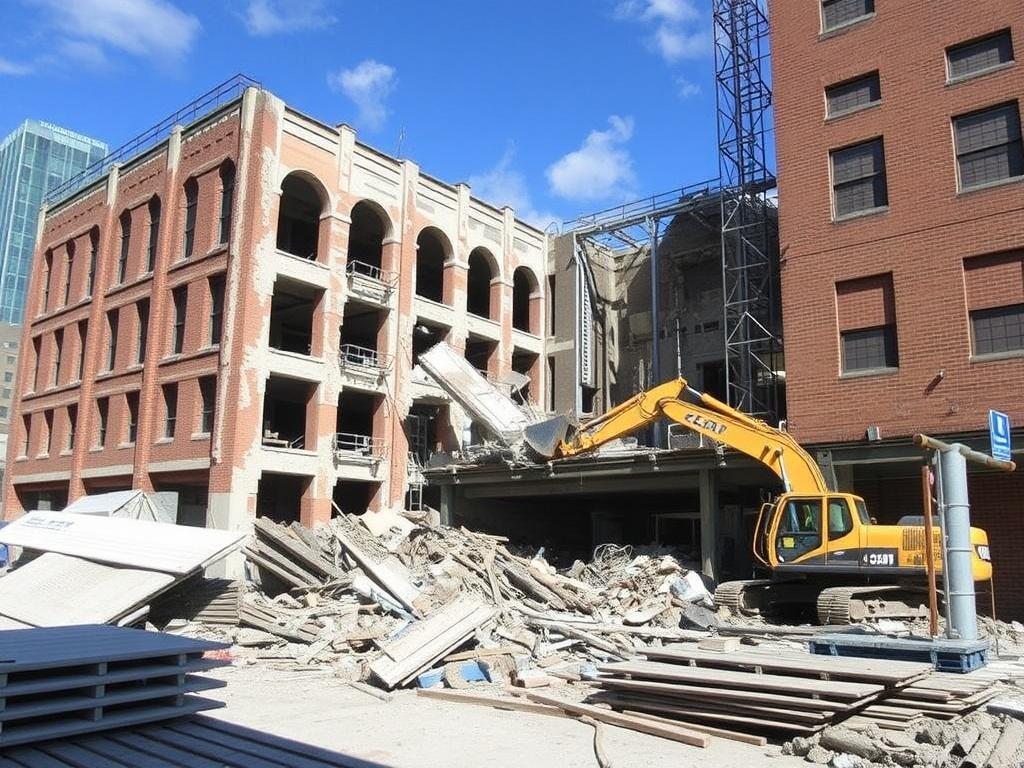
A recent municipal project involved demolishing a structurally compromised civic building while maximizing salvage. The contractor implemented staged deconstruction for interior components, separated metals and concrete onsite, and sourced a local recycler for masonry. This approach reduced landfill waste and recovered valuable materials for local markets.
Coordination with salvage buyers and early sorting plans were crucial to success. Although the deconstruction phase extended the schedule slightly, recovered material value and reduced disposal costs improved the project’s overall environmental score. The community appreciated the effort to minimize waste from a necessary demolition.
Checklist for lifecycle-conscious decision-making
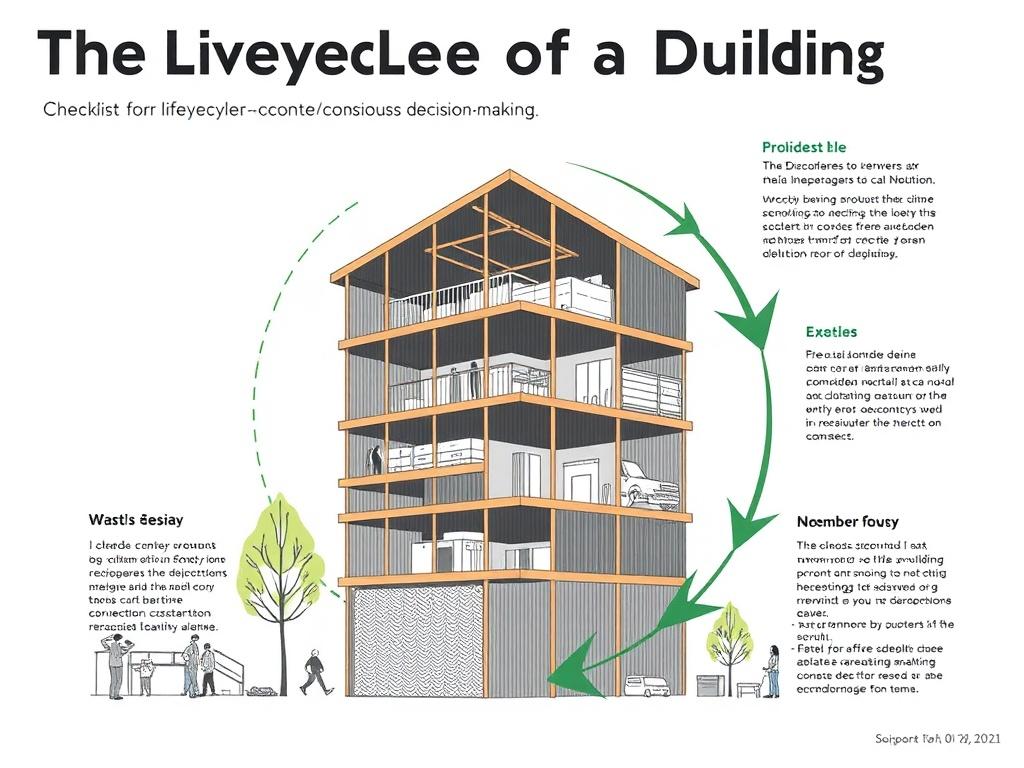
A practical checklist helps owners and design teams align short-term activity with long-term outcomes. Key items include early LCA, integrating operations staff in design, designing for disassembly, considering adaptive reuse, planning waste management for demolition, and budgeting for long-term maintenance reserves. These steps reduce surprises and optimize value across decades.
- Conduct early feasibility and LCA to compare scenarios.
- Engage operators during design to maximize maintainability.
- Choose materials with reuse or recycling potential.
- Plan for deconstruction or salvage in contract documents.
- Invest in monitoring systems to inform future decisions.
Using this checklist in tandem with collaborative procurement and technology tools helps ensure that lifecycle thinking is more than rhetoric and actually shapes outcomes. The more disciplined the approach, the better the long-term results.
Emerging trends that will reshape lifecycles
Several trends stand to alter how we think about building lifecycles: circular economy practices, stricter embodied-carbon regulations, wider adoption of modular construction, and marketplaces for reclaimed materials. These shifts lower barriers to reuse and make end-of-life planning a standard project component. Expect policy and market forces to accelerate adoption.
Another trend is performance-based codes that reward measured outcomes rather than prescriptive methods. When owners can demonstrate energy, resilience, and waste metrics, they have more latitude to innovate across the lifecycle. The net effect is a richer toolkit for delivering buildings that are useful, efficient, and easier to retire responsibly.
Practical tips for owners and managers
Owners and facility managers can influence lifecycle outcomes significantly through everyday choices. Maintain detailed records, invest in training for operations staff, prioritize preventive maintenance, and keep an eye on market shifts that could make adaptive reuse attractive. Small investments today often avoid large expenditures tomorrow.
Additionally, establish a replacement reserve and schedule periodic condition assessments. An accurate picture of asset health supports strategic decisions about retrofits or end-of-life timing. Transparent reporting to stakeholders—tenants, lenders, and regulators—builds trust and often simplifies future transactions.
How professionals can embed lifecycle thinking in practice
Design and construction professionals can advocate for lifecycle thinking by incorporating LCA into proposals, specifying reversible connections for future disassembly, and designing systems that are accessible for maintenance. Early workshops that align clients, operators, and contractors on lifecycle objectives foster shared responsibility and better outcomes.
Education matters: training teams on durable detailing, material flows, and salvage opportunities creates institutional capacity. When lifecycle considerations become part of standard practice rather than an optional add-on, projects deliver greater value and fewer environmental surprises.
Final reflections on buildings as living systems
Buildings are not static artifacts; they are systems that interact with people, economies, and ecosystems over time. Treating them as living sequences—born in concept, maturing through use, and ultimately being reborn as materials or memories—changes how we invest, design, and care for our built environment. That perspective helps align short-term pressures with long-term stewardship.
Whether you are a developer, designer, manager, or occupant, you play a role in that lifecycle. Small choices ripple across decades: the materials you choose, the attention you give to maintenance, and the willingness to adapt older buildings for new uses all matter. Thoughtful stewardship ensures that the next generation inherits not just structures, but opportunities.