
Sound is more than background clutter or pleasant music; it sculpts how we experience space. When a classroom lets a teacher’s voice cut through clearly, when an open-plan office avoids that constant hum of distraction, or when a restaurant feels intimate rather than chaotic, purposeful design is behind it.
Good acoustic design often goes unnoticed because it quietly does its job: it reduces stress, improves speech intelligibility, and supports the intended function of a room. Poor acoustic decisions, on the other hand, are immediately obvious and can derail an otherwise excellent building.
Why acoustics matter in buildings
People respond to sound almost instinctively. Noise can raise heart rates and lower concentration, while clarity of speech and controlled reverberation can make communication effortless. Designers who treat sound as a core element influence occupant well-being, productivity, and satisfaction.
Beyond comfort, sound control protects privacy and supports safety. In healthcare and legal settings, for example, confidentiality depends on preventing intelligible speech from traveling between rooms. In large venues, clear audio ensures announcements reach everyone and emergency messages are heard and acted upon.
Finally, buildings are long-term investments. Addressing acoustic issues once a facility is occupied is often disruptive and costly. Integrating acoustic thinking early saves money, preserves design intent, and creates spaces that perform as intended for decades.
Fundamentals of sound for designers
What sound is and how we measure it
Sound is pressure waves moving through air. Those waves are characterized by frequency (pitch), amplitude (loudness), and time-varying behavior (how a sound starts and decays). Humans perceive frequency roughly between 20 Hz and 20 kHz, but building-relevant issues most often concentrate in the 100 Hz–5 kHz band.
Loudness is measured in decibels, a logarithmic scale where every 10 dB increase roughly corresponds to a perception of twice as loud. Because perception is logarithmic, small reductions in dB can feel substantial to occupants. For building work we often rely on dBA, which weights sounds according to human hearing sensitivity.
Key acoustic metrics designers use
Some metrics repeat across every project: reverberation time (RT60), sound transmission class (STC), impact insulation class (IIC), and background noise criteria like NC or dB(A). RT60 indicates how long sound decays in a space; STC measures how well a partition blocks airborne sound; IIC addresses impact noises through floors.
Another useful metric is speech transmission index (STI) or clarity measures used in performance spaces. These metrics tie directly to human perception—STI correlates with how intelligible speech will be in a room, and clarity indices show whether music will sound defined or muddy.
Room acoustics: balancing absorption, diffusion, and reflection
The role of reverberation time
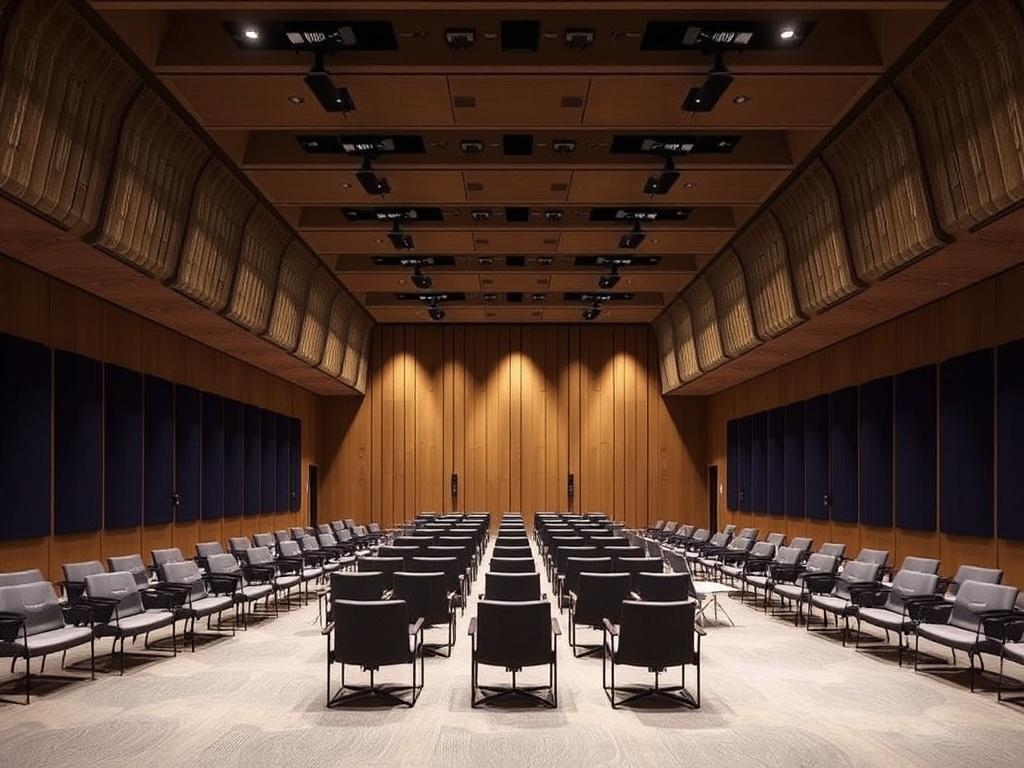
Reverberation is the collective echo of reflections in a room. Too much reverberation blurs speech and music; too little makes a room feel dead and unnatural. The appropriate decay time depends on use: classrooms, offices, and hospitals demand short decay times to favor speech intelligibility, while concert halls often require longer times to enrich music.
The Sabine formula gives a first-order estimate of RT60: RT60 = 0.161 × volume / total absorption. While the formula is a simplification and less accurate in very absorptive or highly irregular rooms, it gives a useful starting point for early design iterations.
Absorption, diffusion, and reflection explained
Absorptive materials convert sound energy into heat and reduce reflections. Diffusers scatter sound, breaking up strong reflections and helping create an even sound field without deadening a room. Reflective surfaces, used deliberately, can project sound and reinforce certain acoustic behaviors.
Effective designs combine all three. For example, a lecture hall often uses absorptive finishes at rear walls to control reverberation while placing angled reflective panels near the front to project the speaker’s voice to the audience. Thoughtful placement often matters more than choosing the most absorptive product.
Low frequencies are the stubborn ones
Low-frequency sound is harder to control because it requires more mass or deeper cavities to absorb. Thin foam or lightweight textiles do relatively little below 200 Hz. Controlling bass often means treating room geometry, using tuned bass traps, or increasing partition mass.
Designers need to pay special attention to low-frequency issues in small rooms and multi-family buildings. Bass can transmit through structure and flanking paths that appear soundproof in the midrange but fail at lower frequencies.
Materials and treatments that work
Choosing absorptive finishes
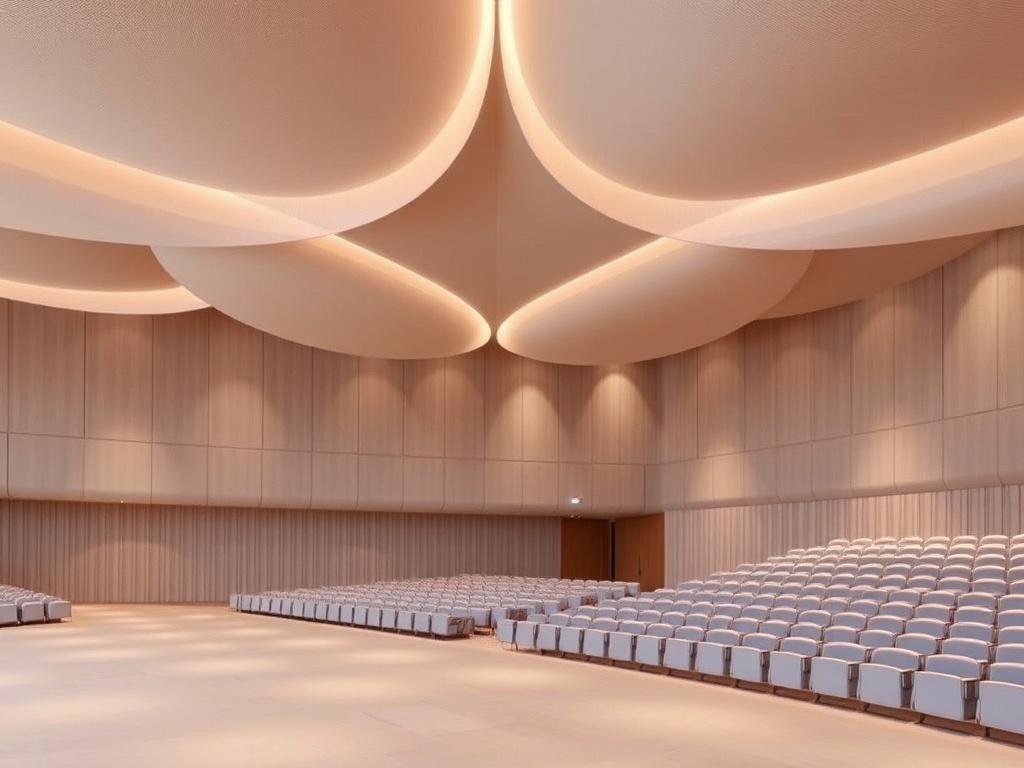
Not all absorptive products are created equal. Porous absorbers like mineral wool panels and acoustical ceiling tiles are effective across mid to high frequencies. Fabric-wrapped panels and thick draperies add absorption and are visually flexible. For critical spaces, use tested panels with published absorption coefficients.
Ceiling plenum treatments and hung absorbers are often cost-effective because they intercept sound where it gathers. Placing absorption at first-reflection points in small rooms—on walls adjacent to a stage or at speaker/listener reflection points—yields big benefits for relatively small material areas.
Mass, damping, and resilient connections
Blocking sound generally relies on mass, airtightness, and vibration isolation. Heavy layers like multiple gypsum board sheets, concrete, or masonry add mass to partitions and raise STC. Resilient channels, clips, and floating floors decouple surfaces to reduce structure-borne transmission.
Seals matter. Gaps at outlets, penetrations, and perimeter joints are common weak spots. Proper detailing—acoustic sealant, gaskets, and overlap joints—prevents small gaps from undermining otherwise robust assemblies.
Approximate absorption coefficients at 500 Hz
Below is a compact reference showing typical mid-frequency absorption values. These are approximate and intended for early-stage comparisons; always consult manufacturer data for design work.
| Material | Approx. α at 500 Hz | Typical use |
|---|---|---|
| Concrete / poured slab | 0.02 | Structural surfaces, low absorption |
| Glass (single pane) | 0.03 | Windows, facades |
| Gypsum board (plain) | 0.05 | Interior walls, ceilings |
| Carpet on pad | 0.25 | Offices, corridors |
| Heavy curtain | 0.30–0.60 | Theaters, flexible spaces |
| Fabric-wrapped panel (2″) | 0.70–0.90 | Acoustic treatment |
| Open-cell foam diffuser | 0.20–0.60 | Diffusion/absorption hybrid |
Windows, doors, and glazing strategies
Glass is a weak link for both airborne and flanking noise. Single-pane glazing transmits midrange energy easily and performs poorly at low frequencies. Laminated and double- or triple-glazed units with properly sealed frames substantially improve isolation.
Acoustic glazing often combines different pane thicknesses and airspace depths to disrupt resonance. But glazing alone won’t solve noise from mechanical equipment or structure-borne sources; coordination with wall and frame design is necessary.
Mechanical systems: the silent saboteurs
Background noise and HVAC
Mechanical systems create background sound that competes with speech and masks critical signals. Fans, ducts, and diffusers need to be specified for noise level targets early in the design. HVAC noise is often the key determinant of a room’s usable background noise level.
Designers use criteria like NC or NC-based target levels for different spaces—classrooms typically aim for lower values than cafeterias. Achieving those targets requires slow fan speeds, large ducts with lined plenums, and low-velocity diffusers.
Vibration isolation and duct-borne noise
Noise travels through solid structure and via ductwork. Isolating noisy equipment on resilient mounts, using flexible connectors on ducts, and adding sound attenuators where needed reduces transmitted energy. Avoiding rigid connections between noisy machinery and structure is a simple, effective rule.
Inline attenuators and lined plenums add pressure drop and need to be balanced with airflow and energy considerations. Collaborate with mechanical engineers to reconcile acoustic needs with HVAC performance and energy budgets.
Geometry and layout: designing with sound in mind
Room shape and directivity
Geometry influences how sound propagates. Parallel reflective surfaces can create strong flutter echoes; concave surfaces can focus sound and create hotspots. Strategically angled walls, diffusing elements, and nonparallel surfaces help eliminate unwanted focusing and standing waves.
For spaces intended for speech, bring the listener and speaker into a coherent acoustic relationship by controlling first reflections and maintaining manageable room volumes. For music, geometry becomes a tool for shaping bass response and early reflection patterns.
Open plan spaces: tradeoffs and mitigation
Open offices and large lobbies offer flexibility and daylight but create challenges for speech privacy and distraction. Acoustic zoning using partial-height screens, absorptive ceiling clouds, and strategic layout of collaborative areas helps balance openness with privacy.
Sound masking—low-level broadband noise introduced to raise ambient levels and reduce intelligibility of speech—can be a useful tool, but it must be tuned carefully. Poorly implemented masking becomes another source of annoyance rather than a remedy.
Measurement and modeling: tools of the trade
On-site measurement practices
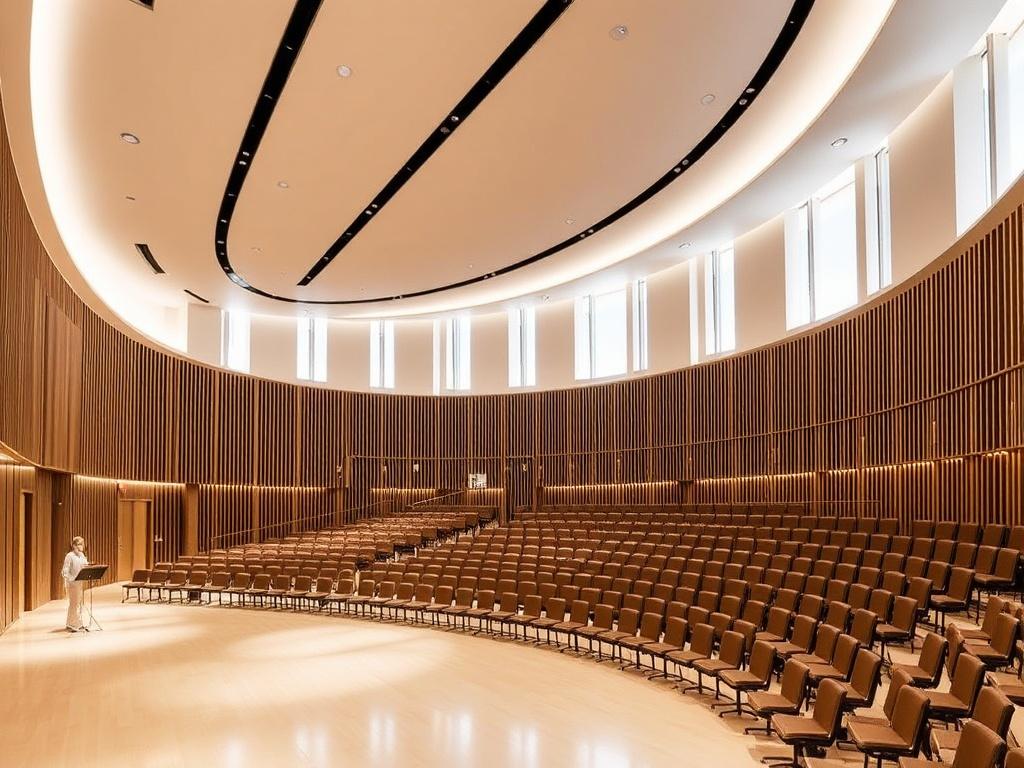
Field measurements validate design assumptions and identify problems after construction. Common tests include RT60, background noise (dBA), and partition STC/IIC testing. Good measurement requires calibrated equipment, controlled conditions, and repeatable protocols.
Shortcuts seldom work. An RT60 measured while HVAC is running or while a hallway door is open gives ambiguous results. Plan tests with mechanical shutdowns and known source levels for meaningful data.
Predictive modeling and its limits
Acoustic modeling tools—ray tracing, image source methods, boundary element and finite element methods—help predict speech intelligibility, reverberation, and sound transmission. These tools are invaluable during design, but they require accurate geometry, material data, and realistic source descriptions.
Use models to compare design options and to find weak spots. Don’t treat modeling output as perfect; validate critical assumptions with measurements or scale models where possible, especially for unusual geometries or highly critical spaces.
Codes, standards, and performance targets
Building codes increasingly reference acoustic performance, and many institutions adopt standards as part of their design requirements. Familiar norms include STC for walls and partitions, IIC for floor impact noise, and criteria like ANSI/ASA and ISO documents for specialized environments.
Typical design targets are useful starting points rather than absolutes. For example, multi-family partitions often aim for STC 50–60 to provide reasonable privacy, while classrooms target low background noise (often near 35 dBA) and RT60s in the 0.5–0.8 second range depending on size.
Always confirm relevant local code requirements and client expectations early. A hospital suite, a recording studio, and an open-plan office each carries different regulatory, functional, and occupant-driven priorities.
Design process: a step-by-step approach
Step 1: Clarify functional goals
Begin by asking how the space will be used and what acoustic outcomes matter most: speech intelligibility, low background noise, music quality, or privacy. Prioritize these goals because they guide tradeoffs throughout the project.
Translate those goals into measurable targets—RT60 ranges, background dBA levels, STC/IIC requirements—so decisions are anchored to performance rather than intuition alone.
Step 2: Coordinate early with engineering
Mechanical and electrical systems are frequent sources of acoustic problems. Coordinate duct routing, equipment placement, and vibration isolation during schematic design. Early coordination prevents having to retrofit solutions that conflict with the architectural vision.
Use simple ruled drawings to show equipment locations and likely noise sources so everyone understands the implications for partitions, ceilings, and finishes.
Step 3: Model and iterate
Run room and partition models during design development to identify weak points. Compare alternative materials and lay out initial absorber placement, diffuser locations, and glazing specifications. Treat modeling as an iterative tool rather than a one-time check.
As details solidify, refine the models with manufacturer data and update geometry for accurate predictions. Keep stakeholders informed when iterations change performance expectations or budgets.
Step 4: Detail and document
Good acoustic performance depends on details: seals, connections, resilient clips, and penetrations. Document these details in construction drawings and specifications so the contractor knows exactly how to build the assemblies.
Include clear installation notes for acoustic sealants, backer rods, and mechanical isolation. Visual details of wall intersections and penetrations often prevent field improvisation that undermines performance.
Step 5: Verify during construction
Inspect partitions, seals, and mechanical isolation during construction, not after occupancy. Field checks catch missing seals, improperly installed clips, and incomplete penetrations that can degrade performance dramatically.
Where possible, perform witness tests of critical assemblies—preliminary STC/IIC tests or simple noise checks—before finishes conceal potential problems.
Step 6: Commission and measure
After installation, perform full measurement tests: RT60, background noise, and partition performance where required. Commissioning validates that the space meets the agreed-upon targets and gives the owner confidence in the investment.
If tests show issues, prioritize corrective actions that are least disruptive and most effective. Often the fix is targeted sealing, adding absorption to problematic reflection points, or tuning HVAC equipment.
Real-world examples and practical lessons
Several years ago I worked on a renovation of a mid-sized classroom wing. The original rooms had reflective concrete ceilings and a persistent background hum from old HVAC units. By lowering the plenum, adding absorptive ceiling clouds and relocating small fans, we reduced reverberation and cut background noise noticeably.
The most striking result came not from replacing walls but from addressing the plenum and first-reflection surfaces. Students reported clearer instruction, and teachers needed to raise their voices far less, which directly reduced vocal fatigue during the day.
In another project—a boutique restaurant—owners wanted a lively atmosphere but not a cacophony. We combined angled wood slats for controlled reflections, absorptive panels concealed behind artwork, and heavy curtains for flexible zones. The result preserved tonal warmth while keeping conversational levels comfortable.
Cost, lifecycle, and maintenance considerations
Acoustic treatments are a long-term investment that affect cleaning, maintenance, and eventual refurbishment. Fabric-wrapped panels and open-cell absorbers are effective but require cleaning or periodic replacement in high-use environments. Hard surfaces last longer but may need additional layers to achieve the same performance.
Consider lifetime costs, not just first cost. A slightly more expensive ceiling system that performs better acoustically may save on HVAC power by allowing lower fan speeds, reduce complaints, and avoid expensive mid-life retrofits.
Common mistakes and how to avoid them
Many acoustic problems are avoidable with basic discipline. Common errors include relying solely on soft materials to solve isolation problems, neglecting seals and penetrations, and postponing acoustic coordination until after systems are selected.
Another mistake is overreliance on sound masking to fix poor design choices. Masking should be a last resort or a complement to a well-designed acoustic environment, not a substitute for inadequate partitions or absorptive treatment.
Practical checklist for designers and clients
- Define acoustic goals in measurable terms early in the program phase.
- Coordinate HVAC and equipment locations with acoustical priorities.
- Specify tested materials and include installation details for seals and isolation.
- Model critical rooms and update predictions as details evolve.
- Inspect acoustic details during construction and verify performance at commissioning.
Keeping this list in front of the design team prevents many of the reactive fixes that drive costs up and timelines out.
Emerging technologies and future directions
Active noise control systems, once limited to headphones and industrial settings, are finding niche building applications. They offer promise in specific scenarios—like long narrow ducts or specialized rooms—but they are not a universal solution. Passive strategies remain the foundation.
Smart materials and adaptive facades that change acoustic properties with occupancy hold interest for the future. Imagine a conference space whose wall absorption increases automatically for video calls and relaxes for social events. These technologies are emerging and worth watching as they mature and become cost-effective.
Integrating acoustics with sustainability and daylighting
Acoustic and sustainable goals often align but sometimes conflict. Exposed concrete slabs, popular for thermal mass and embodied carbon reduction, are acoustically reflective. Achieving good acoustics in that context requires adding absorptive elements in non-structural ways—ceiling clouds, suspended panels, or treated furniture.
Similarly, large glazed façades bring daylight but challenge sound isolation. Design strategies include using interior shading systems with acoustic properties, double-skin façades, or selective zoning so public-facing noisy areas don’t undermine quiet zones.
Working with clients and measuring success
Clients value acoustic outcomes when they are tied to occupant experience and operational goals. Use straightforward language and measured targets—don’t overwhelm clients with jargon. Demonstrate how acoustic decisions influence daily life: fewer overheard conversations, less vocal strain, and clearer emergency announcements.
Post-occupancy evaluations are invaluable. Collect occupant feedback and measure performance after move-in. Small adjustments after occupancy often yield disproportionate improvements in satisfaction and can justify initial acoustic investments.
Final thoughts on designing with sound
Treating sound as a material of design changes everything about how spaces perform and feel. It’s not an add-on to consider after finishes are chosen; it’s a thread that ties together structure, MEP systems, finishes, and layout. When designers accept that responsibility early, the result is buildings that support human activity rather than working against it.
Sound can be complicated, but the principles are straightforward: control sources, provide appropriate paths for reflections, block unwanted transmission, and verify performance. Those steps, combined with careful detailing and early coordination, produce resilient, comfortable, and healthy spaces.
Designers who embrace acoustic thinking create buildings where speech is clear, privacy is respected, and environments support the activities they host. In such places, good design suddenly feels effortless—because the soundscape has been shaped with intention.