
Quality on a construction site is not an abstract ideal; it’s the difference between a finished building that stands the test of time and one that demands costly repairs within years. This article walks through practical, field-proven approaches to ensure work meets design intent, regulatory requirements, and client expectations. The methods described are drawn from standards, industry practice, and my own time supervising projects where the decisions made at dawn shaped outcomes months later.
Defining quality: what we mean by control and assurance

Before diving into methods, it helps to separate two commonly conflated ideas. Quality assurance is the planning and systems that create the conditions for correct work, while quality control is the on-the-ground verification and tests that confirm those conditions were met.
Assurance sets the rules—procedures, training, and document control. Control checks the rules were followed—inspections, measurements, and acceptance testing. Both are necessary: assurance without control is wishful thinking; control without assurance is firefighting.
In practice, they overlap constantly. A good quality assurance plan includes the inspection points and testing regimes that quality control teams will execute, and QC findings feed back to improve the assurance system.
Industry standards and regulatory frameworks
Construction quality work typically sits on top of established standards: ISO 9001 for management systems, ACI and ASTM standards for concrete, AASHTO for highways, and local building codes for structures. These documents provide technical specs and procedural expectations that form the backbone of any robust program.
Adhering to standards reduces ambiguity between designers, contractors, and clients. For example, specifying ASTM testing frequencies for soil compaction or ACI acceptance criteria for concrete strength eliminates much of the negotiation at the pour site.
Regulatory inspections and third-party certifications add an outside check. Many public projects require accredited laboratory testing or agency auditors; even in private work, insisting on third-party oversight can protect both owner and contractor from later disputes.
Quality planning and the quality management plan
A focused quality management plan (QMP) transforms standards into project-specific instructions. The QMP should identify responsibilities, inspection hold points, sampling regimes, acceptance criteria, and document flow for change orders and nonconformances.
Creating the QMP early—during the bid or mobilization phase—lets you align subcontractors, suppliers, and the client. It becomes the contract’s appendix and the checklist used by field teams every day. When managers and tradespeople reference the same QMP, expectations match reality.
Include a simple escalation path in the QMP: who gets notified when tests fail, how decisions are made, and whether work will stop. Clear lines prevent delays that come from “who’s in charge” arguments on site.
Organizational roles and competency
Quality relies on people. A named quality manager, field inspectors, and testing technicians should be identified along with their qualifications. Competency matters more than titles—experience with the materials and methods used is crucial.
Routine tools like a competency matrix help: list tasks and required certifications, then map staff to those tasks. This prevents a well-meaning junior inspector from interpreting an ACI clause they don’t fully understand.
Training is an ongoing cost worth investing in. Short, targeted toolbox talks before critical operations—concrete pours, waterproofing, or structural welding—reduce errors dramatically and reinforce what the QMP requires.
Materials control: selection, acceptance, and traceability
Most defects begin with materials: wrong cement class, contaminated aggregates, or bolts with incorrect heat treatment. A materials management plan sets supplier prequalification criteria, delivery inspection steps, and traceability from receipt to installation.
Prequalify suppliers using performance history, certifications, and site references. On delivery, check certificates of conformance, batch numbers, and visual condition. For high-risk items, request factory test reports and arrange for independent laboratory verification.
Maintain simple but rigorous traceability records. Tag batches, log where each batch was used, and attach test results to those entries. When a problem surfaces, traceability shrinks the investigation time from weeks to hours.
Inspection and testing regimes
Inspection types vary by trade and risk: visual checks, dimensional verification, destructive tests, nondestructive testing (NDT), and laboratory analysis. Choose the mix based on consequence—critical structural welds deserve more stringent testing than plaster finishing.
Establish inspection checklists tailored to each activity. A concrete pour checklist might include slump, air content, temperature, batch ticket verification, and consolidation methods. Checklists make inspections repeatable and reduce missed steps.
Testing frequency should follow standards but be adjusted to site realities. During early pours, increase sampling to confirm supplier consistency, then reduce frequency once stability is demonstrated. Conversely, after a failure, raise the sampling rate until confidence is restored.
Nondestructive testing and where to apply it
Nondestructive testing methods—ultrasonic testing, magnetic particle inspection, radiography, and infrared thermography—are powerful when applied to structural connections, welds, and moisture-sensitive systems. They reveal hidden defects without sacrificing material.
NDT is not a silver bullet. It requires qualified technicians and careful interpretation. Use it where failure has high cost or safety implications, and combine NDT with destructive confirmation when needed to validate the method.
Process control: standard operating procedures and mock-ups
Reliable outcomes come from well-defined processes. Standard operating procedures (SOPs) for recurring activities—formwork erection, rebar tying, and membrane installation—reduce variation among crews and shift supervisors.
Mock-ups are one of the best investments in process control. Creating a full-scale sample of a complex assembly allows the design team, contractor, and owner to agree on workmanship standards before production runs begin. Fixing details on a mock-up avoids repeating mistakes on the finished building.
Document lessons from mock-ups. If a particular flashing detail needed an additional clip, incorporate that into the SOP and the QMP so every crew uses the improved method.
Document control and information flow
Construction projects generate a flood of documents: drawings, specifications, submittals, RFIs, test reports, and daily logs. Good document control ensures the team works from the latest information and that quality records are preserved for audits or claims.
Implement a document numbering and revision control system. Digital platforms with role-based access streamline distribution and reduce paper loss. Field teams should be able to pull the current drawing on a tablet and mark up discrepancies in real time.
Nonconformance reports (NCRs) are the nerve center of corrective action. Capture the issue, the responsible party, root cause hypotheses, and the corrective steps. Close NCRs only when evidence shows the corrective measure worked.
Measurement, metrics, and continuous improvement
Track measurable indicators: percent of passing inspections, number of NCRs per trade, rework hours, and on-time completion of hold-point inspections. Metrics turn anecdote into action and help prioritize where to invest quality effort.
Use Pareto thinking—focus first on the 20 percent of causes that generate 80 percent of problems. If three trades produce most NCRs, target their training and supervision rather than applying a blanket approach across all crews.
Continuous improvement requires feedback loops. Regularly review metrics in site meetings, test improvement ideas, and measure whether changes reduced defects. Small, sustained gains compound into noticeable performance differences over a project.
Technology and tools that speed verification
Modern tools reduce manual error and speed data capture. Drones provide quick visual surveys of large sites, thermography cameras locate moisture or voids, and laser scanners capture as-built geometry for comparison to design models.
Mobile inspection apps let inspectors fill out checklists, attach photos, and issue NCRs on the spot. The immediate capture of evidence and the timestamped trail simplify later analysis and reduce disputes about when an issue was first noticed.
Building information modeling (BIM) connects design and field operations. Clash detection in model space prevents costly coordination issues, while linking models to schedules and quality records allows efficient verification of installed work against design intent.
Internet of Things and sensors
IoT sensors for temperature, humidity, and concrete curing provide continuous measurements that traditional spot checks miss. For mass pours or long curing periods, sensor networks can detect deviations early and trigger corrective actions.
Sensors don’t replace judgment, but they provide data that empower smarter decisions. On one bridge project I oversaw, embedded temperature logs helped overlay heat of hydration patterns with early strength tests, reducing unnecessary form removal delays.
Risk-based inspection and prioritization
Not every element needs the same inspection intensity. Apply a risk matrix that considers likelihood of failure, consequence of failure, and detectability. High-consequence, hard-to-detect elements deserve more testing and independent review.
Examples include foundation pile integrity, seismic connections, and waterproofing below-grade. Label these as risk-critical in the QMP and allocate inspection resources accordingly. Doing so focuses scarce qualified personnel where they matter most.
Reassess risk as the project evolves. Change orders, unexpected site conditions, or supplier changes can increase risk in previously low-priority areas and require a quick pivot in inspection strategy.
Corrective action and root cause analysis
When defects occur, fix the immediate problem quickly but don’t stop there. Conduct root cause analysis to prevent recurrence. Tools like the “5 Whys” or fishbone diagrams help teams dig past symptoms to systemic causes.
Document corrective actions and their verification. For example, if grout strength failed in a masonry wall, corrective steps might include adjusting mixing procedures, retraining masons, and increasing sampling for the next three deliveries. Verify by subsequent passing tests and a reduced NCR count for the trade.
Ensure corrective actions are timely and proportionate. Small problems need simple corrections; systemic failures may require halting work until the issue is resolved to avoid compounding costs and rework.
Audits: internal and third-party
Audits provide independent checks of your quality system. Internal audits ensure the QMP is followed and can be scheduled monthly or by phase. Third-party audits provide impartial validation for owners and regulators.
Plan audits with clear scopes: procedural compliance, materials traceability, testing accuracy, or calibration of equipment. Use them not as punitive exercises but as opportunities to catch drift and reinforce best practices.
Follow-up on audit findings is where the value appears. Track corrective actions from audits to closure and measure whether the same issues reoccur in subsequent audits.
Calibration and equipment maintenance
Testing instruments and inspection tools must be calibrated and maintained. An out-of-calibration moisture meter or torque wrench yields unreliable results and false confidence. Keep a calibration log for every piece of critical equipment.
Define calibration frequency based on manufacturer recommendations and usage intensity. For busy labs, monthly checks may be appropriate; for occasional tools, quarterly or annual calibration can be sufficient when documented.
Don’t forget basic maintenance and storage. A corroded gauge or a cracked concrete cylinder mold introduces variability and undermines otherwise sound procedures.
Contractual mechanisms and incentives
Contracts shape behavior. Include quality requirements explicitly—required certifications, inspection hold points, and the consequences of defective work. When everyone knows the rules, disputes drop.
Incentives work when aligned with measurable outcomes like defect rates or warranty claims. Bonus structures for meeting quality thresholds can motivate contractors, but they must be paired with clear, objective measurement to avoid gaming the system.
Liquidated damages and warranty clauses transfer risk but don’t substitute for on-site oversight. Use contractual tools as part of a broader quality strategy, not as a single solution.
Creating a quality-first site culture
Processes and tests are only as effective as the people who use them. Building a culture that values workmanship encourages pride and reduces rework. Leadership sets the tone; site managers who prioritize quality influence daily decisions more than any memo.
Simple practices reinforce culture: inspect openly rather than in private, celebrate teams with few defects, and encourage crews to flag potential problems without fear of blame. When trades feel respected and supported, they are more likely to follow standards instead of cutting corners.
Reward practical suggestions from the field. Many process improvements are invented by hands-on workers who see a problem every day. Capture their ideas and pilot them. That turns frontline experience into systemic gains.
Common pitfalls and how to avoid them
Three recurring pitfalls appear on projects: insufficient planning, poor communication, and complacency after initial success. The first leads to reactive work, the second creates misaligned expectations, and the third allows small errors to compound into major failures.
Prevent these by building a solid QMP, maintaining rigorous document control, and keeping metrics in daily or weekly conversations. When a site slips from standards, respond quickly with targeted audits rather than vague admonitions.
Another pitfall is over-testing low-risk items while ignoring high-risk ones. Use risk-based inspection and watch for confirmation bias where teams focus only on areas they expect to fail and miss others that actually cause problems.
Real-world example: a bridge deck that refused to cure
On a bridge rehabilitation I supervised, the initial concrete pours showed inconsistent early strength. Daily on-site checks revealed temperature variations between batches, and the mixing plant’s batching sequence had been altered without notice.
We stopped operations, increased sampling, and implemented a corrected batching procedure. We added sensors to monitor curing temperatures and gave the crew a short training session on the new procedure. The problem was traced to a subcontractor’s attempt to save time, not to a materials defect.
The fix cost a day of lost production but saved weeks of potential rework and an expensive structural overlay. That experience reinforced the value of traceability, swift corrective action, and training combined with testing data.
Real-world example: waterproofing mock-up that saved a facade
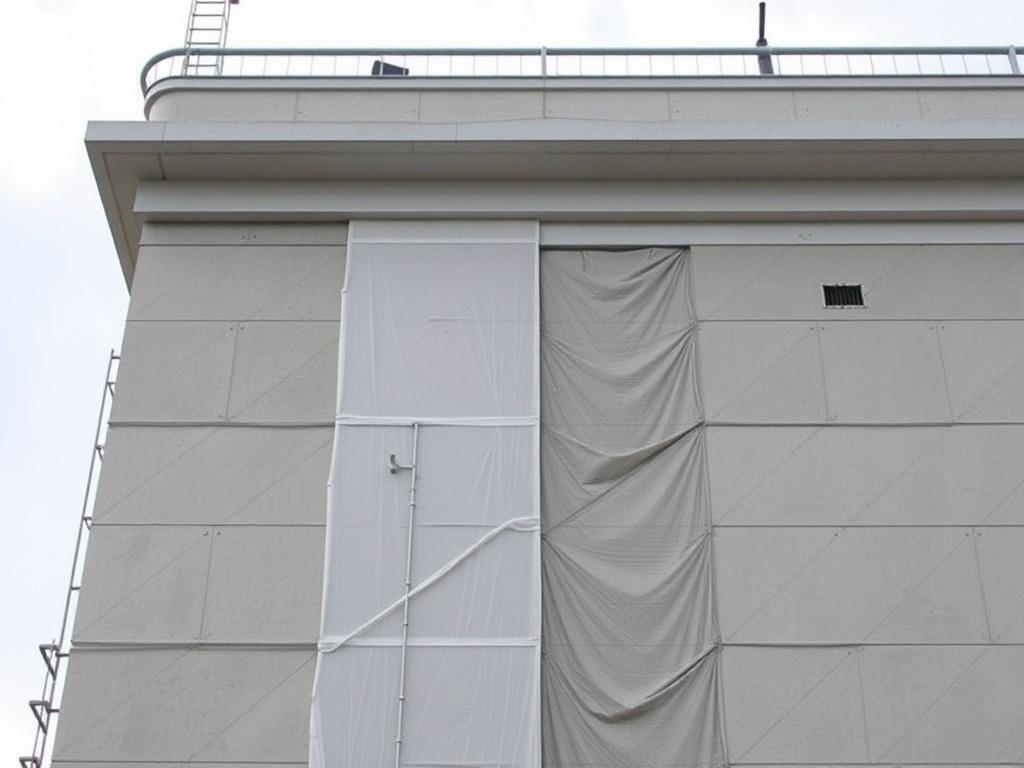
On a mid-rise residential building, the facade contractor proposed a complex flashing detail. Before committing, the project team required a mock-up that included window installs and the proposed flashing sequence. The mock-up leaked during testing.
Because the defect was caught early, the team redesigned the flashing, updated the SOP, and retrained installers. When full installation proceeded, the mock-up’s lessons prevented a costly and hard-to-repair leak that would have shown up after cladding installation.
Mock-ups cost time and money up front, but in projects with concealed assemblies they often pay back several times over in avoided remedial work.
Checklist: essential quality actions by phase
A compact table helps teams remember key activities during different project phases. Use it as a quick reference to ensure no critical quality step is missed.
| Phase | Essential quality actions |
|---|---|
| Preconstruction | Develop QMP, prequalify suppliers, identify critical hold points, arrange labs |
| Mobilization | Set up document control, calibrate equipment, conduct kickoff training, build mock-ups |
| Execution | Daily inspections, testing per plan, NCR management, metrics tracking |
| Closeout | Final audits, as-built verification, warranty documentation, lessons learned |
Practical tips for smaller contractors

Smaller firms often lack dedicated QA staff but can still achieve high quality by standardizing simple practices. Use plain-language checklists, require certificate of conformance on deliveries, and keep a single, well-organized quality binder on site.
Outsource specialized testing and NDT to accredited labs rather than attempting to run complex tests in-house. Build relationships with a few reliable suppliers instead of rotating among numerous vendors—consistency matters.
Make inspections habitual. A brief daily walkthrough with a short checklist and photos is more valuable than a long, infrequent inspection that arrives too late to correct poor practices.
How to measure return on quality
Quality investments show up as fewer change orders, reduced rework, lower warranty claims, and higher client satisfaction. Track rework hours and costs over time; reducing even 5 percent of rework can translate into meaningful project savings.
Compare projects using a simple scorecard: inspection pass rate, NCR frequency, and warranty claims per square foot. Over several projects, patterns emerge that justify spending on training, sensors, or third-party oversight.
Remember that not all benefits are immediate. Reputation and repeat business from delivering high-quality work are powerful long-term returns that rarely show up on a single job’s balance sheet.
Bringing it together: an implementation roadmap
Implementing stronger quality methods need not be disruptive. Start with these steps: define the QMP, prioritize high-risk elements, implement targeted inspections, and introduce simple metrics. Iterate and expand based on results.
Start small: pick one trade or one system to improve this project, and apply the full suite of methods—SOPs, mock-ups, testing, and training. Use the success as a case study to drive broader adoption on subsequent projects.
Leadership commitment is the fastest accelerator. If owners and senior management visibly support quality—by allocating time, budget, and authority—field teams will follow.
Final thoughts on durable results
Quality on a construction site is the sum of many small decisions made daily. Systems, standards, and tests provide structure, but the decisive factor is people making the right choice when the plan hits reality.
Invest in clarity up front, measure what matters, and respond quickly when reality diverges from the plan. With the right mix of prevention, verification, and corrective action, projects finish on time, meet performance expectations, and avoid the expensive ripple effects of poor quality.