
Modular and prefabricated construction has moved from niche curiosities to mainstream solutions that reshape how we design, build, and occupy buildings. This piece offers a practical, wide-angle look at the methods, benefits, challenges, and real-world practices behind offsite construction without jargon-heavy detours.
Whether you are an architect, developer, contractor, or curious homeowner, the following pages will unpack the technology, logistics, regulations, and design thinking that make modular work. I’ll share both industry overview and hands-on insights so you can judge when prefabrication is the right tool for a project—and when it isn’t.
Defining modular and prefabricated construction
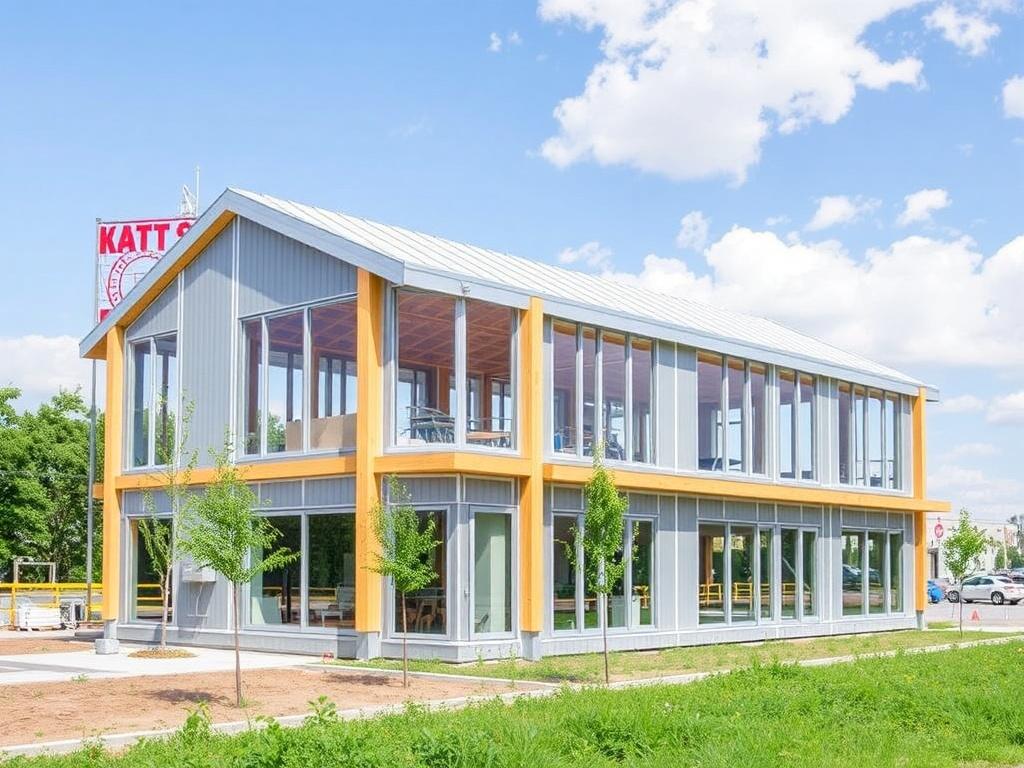
At its core, prefabrication means assembling building components away from the final site, in a controlled factory setting. Modular construction is a specific type of prefabrication where whole volumetric units—complete rooms or groups of rooms—are built offsite, finished, and then transported to the site to be joined together.
The distinction matters because panelized systems (walls, floors, roof panels) and componentized systems (bathroom pods, MEP skids) are counted as prefabrication but differ in on-site labor requirements. Both approaches share the fundamental advantage of shifting work from unpredictable field conditions into a repeatable, quality-controlled environment.
Terminology across the industry varies: manufacturers, contractors, and clients will sometimes use “modular,” “offsite,” “factory-built,” and “prefab” interchangeably. For clarity in this article, I use “prefabricated” as the umbrella term and “modular” when referring to volumetric, unitized construction.
Brief history and evolution
Factory-built construction has roots in the 19th century, from kit houses shipped by rail to wartime barracks and postwar mass housing. Those early examples focused on speed and economy rather than finesse, which shaped perceptions of prefab as low-quality for decades.
Advances in materials, manufacturing precision, and logistics have changed that narrative. Over the last twenty years, rising labor costs, skilled labor shortages, and demand for faster schedules have pushed high-quality prefabrication into mainstream architecture and commercial construction.
Today’s factories use CNC machines, automated assembly lines, and digital workflows that integrate BIM and ERP systems. That evolution means prefabricated buildings can match or exceed site-built standards for durability, performance, and aesthetics.
Types and methods of offsite construction
Offsite construction is not a single technique but a spectrum of approaches ranging from component prefab to complete volumetric modules. Each method carries trade-offs in speed, transport complexity, and architectural flexibility.
Below are the common categories you’ll encounter, with practical notes about how they get used in projects.
Volumetric modular construction
Volumetric modules are three-dimensional units—like hotel rooms, apartment units, or classroom boxes—built complete with internal finishes, fixtures, and mechanical systems. These modules are transported to site and stacked or joined like Lego pieces to form the final structure.
Because modules arrive highly finished, onsite work focuses on connections, foundations, and enclosure integration. This method is ideal when repeatability and rapid assembly are priorities, such as in hospitality, student housing, or mass-market multifamily projects.
Panelized systems
Panelized construction uses large flat components—wall panels, floor cassettes, or roof sections—manufactured in a factory and assembled onsite. Panels are lighter and easier to transport than volumetric units and allow more architectural variation.
Panelized systems strike a balance between speed and flexibility, often used for single-family housing, mid-rise residential buildings, and complex façades that benefit from offsite precision but require onsite adaptation.
Componentized and pod systems
Componentized prefabrication focuses on discrete systems such as bathroom pods, kitchen pods, or mechanical skids that are fully assembled and tested in the factory. These are then craned into position and connected to building services.
Pods reduce onsite plumbing and electrical labor and improve quality control for highly repetitive or labor-intensive assemblies. They are commonly used in hotels, healthcare facilities, and student residences.
Hybrid approaches
Many projects use a hybrid mix—volumetric modules for sleeping units, panelized exterior walls for façade expression, and pods for wet spaces. Hybrids leverage the strengths of each approach to meet design aspirations and constructability requirements.
Choosing the mix depends on site constraints, architectural complexity, budget, and the available supply chain. Good early-stage integration between architect, fabricator, and contractor is essential for a successful hybrid strategy.
Comparing common prefabrication types
| Type | Typical use | Speed | Design flexibility |
|---|---|---|---|
| Volumetric modules | Hotels, apartments, student housing | Very high | Moderate; best for repetitive layouts |
| Panelized systems | Single-family homes, mid-rise housing | High | High; supports varied façades |
| Pods / componentized | Bathrooms, labs, kitchens, MEP skids | High | High; integrates into many systems |
Key advantages that drive adoption
Speed is the headline benefit: building modules in a factory while site work proceeds in parallel cuts schedules significantly. For many clients, an occupancy date moved up by months translates directly into revenue and lower financing costs.
Quality control improves because factory environments are less subject to weather, theft, or variable on-site skill levels. Repeatable processes, checklists, and factory testing reduce rework and defects, raising long-term durability.
Safety and site disruption are better as well. Fewer workers on congested sites and predictable lift operations reduce accidents and neighbor complaints. This is particularly valuable in dense urban settings.
Sustainability gains come from waste reduction, optimized material use, and the possibility of designing for disassembly and reuse. Prefab factories often capture and recycle cuts and packaging more efficiently than field crews can.
Common challenges and limitations
Transport and cranage are nontrivial: oversized modules require permits, escort vehicles, and careful route planning—especially in dense urban neighborhoods. Not every site can be reached by large cranes without costly street closures or staging areas.
Design constraints exist because serial production favors repeatability. Highly customized façades or irregular geometry can erode the cost and schedule advantages unless carefully managed through a hybrid approach.
Permitting and codes can be stumbling blocks. Local building departments vary in their familiarity with factory-built systems and may require additional documentation, inspections, or modified approval paths that add time and cost.
Financing and insurance markets are still catching up: lenders may treat factory-built buildings differently, and manufacturers often need working capital to fund production before client payments come through. This can complicate cash flow and contract terms.
Design and engineering considerations
Successful prefabricated buildings begin with assembly-friendly design that considers connections, tolerances, and transportation limits from the first sketch. Architects must coordinate with fabricators early to align module sizes, joint details, and service routes.
Tolerances are tighter in factory production; designers need to specify edge conditions and interface details precisely so modules fit together onsite without trimming. Dimensional control and digital models reduce surprises during erection.
Mechanical, electrical, and plumbing (MEP) coordination is crucial. MEP skids and pods are built and pretested in the factory, but field connections still require clear access, sequencing, and leak-testing protocols to ensure performance.
Acoustics, fire separation, and building movement are also important. Designers must detail sound attenuating walls and continuous fire barriers at module joints, and account for differential movement between modules and foundations over time.
Architectural expression and finishes
Prefabrication doesn’t mean bland boxes; façade systems, cladding, and fenestration can be designed to give character and context. Panelized exterior layers or site-applied rainscreens offer opportunities for bespoke architectural expression.
Specifying material continuity at junctions and protecting finishes during transport are parts of the design conversation. Successful projects balance factory efficiency with the tactile, visual qualities that make buildings feel intentional.
Factory workflow and quality control
Factories operate with production lines, quality gates, and data-driven tracking that mirror manufacturing practices in other industries. This environment allows repeatable cycles, predictable outputs, and traceable materials for warranty and maintenance purposes.
Typical workflow follows design freeze, material procurement, subassembly, final assembly, testing, packing, and dispatch. QA/QC checkpoints during each stage reduce rework and speed acceptance on site.
Digital tools—BIM, CNC nesting, and production scheduling software—link design to shop-floor execution. A digital thread from model to machine reduces human error and helps forecast lead times and material needs.
Supply chain and logistics management
Supply chain resilience is a strategic concern because factories depend on timely delivery of materials, fittings, and MEP equipment. Delays upstream cascade quickly and can idle expensive production lines.
Logistics planning goes beyond trucking: modules require route surveys, utility relocation, and crane availability. Many projects use dedicated logistics managers to coordinate permits, escorts, and staging at both origin and destination.
Just-in-time delivery reduces onsite storage needs but increases reliance on predictable transport windows. For projects in remote areas or with constrained access, logistics costs can offset prefab savings.
Codes, standards, and compliance
Modular systems must comply with the same building codes as site-built structures, but the process of compliance often differs. Inspectors may need to review shop drawings, factory test reports, and site connection procedures in addition to conventional plans.
International and national standards—such as ISO quality standards and local modular construction guidance—help create consistent expectations. Certification programs and third-party testing for fire performance, structural integrity, and acoustics are common prerequisites for acceptance.
Early engagement with code officials and third-party reviewers smooths the approval path. Several jurisdictions now offer expedited review tracks for modular or factory-built projects, recognizing their potential for faster, safer construction.
Cost drivers and lifecycle economics
Initial capital costs for modular projects can be higher due to factory setup, transportation, and cranage. However, schedule compression often reduces overall project carrying costs, making the net project budget competitive or favorable.
Lifecycle costs can favor prefabrication because of higher build quality, lower maintenance from precise assemblies, and reduced energy use when components are optimized in the factory. A whole-life economic perspective is important.
Financing models matter: leaseback arrangements, volume contracts for large portfolios, and manufacturer financing can change the economics. Developers should model both first costs and long-term savings to make informed decisions.
Applications by sector
Multi-family housing and student residences are leading markets for volumetric modulars because of repeated unit layouts and the value of rapid occupancy. Hotels benefit similarly from repeatable rooms that can be stacked and finished quickly.
Healthcare and senior living use pods for bathrooms and service modules to improve sanitation and reduce onsite disruption, while offices and schools adopt panelized systems to speed expansion and renovation with less downtime.
Disaster relief and temporary housing leverage modular’s speed and portability, providing shelter solutions that can be deployed quickly and removed or repurposed later. Military and remote industrial camps also use prefabrication extensively for the same reasons.
Real-world example and personal experience
I worked on a mid-rise modular apartment project where factory production ran concurrently with foundation work, trimming the schedule by nearly four months. The project required tight coordination on module dimensions, MEP stub locations, and temporary storage on a constrained urban lot.
During assembly we discovered small gaps at several module joints caused by truck vibration during transport. The issue was resolved by a quick revision to packaging and bracing protocols, and the factory implemented a new pre-shipment check that prevented recurrence.
That experience reinforced the value of clear responsibilities and iterative feedback between site teams and the factory. Small operational changes at the factory level can remove major headaches onsite and are often the unsung benefits of a close working relationship.
Sustainability and circularity
Prefabrication reduces waste through precise cutting, reuse of offcuts, and centralized recycling practices that are easier to manage than disparate jobsite waste streams. That reduction translates to lower embodied carbon per unit of construction in many cases.
Designing for disassembly means modules or panels can be refurbished or relocated rather than demolished, supporting circular economy principles. This is particularly appealing for temporary uses or lifecycle strategies where reuse is planned.
Energy performance benefits arise from better insulation continuity and airtightness achieved in factory conditions. Combined with efficient mechanical systems, prefab buildings can meet high-performance energy targets with fewer field surprises.
Technology trends shaping the future
Digital integration—BIM-driven prefabrication, IoT-enabled factories, and production scheduling software—will continue to raise the ceiling on what offsite construction can achieve. Digital twins allow simulation of assembly sequences and performance long before the first screw is turned.
>
Robotics and automated assembly are entering factory floors, improving consistency and addressing labor shortages. Automation is particularly effective for repetitive tasks like framing, finish installation, and material handling.
New materials such as mass timber and advanced composites are expanding design possibilities for modular construction, allowing warmer aesthetics and lower embodied carbon while maintaining factory-friendly workflows.
Procurement and contracting strategies
Procurement models range from design-bid-build to design-build and integrated project delivery, and the choice affects responsibility for interfaces, tolerances, and risk allocation. Integrated approaches often produce cleaner outcomes because they align incentives across stakeholders.
Contracts should clearly allocate risks around transport damage, storage, weather delays, and factory defects. Warranties and acceptance criteria for modules—both at the factory and once installed—must be explicit to avoid disputes.
Volume purchasing or long-term manufacturer relationships can reduce unit costs and stabilize lead times. Institutional clients with repeat needs often benefit from establishing supply partnerships rather than single-project procurement.
Practical checklist for starting a modular project
Start with a feasibility study that considers site logistics, crane access, street permits, and transportation routes. Early feasibility helps decide whether volumetric, panelized, or hybrid approaches make sense for your site.
Engage a manufacturer or experienced prefabrication consultant during schematic design to align module dimensions, MEP routing, and structural systems with factory constraints. Early collaboration minimizes redesign costs later.
Plan for offsite testing, factory inspections, and staged deliveries to minimize onsite clutter. Build robust coordination between the factory, site superintendent, and logistics manager to keep schedules synchronized.
- Assess site access, crane capacity, and street closure requirements.
- Freeze critical dimensions early and lock down MEP interfaces.
- Define inspection points and acceptance criteria for modules.
- Model cash flow for manufacturing lead times and on-site assembly.
Common myths and misconceptions
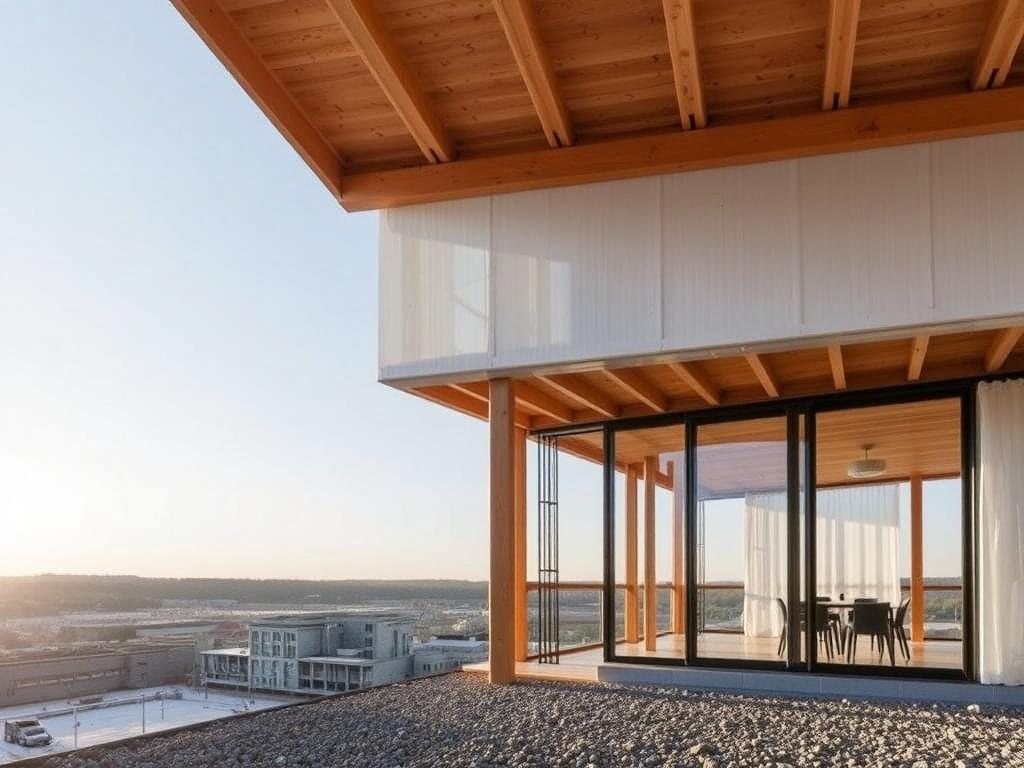
One persistent myth is that prefab equals poor design. In reality, many prefab projects are architecturally ambitious and finely detailed; the factory simply makes it easier to deliver complex details consistently. Design constraints exist, but they can be pushed with thoughtful detailing.
Another misconception is that modular is only for low-cost or temporary buildings. While speed and affordability are strengths, modular is increasingly used for high-end hotels, premium housing, and healthcare facilities because of its precision and reliability.
Some people assume prefab eliminates the need for on-site skilled labor entirely. That’s not true. Skilled trades remain essential for foundations, connections, finishing work, and commissioning; prefab shifts the location and timing of that work rather than removing it.
Risk management and quality assurance in practice
Risk management for modular projects focuses on the interface points: transport damage, fit-up tolerances, and utility connections. Systematic pre-shipment inspections and checklists reduce these risks dramatically.
Quality assurance should include factory acceptance tests for MEP systems, leak and pressure tests for plumbing pods, and mock-ups of critical wall sections. Documented tests provide reassurance to owners and building officials.
Insurance and warranties must reflect factory-built realities. Projects often require specialized insurance for transit and storage, and manufacturers typically provide separate warranties for factory-installed components.
Workforce and training considerations
Prefabrication changes workforce needs: factories demand assembly-line skills, precision workmanship, and familiarity with digital fabrication tools. That shift opens opportunities for stable, well-paid factory jobs in many regions.
Training programs and apprenticeships that mix shop skills with digital tool knowledge are becoming essential. For contractors, cross-training site crews to interface with factory processes smooths installation and reduces errors.
Investing in workforce development pays off through fewer defects and faster assembly. It also helps close the skills gap by creating repeatable career paths within manufacturing and construction trades.
International perspectives and regulatory variation
Countries vary widely in how they regulate and incentivize offsite construction. Scandinavian markets have long embraced high-quality modular systems, particularly with timber technologies, while other regions are just beginning to standardize regulations.
Government policy can accelerate adoption through procurement preferences, tax incentives, or pilot programs that demonstrate viability. Public housing and infrastructure projects are common early adopters because they can absorb innovation at scale.
When working internationally, expect differences in fire codes, seismic requirements, and thermal performance standards that require adaption in factory processes and design details.
Where prefab makes the most sense—and where it doesn’t
Modular and prefabricated systems shine when projects have repetition, tight schedules, and constrained site disruption needs. Large portfolios of identical units, temporary needs, or operations requiring minimal downtime are good candidates.
Conversely, one-off, highly bespoke projects with deep site-specific character or extremely irregular massing may find offsite methods less advantageous. In those cases, panelized or componentized strategies can capture some prefab benefits without forcing uniformity.
Evaluating fit means weighing project goals—speed, quality, cost, sustainability—against the logistical and contractual complexities that offsite construction introduces. The right decision is often a nuanced, hybrid one.
Looking ahead: what to watch
Watch for increased standardization across the industry—standard unit sizes, connection systems, and digital exchange standards—that will lower transaction costs and broaden the pool of manufacturers and designers. Standardization tends to drive down costs and increase predictability.
Expect more integration between design software and factory machinery, which will speed iteration and reduce errors. As the industry scales, we’ll see evolving business models: subscription-style housing, rapid-response modular clinics, and factory-as-a-service offerings.
The combination of better materials, smarter logistics, and tighter digital integration means prefab will continue to expand into more building types and markets. Its growth will be shaped as much by policy and finance as by technology.
Modular and prefabricated construction is no longer a fringe tactic—it’s a strategic method with real advantages and real constraints. For those willing to rethink processes, coordinate early, and accept a different rhythm of design and delivery, offsite construction offers powerful levers to reduce time, improve quality, and build more sustainably.
If you’re planning a project, begin conversations with potential fabricators at the schematic stage, model logistics as carefully as you model the structure, and plan for robust inspection and testing regimes. When those pieces are in place, prefabrication can be a pragmatic, creative, and transformative way to build.