
Basements have a habit of revealing themselves during the worst weather: a slow dampness, a dripping corner, a bloom of mildew. Addressing moisture involves more than slapping on paint; it requires understanding how water moves around and through a house. This article walks through the most reliable approaches for stopping moisture at the source and protecting the structure beneath your feet.
Why basements leak: the forces behind water intrusion
Water doesn’t need much encouragement to find its way into a basement — gravity and pressure do most of the work. Soil holds water after rain, and that water pushes against foundation walls; over time hydrostatic pressure forces moisture through cracks, joints, porous masonry, and even untreated concrete.
Beyond subsurface water, surface runoff and poor roof drainage often concentrate volumes of water near a foundation. When downspouts discharge at the foundation or the yard slopes toward the house, every storm becomes a test of your basement’s defenses.
Hydrostatic pressure and soil conditions
Hydrostatic pressure is the science behind many stubborn leaks: saturated soil behaves almost like a liquid and transmits pressure to the foundation. In clay soils, which retain water more than sandy soils, pressure builds and holds for long periods after rainfall.
Seasonal water tables also matter. If your property sits near a high water table, the foundation is consistently exposed to groundwater that will find flaws in any barrier you apply. Knowing your soil type and groundwater behavior informs which waterproofing techniques will last.
Poor grading, gutters, and roof drainage
Surface water is deceptively powerful. A roof that sheds water too close to the foundation or a yard that slopes inward creates constant wetting at the base of the wall. Over years, that repeated soaking accelerates deterioration and magnifies small imperfections into leaks.
Gutters and downspouts act as first responders; when they fail, every rainstorm becomes a stress test. Extending downspouts away from the house and correcting surface grading are inexpensive, high-impact measures that should be the first line of defense.
Cracks, tie-ins, and construction joints
Basement walls are a patchwork of joints, forms, and connections where materials meet. Cold joints between poured concrete lifts, block cores, window wells, and pipe penetrations are natural weak points. Hairline cracks may seem harmless but will accept water under enough pressure.
Understanding how and where the structure moves — thermal contraction, settling, and lateral soil pressure — helps target repairs. Some defects need cosmetic sealing; others require structural injection or external excavation to fix the root cause permanently.
Exterior waterproofing: stopping water before it reaches the wall
Exterior solutions treat the foundation from the point of exposure and are generally the most fundamental long-term fix. They require excavation around the perimeter, which is disruptive, but when properly executed they change the lifecycle of the wall itself.
Professional exterior waterproofing combines membrane systems, proper drainage, and careful backfill to reduce hydrostatic pressure and direct groundwater away from the foundation. When I supervised an older house retrofit, this approach eliminated rear-wall seepage that interior fixes had failed to control.
Excavation and exterior membranes
Applying a continuous barrier on the exterior face of a foundation is a basic waterproofing principle: keep water from contacting the wall. The common approach is to excavate down to the footing, repair any defects, and apply a membrane — either fluid-applied or sheet — across the full height of the foundation.
Membranes are available in a range of thicknesses and chemistries. A heavy-duty bituminous membrane or modern polymer-modified coating provides resilient coverage, while protectors like rigid boards or drainage mats shield the membrane during backfill and movement.
Drainage boards and protection layers
Directly over the membrane, contractors often install a dimpled drainage board to create a separate channel for water to flow down to the drainpipe. This layer prevents fines in the backfill from clogging the membrane and keeps the system functioning under pressure.
These boards can also reduce thermal bridging and protect against accidental damage during later landscaping. They are a small up-front cost that pays dividends in system longevity and performance.
Exterior French drain and footing drains
A footing drain — a perforated pipe installed at the base of the foundation and surrounded by clean gravel — collects water before it accumulates against the wall. It channels moisture to a daylight outlet, storm system, or a sump pit where it can be safely discharged away from the house.
Coupled with a membrane, this creates a comprehensive exterior system: water won’t meet the wall and what does move downward has a clear path away. Proper slope, clean aggregate, and filter fabric are small details that keep the system from clogging over years.
Interior waterproofing: practical options when exterior work is impractical
Interior systems are often faster and less expensive because they avoid exterior excavation. They don’t always address the root cause — they control water once it passes the wall — but they can be highly effective when combined with the right drainage and removal strategy.
For homeowners with finished landscaping, close neighbor structures, or tight budgets, an internal drainage system with a sump pump offers a durable and minimally invasive alternative to digging up the foundation.
Interior perimeter drains and channels
Interior drainage systems usually involve a channel cut along the inside edge of the slab or at the footing line. A perforated pipe set in the channel collects infiltrating water and routes it to a sump. Modern systems pair with a liner and a clean aggregate bed to maximize flow.
The visible benefit is immediate: water that used to pool on walls or floors is captured and handled before it damages finishes. Performance depends on correct installation depth and slope, so even interior solutions call for careful workmanship.
Sump pumps and discharge strategies
Sump pumps are the mechanical heart of many interior systems. When water enters the pit, a float or sensor activates the pump and ejects water away from the foundation. Choosing the right capacity, pump type, and reliable power or battery backup is crucial to prevent failures during storms or power outages.
Discharge should be directed to a safe location or municipal storm system if allowed, far enough from the foundation so it doesn’t run back. Regular testing and maintenance — including checking the check valve and clearing debris from the pit — keep pumps operational when you need them most.
Interior sealants, coatings, and vapor control
Interior coatings and sealants are useful to address dampness, minor bleeding, or efflorescence on concrete and masonry. These products can reduce surface water intrusion and block vapor transmission, making basements more suitable for finishing. However, they rarely stop water that’s under hydrostatic pressure.
For best results, pair surface treatments with a drainage strategy. Vapor barriers on walls and floors and using moisture-resistant paints in conditioned basements improve indoor air quality and occupant comfort but are not standalone waterproofing fixes.
Crack repair: targeted methods for where water actually gets in
Cracks are the plumbing of the foundation world — they show you where water wants to enter. Fixing them effectively depends on determining whether the crack moves, how wide it is, and if it carries water under pressure or only allows dampness through.
A neighbor’s foundation had a distinctive diagonal crack from settling; we chose different repair approaches for the stable section and the active movement area, illustrating that repair must match behavior.
Epoxy injection vs polyurethane injection
Epoxy injections create a rigid bond and are best used for structural cracks that no longer move. They restore structural continuity and are useful for repairs where stiffness and load transfer are required. Epoxy isn’t ideal where water continues to flow or where the crack expands and contracts frequently.
Polyurethane membranes expand and remain flexible, making them better for active leaks because they seal and accommodate slight movement. They react with water to form a waterproof, flexible plug. Choosing between them depends on whether the priority is structural strength or water stopping.
Routing, sealing, and mechanical repairs
For superficial cracks, routing out and applying a cementitious or elastomeric sealant can be effective. For larger, structural cracks, mechanical methods like stitching with stainless steel rods or helical ties may be needed to restore integrity. Matching the repair material to the wall type and load conditions avoids repeating failures.
Documentation of crack repair — photographs, measurements, and repair details — is valuable. It helps track whether a crack reactivates and informs whether a further, more invasive measure is warranted.
Membranes: liquid-applied vs sheet systems
When choosing a membrane, the tradeoff is often flexibility versus toughness. Liquid-applied products can conform to irregular surfaces and deliver continuous coverage, while sheet membranes provide factory-controlled thickness and puncture resistance.
Both types require careful surface preparation to bond properly. If a membrane separates from the substrate or is punctured during backfill, its protection is compromised, so installation quality matters as much as the product selection.
Pros and cons of fluid-applied membranes
Fluid-applied membranes are sprayed or troweled onto clean substrates, sealing joints and small details without seams. They are excellent for retrofits and for filling complex geometries, and they form a monolithic barrier if fully cured.
The downside is sensitivity to temperature and moisture during application, and in some cases they require multiple coats and drying time. Inspecting coverage and thickness during installation helps ensure consistent protection.
Pros and cons of sheet membranes
Sheet membranes like rubberized asphalt or thermoplastic sheets are rolled on and often overlap to create a robust barrier. They resist punctures and can be paired with protective boards or drainage layers for long service life.
Seams and terminations are the weak points; they must be sealed diligently and protected from backfill damage. Proper overlap, adhesives, and detailing at corners and penetrations are non-negotiable for effective performance.
Basement floor and slab waterproofing
Water can come up through floor slabs as vapor or liquid, especially in high water table areas. Slab-level waterproofing and vapor control are key when finishing basements into living space or installing sensitive flooring materials.
Slab solutions vary from under-slab membranes at construction time to surface-applied coatings and floor-level drainage systems installed in existing homes.
Under-slab membranes and vapor barriers
During new construction, placing a continuous polyethylene or specialized under-slab membrane on compacted subgrade limits moisture from migrating upward. This layer also protects sub-slab insulation and can be integrated with underfloor heating systems where used.
For renovations, under-slab work is often impractical. Instead, designers focus on surface treatments, slab injections, and perimeter drainage combined with dehumidification to manage moisture in finished basements.
Surface treatments and floor coatings
Epoxy floor coatings can block moisture transmission and create an easy-to-clean, attractive surface. They are appropriate for many basements but require a dry substrate during application and may fail where water comes under high hydrostatic pressure.
In spaces with occasional dampness, elastic sealants at joints and floor-to-wall interfaces along with paint-grade moisture-resistant coatings reduce the chance of mold and protect finishes.
Managing groundwater with drainage systems
A well-designed drainage system takes water away quietly and efficiently; it runs when necessary and sleeps when dry. The best systems accommodate the worst storms a house is likely to see, and they include redundancy where failure would be catastrophic.
Systems differ by property but often include a combination of surface grading, roof drainage, exterior or interior drains, and one or more pumps to move water to a safe discharge point.
Designing a reliable sump pit and pump system
When selecting a sump pump, consider pump capacity in gallons per minute at the expected head (vertical lift) and typical inflow during storms. Submersible pumps are compact and quieter, while pedestal pumps are easier to service but more visible in the pit.
A properly sized pit, a check valve to prevent re-entry, and a discharge run that avoids freezing are small details with big operational effects. For critical installations, a battery backup and an alarm give owners peace of mind when the grid fails.
Redundancy and backup systems
In flood-prone or high-value spaces, installing dual pumps or a pump plus a gravity daylighted outlet provides redundancy. Automatic switching between pumps or manual override capability ensures continuity under heavy loads. Many homeowners overlook the cost of a second pump until the first one fails during an intense storm.
Battery backups and water-powered backup pumps are available, each with pros and cons. The important point is recognizing where a one-failure system will have unacceptable consequences and designing accordingly.
Landscape approaches: grading, swales, and plantings
Water management doesn’t stop at the foot of the foundation; the landscape is part of the system. Regrading to slope away from the house, installing shallow swales, and placing rain gardens at strategic low points deflect surface water from the foundation.
Even small changes to drainage patterns can change water loading on a foundation after heavy storms. These fixes are often cost-effective and can be implemented incrementally as part of regular yard work.
Gutters, downspouts, and extensions
Well-maintained gutters collect roof runoff and downspouts move it away from the foundation. Extensions that discharge water six to ten feet from the foundation reduce the volume that infiltrates near the footing. In freezing climates, consider heat tape or burying the extension to a depth that prevents ice backup.
Many water problems can be corrected simply by clearing debris and ensuring downspouts are directed away. This is the fastest, cheapest action homeowners can take to reduce basement moisture.
Permeable paving and infiltration controls
Permeable pavements and infiltration trenches allow rain to soak into the soil rather than run toward the foundation. Paired with sub-surface storage or rain gardens, these features reduce peak runoff and lessen the burden on foundation drains and municipal storm systems.
They are particularly useful in urban settings where impervious cover is high and natural infiltration has been lost. Proper installation with a clean aggregate base prevents clogging and extends functionality.
Waterproofing masonry and block foundations
Masonry and concrete block foundations have distinct vulnerabilities: core voids, joints, and porous mortar. Addressing these requires targeted strategies that recognize the difference between aesthetic dampness and active infiltration.
Solutions combine surface treatments, parging, grout filling of voids, and external membranes, depending on whether the priority is structural integrity or moisture control.
Cementitious parging and stucco
Cementitious coatings or parging create a smooth, unified surface that reduces water penetration and hides mortar defects. Properly applied, parging can extend the life of an older block wall and make a good substrate for an exterior membrane.
However, parging is not a complete waterproofing solution where hydrostatic pressure is present. It works best as a preparatory step or as a breathability-preserving finish in drier conditions.
Grout injection and void-filling
Voids inside block cores or between stones can funnel water directly to problem areas. Grout injections can fill those voids and halt active flows by restoring continuity within the wall. Injection methods vary in material and technique and should be chosen based on wall condition and moisture behavior.
Correct mixing, pressure control, and targeted application are essential to avoid creating new stresses or inadvertently altering load paths in the masonry.
Finishing basements right: materials and detailing for moist environments
Turning a basement into comfortable living space requires thinking like a building scientist: isolate moisture sources, allow assemblies to dry, and select materials that tolerate a basement’s unique conditions. Hard-surface floors, closed-cell insulation, and moisture-tolerant wall systems are routine choices.
Mechanical systems such as dedicated HVAC or dehumidification stationed in the basement help control relative humidity and reduce the risk of mold. Keeping mechanicals elevated and protected during floods prevents costly damage.
Insulation and wall assembly choices
Rigid foam (XPS or closed-cell polyiso) applied to walls provides thermal resistance and reduces condensation risk. It maintains its R-value when damp and forms part of a dry, continuous envelope when installed carefully. Breathable assemblies using mineral wool and a capillary break may be preferable where drying to the interior is desired.
Choosing insulation requires balancing moisture control, fire code, and finish requirements. When in doubt, consult a building professional with local climate experience to avoid trapping moisture in problematic ways.
Flooring and finishing materials
For finished basements, pick floors and wall materials that tolerate occasional dampness: tile, engineered flooring with moisture-resistant cores, and cementitious backer boards are solid choices. Avoid solid hardwood directly on concrete unless a full moisture mitigation system is present.
Wall framing on furring strips or resilient channels, separated from the below-grade concrete with a capillary break, lowers the risk of rot in wood elements and makes future remediation easier if leaks occur.
DIY vs professional work: deciding which route to take
Some waterproofing tasks are approachable by competent DIYers: improving grading, extending downspouts, patching hairline cracks, and installing basic vapor barriers. These actions are inexpensive and can prevent many common problems when done right.
However, when hydrostatic pressure, structural cracks, repeated flooding, or complex drainage is involved, a professional waterproofing contractor or structural engineer should be consulted. The wrong fix can be expensive and temporary; a correctly designed system avoids repeated work and reduces long-term costs.
Red flags that warrant a pro
Signs such as active leaks during moderate rain, large or widening cracks, wet floors despite interior drainage, and evidence of foundation movement are reasons to call an expert. Experienced contractors can perform a diagnostic that differentiates between surface drainage issues and deeper groundwater problems.
Additionally, work requiring excavation near property lines, major plumbing reroutes, or permitting will almost always be faster and safer with a licensed professional handling details and inspections.
Costs, lifespans, and what to expect financially
Costs vary widely depending on the approach: simple surface repairs can be a few hundred dollars, interior drainage with a sump and pump typically runs in the low thousands, and full exterior excavation with membrane and backfill can be a major project costing substantially more. Local labor costs, soil conditions, and access are big price drivers.
Material lifespans also differ. A well-installed exterior membrane and drainage system can last decades, while pumps typically need replacement every 7–15 years depending on use. Budgeting for maintenance and occasional component replacement protects your investment.
Making cost-effective choices
Start with inexpensive, high-impact measures: fix gutters, regrade soil, and clear downspouts. If those don’t solve the issue, plan upgrades starting with the least invasive interior systems and escalate to exterior work only when necessary. This stepwise approach manages cash flow while addressing the root cause progressively.
Keep records of repairs and warranties, and consider a maintenance plan for mechanical components. These simple administrative steps can save money when claims or additional work come up later.
Inspection, maintenance, and a seasonal checklist
Waterproof systems are not ‘set and forget.’ Periodic inspection and maintenance catch small issues before they become disasters. A quick seasonal routine can keep systems performing well for years.
Check membrane terminations, look for soil settlement near the foundation, exercise the sump pump, clear gutters, and inspect interior finishes for new staining or efflorescence. Doing these tasks once or twice a year can prevent most emergency repairs.
Seasonal checklist
- Spring: Inspect exterior for winter damage, clean gutters and downspouts, check sump pump after thaw.
- Summer: Test pump and backup, verify grading after seasonal landscaping, remove debris from exterior drains.
- Fall: Extend downspouts for autumn storms, inspect seals around windows and penetrations, clear leaves from drains.
- Winter: Protect exterior discharge lines from freezing, confirm backup power for pumps, check for ice dams that force meltwater down walls.
Choosing materials and following standards
Select products with a track record in your climate and for your foundation type, and verify manufacturer instructions and warranties. Technical datasheets and installation guides often define critical tolerances for adhesion, thickness, and substrate preparation.
Local building codes and standards provide guidance on drainage, pump installation, and frost protection for discharge lines. When in doubt, seek a contractor familiar with local inspection practices and the specific environmental conditions of your area.
Real-life examples and lessons learned
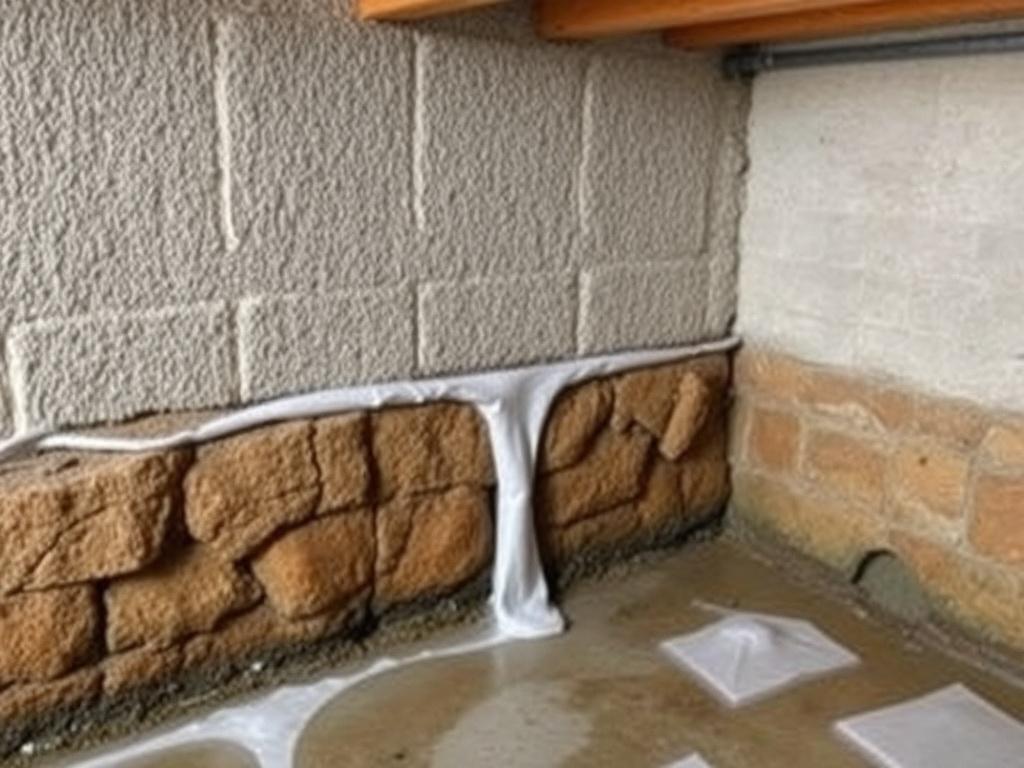
In one retrofit I supervised, a 1930s bungalow leaked at the rear wall only after long storms. We initially tried interior sealants and a dehumidifier, which reduced surface dampness but didn’t stop intermittent seepage. Excavation and applying a membrane with a footing drain resolved the issue because it removed the water source rather than just managing the symptom.
A neighbor chose an interior system with a high-capacity pump and battery backup after learning his property had a seasonal rise in the water table. That decision saved his finished lower level and avoided disrupting a mature yard. Both examples show that the right solution depends on how water reaches the foundation and what compromises the homeowner will accept.
Final thoughts on practical waterproofing choices
Waterproofing is part science, part craft. Successful strategies begin with understanding how water behaves around your home, then matching repair methods to the cause rather than the symptom. Small, consistent maintenance actions prevent many problems, while appropriately chosen systems — exterior membranes, interior drainage, pumps, and landscaping — address the full spectrum of risks.
Invest time in diagnosis, prioritize inexpensive preventive measures first, and escalate to invasive solutions when the data shows they’re necessary. With the right plan and periodic attention, a basement can remain dry, healthy, and ready for whatever you choose to do with it.