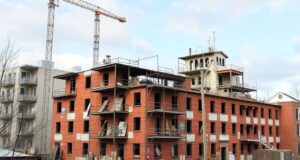
Every construction project carries a margin of surprise: weather that refuses to cooperate, materials that arrive late, designs that shift under pressure. The difference between a project that limps across the finish line and one that finishes on time and on budget is how risks are anticipated, communicated, and handled. This article walks through pragmatic approaches—tools, behaviors, and real-world tactics—that help teams reduce surprises and recover faster when they happen.
Why risk matters in construction
Construction is a sequence of interdependent decisions executed in an imperfect world. Uncertainties in design, procurement, labor, and environment can cascade quickly because tasks are linked and schedules are tight. A single late delivery or design clarification can ripple across trades, creating rework, claims, and strained relationships.
Ignoring risk isn’t neutrality; it’s a decision to react instead of prepare. Projects that acknowledge uncertainty early and allocate attention and resources to manage it tend to preserve value: fewer disputes, more predictable cash flow, and safer sites. That predictability benefits owners, contractors, and subcontractors alike by reducing stress and improving outcomes.
Common types of construction risk
Risks in construction fall into several broad categories: schedule, cost, safety, quality, environmental, legal, financial, and reputational. Each category contains multiple specific exposures—such as adverse weather under schedule risk or latent conditions under cost risk—that require different responses.
Recognizing the variety helps prioritize actions. A voltage of regulatory risk demands legal and permitting attention, while supply-chain risk is best addressed through procurement strategy and vendor relationships. Treating all risks the same wastes effort and misses opportunities for targeted mitigation.
| Category | Typical examples | Usual response |
|---|---|---|
| Schedule | Late deliveries, sequencing conflicts, weather | Schedule buffers, acceleration plans, alternative suppliers |
| Cost | Estimating errors, change orders, unforeseen site conditions | Contingency, change-order process, value engineering |
| Safety | Falls, equipment incidents, hazardous materials | Training, PPE, safety supervision, incident response |
| Quality | Nonconforming work, poor materials, design omissions | Inspections, mock-ups, QA/QC programs |
| Environmental & regulatory | Permitting delays, contamination, stormwater violations | Permitting strategy, monitoring, remediation plans |
The risk management process: step by step
Effective risk management follows a simple cycle: identify, analyze, respond, monitor. That sequence is straightforward but requires discipline, documentation, and clear ownership to work at project scale. Each step should be embedded in routine project meetings rather than treated as an extra chore.
Below is a practical breakdown of the core steps. Use them as a living framework and adapt the level of formality to the project’s size and complexity.
- Identify: Gather potential exposures from stakeholders and historical records.
- Analyze: Assess likelihood and impact using qualitative or quantitative tools.
- Plan response: Determine avoidance, mitigation, transfer, or acceptance measures.
- Implement: Assign owners, allocate resources, and execute actions.
- Monitor: Track risk status, effectiveness of measures, and triggers that require escalation.
Successful teams make the risk register part of weekly conversations. A living register identifies owners, due dates for actions, and residual risk after mitigation. It becomes the project’s heartbeat for proactive decision-making.
Identifying risks on your project
Risk identification is best when it’s collaborative and evidence-based. A handful of targeted techniques will uncover most material risks: site walks with technical designers, structured interviews with trade foremen, historical lessons-learned reviews, and vendor risk assessments.
Start with a checklist derived from prior projects, but don’t stop there. Encourage field personnel to log near-misses and odd observations—these often prefigure larger problems. Digital tools make it easier to capture and categorize those notes in real time.
Workshops such as risk mapping or SWOT sessions create alignment among stakeholders and expose differing perspectives early. When an owner, the designer, and key subcontractors sit in the same room, silent assumptions surface quickly, allowing the team to surface and assign responsibility for potential exposures.
Tools for systematic identification
Several simple tools accelerate identification: checklists, risk registers, fault-tree diagrams, and interface matrices that show where trades overlap in space or sequence. Each tool offers a different lens: checklists ensure completeness, while interface matrices highlight coordination risks.
Documenting assumptions is equally important. Assumptions about material availability, permit timelines, or site access often go unrecorded until they fail. A short assumptions log linked to the risk register prevents those expectations from becoming blind spots later on.
Assessing and prioritizing risks
Not all risks warrant the same level of attention. Prioritization helps you spend resources where they have the greatest effect. A common first-pass method is a qualitative probability-impact matrix that categorizes risks as high, medium, or low.
For larger projects or when exposure is significant, quantitative techniques add precision. Expected monetary value (EMV), Monte Carlo simulations, and sensitivity analyses convert uncertainty into numbers that can inform contingency sizing and decision choices.
| Likelihood | Impact | Color |
|---|---|---|
| High | Severe schedule or cost effect | Red |
| Medium | Manageable with action | Amber |
| Low | Minor disruption | Green |
Use quantitative models where the stakes justify the effort. Monte Carlo provides distributions rather than single-point estimates, which is valuable when multiple uncertainties interact and when the owner or lender needs a defensible contingency number.
Risk response strategies and practical mitigation techniques
Response strategies fall into four familiar categories: avoid, transfer, mitigate, and accept. The choice depends on cost-effectiveness, contract relationships, and the appetite for residual risk. A practical view focuses on combinations: partial transfer with mitigation often works better than relying on a single tactic.
Avoidance removes the exposure entirely—for example, choosing an alternative foundation system to eliminate risk of encountering contaminated soils. Transfer shifts responsibility, typically through contract clauses or insurance. Mitigation reduces probability or impact, and acceptance acknowledges the risk with contingency measures and triggers.
Examples of mitigation measures
Mitigation is where most day-to-day efforts land. Common tactics include early procurement of long-lead items, mock-ups for critical systems, prequalification of subcontractors, and modular construction to reduce on-site work. These actions reduce the likelihood or severity of typical construction problems.
Operational mitigations—like dedicating a full-time coordinator for interfaces or establishing a rapid materials inspection process—often yield outsized benefits. They improve communication, spot issues early, and reduce rework, especially on complex multi-trade projects.
Contractual and insurance tools to allocate risk
Contracts are instruments of risk allocation. Clear, fair contracts reduce ambiguity that otherwise becomes fertile ground for disputes. The choice of contract form—lump sum, cost-plus, design-build—affects who carries which risks and how changes are handled.
Standard clauses around scope, variations, force majeure, delays, and liquidated damages should be negotiated with an eye toward allocating risks to the party best able to control them. Ambiguity breeds litigation; precision prevents it.
Insurance and surety instruments
Insurance and bonds provide financial backstops for specified exposures. Builders’ risk covers property damage during construction, professional liability protects against design errors, and performance bonds give the owner a remedy if the contractor defaults. Each instrument has limits, exclusions, and costs that must be weighed.
Rely on insurance to cover catastrophic or hard-to-control events, not to excuse poor planning. Policies are most useful when combined with practical preventive actions—regular safety programs, environmental controls, and testing regimes reduce claims and often lower premiums.
Schedule and cost controls to reduce risk
Schedule and cost are the twin metrics most directly visible to owners and financiers. Tight controls here reduce the probability of overruns and provide early warning when things deviate. Practical techniques include baseline schedule discipline, regular forecasting, and change-order management that captures cost impacts promptly.
Earned value management (EVM) offers an integrated view of scope, schedule, and cost, translating progress into performance metrics. Even simplified EVM measures—like percent complete vs. planned—help uncover trends before they become crises.
Managing float and critical path
Protecting critical-path activities is a simple but powerful risk control. Identify long-lead items and activities with little float early, and focus scheduling and monitoring resources there. Where appropriate, negotiate priorities with subcontractors and use incentive clauses to keep key activities on track.
When risks threaten the critical path, have contingency plans ready: additional shifts, temporary acceleration, or resequencing. These actions cost money but can be cheaper than prolonged delay or contractual penalties.
Health, safety, and environmental risk controls
Safety is non-negotiable. Prevention not only protects workers but also limits downtime, legal exposure, and reputational harm. A structured safety program with clear leadership, routine training, and active supervision reduces incidents and improves morale.
Environmental risks—permits, stormwater, erosion, contamination—require meticulous planning and monitoring. Many environmental noncompliances are avoidable with early permit coordination, storm-event plans, and routine inspections. Investment in these areas pays back by avoiding fines and remediation costs.
Practical safety measures
Daily toolbox talks, visible safety leadership, and prompt investigation of near-misses build a safety culture that prevents incidents. Empower site personnel to stop unsafe work without fear of reprisal; this simple policy often prevents the worst events. Regular audits and third-party inspections provide independent checks that reinforce internal discipline.
On larger projects, consider a safety incentive tied to leading indicators—like number of hazard observations closed out—rather than lagging indicators, which only reflect incidents after they happen. Leading metrics encourage proactive behavior.
Quality, procurement, and supply chain risk management
Quality problems and procurement failures are frequent sources of cost and schedule disruption. Prequalifying suppliers, insisting on material submittals with realistic lead times, and maintaining parts of the procurement chain under contract control reduce surprises. Treat procurement as a strategic activity, not an administrative afterthought.
Perform sample testing before full-scale delivery and require factory acceptance tests where appropriate. For complex systems, mock-ups provide early proof and reduce downstream rework. Those measures cost time upfront but save multiples of that investment later.
Managing supplier relationships
Supplier relationships matter. Timely payments, clear communication, and reasonable expectations build trust, which is invaluable when times are tight. Establish escalation pathways for critical suppliers and identify backup vendors for high-risk materials to reduce single-source exposure.
For international procurement, factor customs, tariffs, and transit risk into the schedule and price. Early engagement with freight forwarders and customs brokers prevents surprises and provides realistic arrival dates for critical items.
Emerging technologies that help manage risk
Technology is changing how teams spot and manage risk. Building Information Modeling (BIM) improves clash detection and coordination. Drones provide rapid site imagery for progress tracking and safety inspections. IoT sensors monitor concrete curing, equipment usage, and environmental conditions in near real time.
These tools aren’t magic—they require process changes and data-management discipline to be effective. A common mistake is investing in devices without a plan for integrating their outputs into decision-making. When used correctly, they reduce uncertainty and speed responses.
Practical tech implementations
On a mid-size hospital project I advised, we used a weekly 4D BIM review to visualize sequencing conflicts that hadn’t shown up in 2D coordination. Catching those issues early prevented two major re-sequences, saving weeks of schedule contention and tens of thousands in subcontract acceleration costs.
Drones are particularly useful for cliff-edge inspections and tracking stockpile volumes. We paired drone imagery with simple analytic tools to verify material quantities on site, which tightened invoicing disputes and kept procurement aligned with actual usage.
Building a risk-aware culture and governance
People, not documents, manage projects. A governance structure that assigns clear risk owners, decision authority thresholds, and escalation pathways ensures that issues are addressed promptly. Without ownership, risks drift and become crises.
Leadership sets the tone: visible engagement by senior management signals that risk management is a priority. Recognize and reward team members who surface problems early and present practical solutions rather than simply flagging concerns.
Training and incentives
Regular training—on contract clauses, claims avoidance, safety, and quality—builds competence and reduces error. Pair training with incentives that align behavior with project goals, such as bonuses for early handovers or for maintaining low incident rates without cutting corners on quality.
Feedback loops are important too. Host after-action reviews at project milestones to capture lessons and distribute them across the organization. Those lessons should update templates, checklists, and the risk library so future projects start from a higher baseline.
Monitoring, reporting, and lessons learned
Monitoring turns plans into action. Weekly risk status reports and dashboards that combine schedule, cost, and risk indicators provide timely signals. Make these reports concise and focused on decisions: highlight risks that need action, not every item in the register.
When mitigation measures are ineffective, escalate quickly and pivot. Frequent, honest reporting reduces the political pressure to ignore negative trends until they become emergencies. That openness builds credibility with owners and lenders.
At project closeout, invest time in a structured lessons-learned review. Capture what worked, what didn’t, and why. Distill those findings into a short, actionable set of recommendations that can be incorporated into the next project’s planning phase.
Case study: turning a schedule crisis into an opportunity
On a downtown mixed-use project I observed, an unexpected permit delay threatened the completion of critical façade work, which in turn jeopardized tenant move-ins. The team convened a cross-functional war room that included the owner, architect, contractor, and key subcontractors to redesign the sequence.
The solution combined partial prefabrication of façade panels offsite and a revised traffic-control plan to allow parallel interior work sooner. The team also negotiated a short-term price incentive with the façade supplier to prioritize the project. The result: a compressed recovery that avoided liquidated damages and improved communication protocols for future permitting risks.
The lesson was practical: when a single permit failure created schedule risk, rapid collaboration and a willingness to invest in mitigation—rather than finger-pointing—saved the overall program. The project ended with improved trust among parties and a documented process for expedited permit escalation that future teams used successfully.
Practical checklist for project managers
Use this checklist as a quick starter for new projects. Tailor each item to project size, complexity, and owner expectations. Keep it visible in the project management office and review items at kickoff and major milestones.
- Create a living risk register with owners and review it weekly.
- Prequalify critical suppliers and source alternatives for long-lead items.
- Establish a clear change-order process with prompt price-and-schedule impact reporting.
- Set up a safety program with daily briefings and a near-miss reporting channel.
- Identify regulatory and permit critical paths and assign a single owner for permits.
- Use mock-ups or prototypes for high-risk systems where feasible.
- Integrate technology outputs (BIM, drone, sensor data) into weekly coordination.
- Allocate explicit contingency and define triggers for drawing it down.
- Plan lessons-learned sessions at key milestones, not just at closeout.
Measuring success: KPIs and indicators
Good metrics drive behavior. Track a mix of leading and lagging indicators: near-miss reports and open action items signal culture and prevention, while schedule variance and cost-to-complete show outcome. Keep KPIs few and directly tied to decisions.
Common KPIs include number of unresolved high-risk items, percentage of forecast accuracy, number of change orders and their approval lead time, safety incident frequency, and percent of subcontractor milestones met on time. Review them with an emphasis on corrective steps rather than blame.
Final thoughts and ongoing practice
Risk management on construction projects succeeds when it’s practical, visible, and iterative. The tools are familiar, but their power lies in disciplined application: identify early, assign ownership, act fast, and learn from each event. Small, consistent practices—daily safety talks, a weekly risk roll-up, and an insistence on documenting assumptions—compound into resilience over time.
Remember that not all surprises can be eliminated. The goal is to reduce their frequency and severity and to build the capacity to respond effectively when they arise. That capacity—clear governance, collaborative culture, and tested playbooks—is what separates projects that recover gracefully from those that struggle under the weight of the unexpected.