
Masonry is an art disguised as construction: tactile, precise, and surprisingly forgiving when you know the rules. This article walks through the practical techniques and decisions that shape durable walls, elegant fireplaces, and resilient retaining structures using brick, concrete block, and natural stone. Expect hands-on details—mixes, bonds, reinforcement—and a few real-world tips gathered from years on job sites.
Why study masonry techniques now?
Buildings still rely on masonry for strength, fire resistance, and aesthetic weight in ways that lighter construction cannot always match. With renewed interest in durable, low-maintenance materials and energy-efficient thermal mass, learning practical masonry techniques pays off for homeowners, contractors, and hobbyists alike.
Beyond materials, the craft has classrooms on job sites: how mortar behaves in winter, how a slight twist of a trowel changes a joint, how one good layout saves an entire day of cutting. Those small insights turn a decent wall into something that lasts generations.
Materials at a glance: brick, block, and stone
Each material brings different characteristics: bricks are precise and modular, concrete masonry units (CMUs) are economical and structural, and natural stone offers unmatched variety and longevity. Choosing among them means considering strength, finish, cost, insulating properties, and how much shaping or reinforcement you’ll accept.
To keep decisions practical on site, I use a simple rubric: use brick when you want regular rhythm and detail, block for rapid load-bearing assembly, and stone when the look or weathering character matters most. The rest of this article digs into how to work each material well.
Quick comparison table
| Material | Typical use | Strength/weight | Workability |
|---|---|---|---|
| Brick | Façades, chimneys, garden walls | Moderate, uniform | High—easy to lay and cut |
| Concrete block (CMU) | Foundations, retaining walls, structural walls | High—good compressive strength | Moderate—larger units, needs grout/rebar |
| Natural stone | Cladding, walls, veneers, monumental work | Very high—varies by type | Low—requires shaping and experience |
Essential tools and safety on the job
Good tools make the work clean and fast: brick trowel, pointing tools, mason’s line and line blocks, joint raker, brick hammer, cold chisel, level, and a flat shovel for mixing. For cutting, a masonry saw or angle grinder with diamond blade is indispensable when working with stone or hardened units.
Safety must be front and center. Eye protection, respirators for dusty cutting, cut-resistant gloves, and steel-toed boots should be non-negotiable. Scaffold safety and fall protection are equally important—masonry often happens at heights, and a dropped trowel is the least of your worries.
Foundations, footings, and substrate preparation
Start every masonry project with a proper foundation or footing sized for soil conditions and loads. A shallow footing might suffice for a low garden wall, while structural bearing walls need reinforced concrete footings beneath frost line and local code depth. Uneven or soft soil requires compaction or engineered fill before pouring.
Substrate preparation also means installing a damp-proof course (DPC) and ensuring good drainage. Masonry tolerates moisture in its pores, but not persistent wicking from below; a properly placed DPC and weep systems for cavity walls protect mortar and finishes over decades.
Setting lines and layout
Layout is the silent hero of tidy masonry. Snap lines for courses and offsets before you lay a single unit; mark batter boards for retaining walls and establish corner leads—two or three vertical corner stacks set square and plumb—to run lines from. Accurate corners let you “sweep” the wall between them rather than resetting each unit by eye.
I learned early that pausing to set ledges, openings, and expansion joints on paper saves hours of cutting later. Take a tape measure and full-size mockup of the window sill or column base when precision matters; it prevents ugly compromises once mortar hardens.
Mortar: selection, mixing, and application
Mortar is as important as the units it joins; pick a type that matches structural requirements and substrate movement. Common designations under ASTM are Type M, S, N, and O, with Type M strongest and Type O weakest. For most above-grade brickwork, Type N (general-purpose) or Type S (for higher lateral loads) are common choices.
Mix mortar to plastic consistency—not too wet and not too dry. A typical on-site mix for Type N is 1 part Portland cement, 1 part lime, and 6 parts sand by volume, but preblended mortars simplify the process and improve consistency. Use clean water, avoid over-mixing, and keep mortar shaded and covered in hot weather to prevent rapid drying.
Admixtures and lime mortar
Lime-admixtured mortars improve workability and breathability. Historic and soft stonework often uses lime-rich mixes that accommodate movement and let moisture evaporate slowly. Modern hydraulic lime offers intermediate strength and faster setting than pure non-hydraulic lime for certain restoration tasks.
Plasticizers, air entrainment agents, and retarding admixtures can help in specific climates—cold weather, hot sun, or when you need more working time. Use admixtures according to manufacturer guidelines and test small batches if you’re combining them with older masonry materials.
Bricklaying fundamentals and common bonds
Brickwork is all about bond patterns and consistent jointing. Running bond is the simplest and most common; it staggers vertical joints and is efficient for cavity walls. English and Flemish bonds create stronger ties and more decorative faces but require planning for half-bricks and headers.
Joint thickness is usually kept around 3/8 inch for standard modular brick but check the units and mortar behavior. Keep joints uniform with a CSS-level line and strike or rake joints as you go to match the intended finish—concave joints shed water best, while struck joints are more vulnerable to water intrusion.
Corners, returns, and reveals
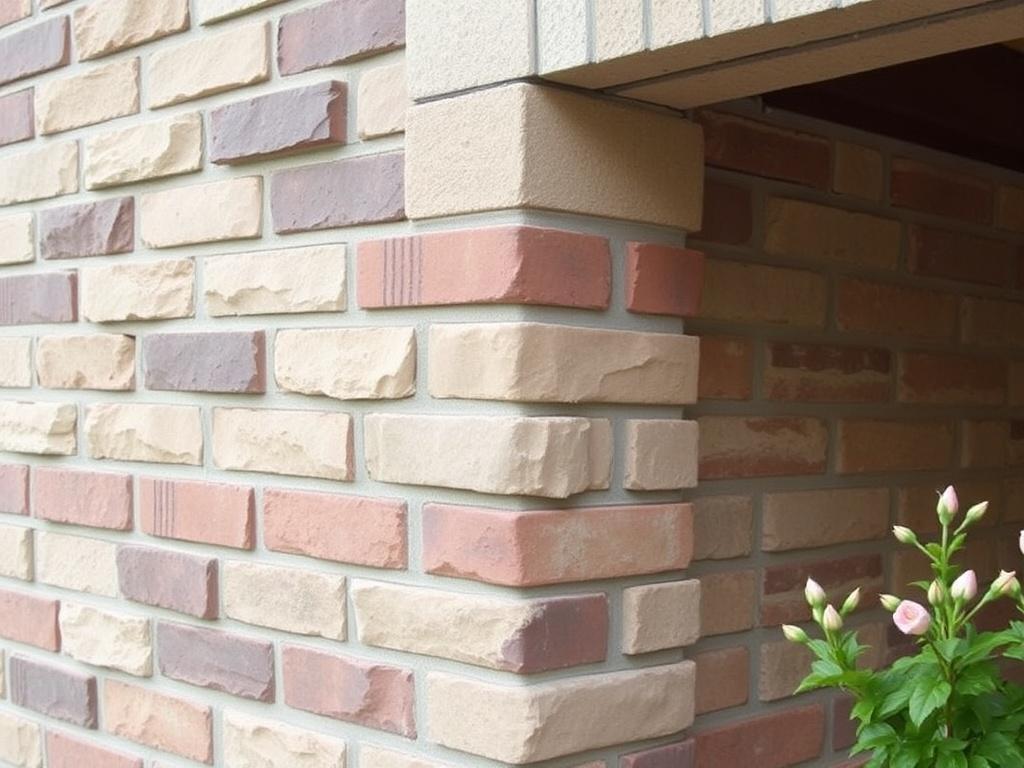
Always build corners first and then run the wall between them. Corners act as true references for plumb and level, and they allow you to use the same bricks as tie units, which improves bond and strength. For returns and reveals around openings, lay stretchers and headers purposefully to maintain bond and provide a clean visual edge.
When making corners, use full and half bricks as required to maintain pattern. In my experience building a house façade, careful corner planning reduced the need for unsightly cut bricks near windows and preserved the symmetry the client wanted.
Arches, lintels, and openings
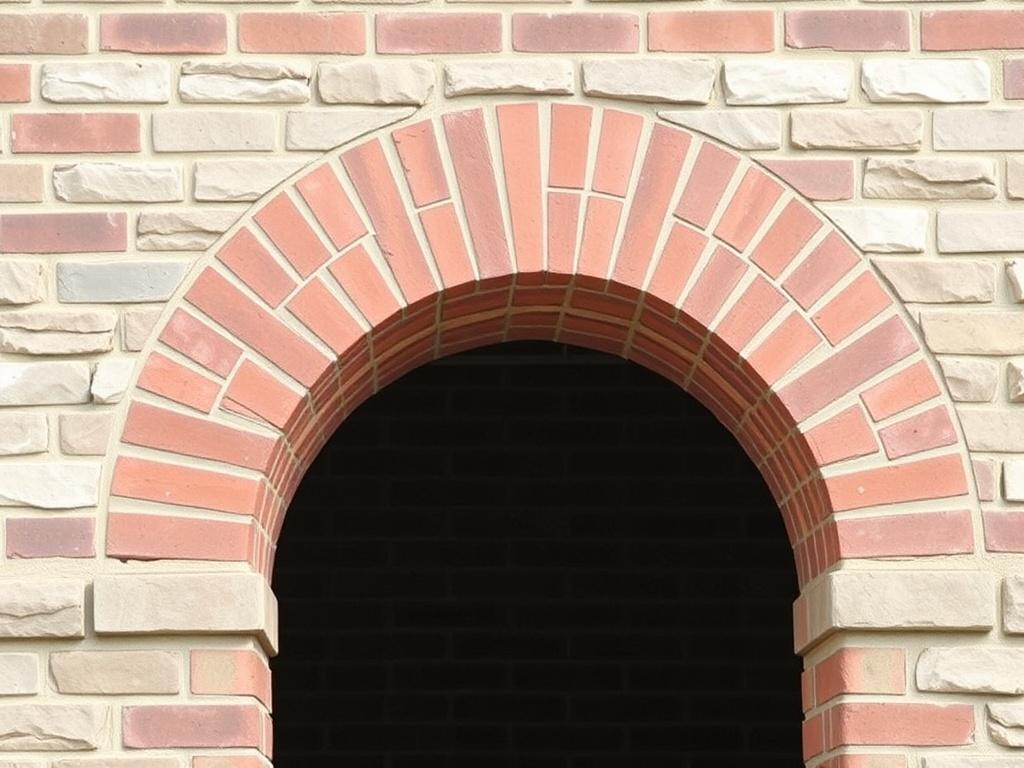
Arches distribute loads neatly but require formwork and precise laying of voussoirs (wedge-shaped bricks or stones). For small openings, soldier courses or preformed lintels are often more economical. When building with concrete block, reinforced bond beams and steel lintels carry loads over doors and windows effectively.
Temporary centering supports must remain in place until mortar reaches sufficient strength—rushing this step is a common cause of early failure. In restoration work I did on a 1920s storefront, careful setting and curing of the stone arch saved the facade from future settling and costly repairs.
Concrete block techniques: reinforcement and grouting
CMUs are great for structural walls because they accept vertical reinforcement and full-height grouted cores. Place rebar within grouted cells and use bond beams where needed to create integrative, reinforced assemblies that resist flexural loads. Horizontal reinforcement in mortar beds, like ladder-type reinforcement, also controls crack widths.
Grouting requires clean cavities and proper grout slump—too dry and the grout won’t encapsulate rebar; too wet and segregation occurs. Use grout mixes recommended by code, vibrate or rodding where practical to remove voids, and plan pour sequences to avoid cold joints and excessive heat buildup in massive sections.
Lintels, bond beams, and load transfer
Design lintels and bond beams to match the loads they carry. Precast lintels speed construction but must be supported on adequate bearing lengths—typically several inches past the opening on each side. In steel-reinforced masonry, dowels at intersections transfer load between walls and slabs for a unified structural system.
I once worked on a basement wall where the contractor omitted vertical reinforcement at a corner; after a heavy winter thaw the corner developed a telltale stair-step crack. Reinforcement and proper grout are not optional when the structure is expected to bear lateral earth or roof loads.
Stone masonry: types and working techniques
Stonework ranges from carefully dressed ashlar to informal rubble. Ashlar consists of squared, coursed blocks laid with thin joints for a refined look. Rubble can be laid coursed or uncoursed; coursed rubble aligns beds, while uncoursed yields a rustic, irregular aesthetic.
Working stone requires patience and a different set of shaping tools: pitching tools, chisels, and diamond-tipped saws for accurate cuts. Respect the grain and bedding of natural stone when cutting to avoid unexpected splits or waste.
Dry-stone and mortar-backed stonework
Dry-stone walls rely on careful fitting and gravity; no mortar means you must seat each stone tightly and often taper the wall inward slightly for stability. They drain naturally and move with frost cycles, making them ideal for many landscape uses. Mortar-backed stonework simplifies fitting and provides a continuous bond but traps water if not detailed with weeps and proper flashing.
On a dry-stone terrace project I built, we selected flatter, wider stones for batter stability and installed through-stones at intervals to prevent face slippage. Even dry-stone benefits from careful selection and placement rather than brute force stacking.
Veneer systems, ties, and cavity walls
Stone and brick veneers over framed walls require an air cavity, flashings, and ties to the structural backup. Stainless steel or galvanized masonry ties keep the veneer tied back while permitting differential movement between materials. Weep holes at the base of the cavity and flashing above openings channel water out and prevent moisture buildup behind the veneer.
A common error is to omit flashing at sills and shelf angles; the result is trapped water and long-term staining or deterioration. In every veneer job I oversee, we detail flashing first, set proper ties, then build the visible face carefully to preserve both look and function.
Pointing, joint finishing, and weather protection
Pointing style affects both appearance and weather performance. Concave joints shed water and compact mortar, while flush or recessed joints are more decorative but less weather-resistant. Use the appropriate joint tool at a consistent pressure to get a uniform face that matches surrounding work.
Protect newly mortared masonry from rapid temperature swings and excessive moisture during curing. In winter, use insulating blankets for protection; in hot dry weather, shade and damp curing slow the set and reduce shrinkage cracks. A well-cured mortar is far stronger and less prone to premature failure.
Common failures and how to diagnose them
Cracking, spalling, efflorescence, and bulging are frequent masonry troubles with identifiable causes. Horizontal cracks often indicate settlement or thermal movement, while stair-step cracks in brick walls point to foundation differential movement. Spalling typically stems from freeze-thaw cycles or hostile salts drawing moisture into the unit and forcing faces off.
Diagnosis starts with a careful inspection of patterns and history: when did the damage appear, were loads changed, and how has drainage been managed? Sometimes the fix is local repointing; other times it requires underpinning, improved drainage, or replacing incompatible mortar that traps moisture in historic stonework.
Repointing best practices
Repointing must remove failing mortar to a consistent depth—typically twice the joint width—without damaging faces. Use hand tools when working with soft historic brick or stone to avoid cutting into the units, and match the new mortar in composition and color to avoid causing further stress through a harder, less permeable mix.
In a small church project, matching lime-rich mortar to original work prevented future spalling by allowing the masonry to breathe. It took more time than a cement-rich patch, but the wall’s performance over winter proved the extra care worth it.
Estimating materials and planning cuts
Material takeoffs simplify ordering and budgeting: calculate bricks per square foot based on bond and joint thickness—modular brick typically needs about 7 bricks per square foot in running bond. For CMUs, count blocks per square foot and add waste allowances of 5–10 percent for brick and 8–15 percent for stone depending on irregularity and cutting needs.
Plan cuts to minimize waste: adjust coursing heights slightly to avoid many small cuts at the top of a wall, and sequence corners and openings so full units are visible where they matter. Efficient layout saves both material cost and time on the cutting saw.
Sustainability and energy considerations
Masonry can be sustainable: durable materials mean less frequent replacement, and thermal mass helps regulate indoor temperatures when designed properly. Using reclaimed bricks and stones reduces embodied energy, and specifying lime mortars can improve the building’s vapor permeability and longevity.
Insulated cavity walls and properly detailed air barriers combine masonry’s mass with modern thermal performance. Retrofitting an exterior insulation and finish system (EIFS) behind a new veneer can improve energy efficiency while preserving a masonry exterior in historic-sensitive projects.
Reclaimed materials and ecological choices
I’ve salvaged centuries-old bricks from demolished barns and reused them in modern garden walls; the patina and stability of reclaimed units add character and save production energy. Verify the structural integrity of salvaged stone and remove salts or contaminants before reuse to avoid creating future durability problems.
Also consider locally sourced stone or manufactured units with recycled content; transportation often contributes more to a material’s carbon footprint than its manufacture. Local sourcing supports community economies and simplifies replacement repair in years to come.
Advanced techniques and specialty masonry
Advanced masonry often blends structural requirements with aesthetics: patterned brickwork, standing-bond retaining walls with geogrid reinforcement, and thin stone veneers over insulated backing are common examples. Tying into structural steel, embedding anchors for cladding, and creating movement joints where different materials meet demand careful detailing.
Techniques like post-tensioned masonry or reinforced masonry shear walls are specialized and require engineer oversight, but they enable masonry use in seismic or high-rise applications where plain unreinforced walls would be insufficient. Work with an engineer for load and detail calculations when the stakes are high.
Practical tips for beginners
Start small: build a garden wall or a raised planter to learn mixing mortar, setting line and batter, and finishing joints. Practice cutting bricks and stones before tackling a visible façade. Doing small projects also teaches patience—you’ll learn how much mortar squeezes out, how much set time you need, and how to correct minor misalignments without panic.
Join a class or volunteer with a local preservation group if possible. Hands-on exposure accelerates learning far more than videos alone, and experienced masons will show scaffolding tricks and layout shortcuts you won’t find in textbooks. In my early days, a mentor’s quick demo on how to hold a trowel saved me hours of slow, inefficient work.
Costs, scheduling, and labor considerations
Masonry can be labor-intensive, so labor costs often dominate the budget. Concrete block walls go up quickly and are therefore economical for long runs, while hand-laid stone is time-consuming and pricier. Factor in scaffolding, curing delays, and seasonal interruptions when scheduling a masonry project.
For bidding, allow contingencies for unexpected conditions—buried footings, poor soils, or hidden damp-proof failures. Clear scopes and detailed drawings reduce disputes and keep work flowing without costly mid-project redesigns.
Working with contractors and inspections
Choose contractors with references and relevant masonry portfolios—look at completed work in similar climates and applications. Ensure structural drawings and reinforcement schedules are part of the contract for load-bearing work, and schedule inspections after foundation, reinforcement, and before full-scale pouring of grouted cells.
Clear communication about quality expectations—joint appearance, tolerances for plumb and level, and cleaning procedures—ensures the finished surface aligns with design intent. A pre-job meeting with masons, supplier reps, and the site superintendent prevents misunderstandings down the line.
Tools and small supplies checklist
- Masonry trowels (brick trowel, pointing trowel)
- Mason’s line and line blocks
- Jointers and rakers
- Brick hammer and cold chisels
- Levels (spirit and torpedo) and plumb bob
- Masonry saw or grinder with diamond blade
- Wheelbarrow and mortar boards
- Protective gear: gloves, goggles, respirator
Project example: building a freestanding garden wall
For a typical 4-foot-high garden wall on compacted gravel and a 12-inch-wide footing, I start with a 16-inch-deep footing reinforced with rebar set into undisturbed subgrade. Once cured, I set two corner leads five courses high and run a mason’s line, maintaining a running bond throughout and reserving larger stones or headers for visible corners.
I use Type N mortar for the brick facing and install a DPC at the top of the footing. Weep holes and a small gravel backfill behind the wall prevent hydrostatic pressure, and a slight batter inward softens the profile while improving long-term stability.
Learning resources and continuing education
Professional bodies like the Mason Contractors Association and technical manuals such as ASTM standards or the Masonry Standards Joint Committee (MSJC) code give the authoritative specifications for materials and detailing. Hands-on workshops and apprenticeships remain the best way to gain comfort with mortar behavior and unit handling.
For restoration work, look for courses that cover lime mortars and historic detailing. Digital resources and building codes are useful, but nothing replaces the tactile lessons learned from a seasoned mason correcting your first crooked course.
Final thoughts on practicing the craft
Masonry sits at the intersection of art and engineering; technical knowledge keeps structures sound while measured aesthetic choices give them presence. Working deliberately—measuring twice, planning cuts, protecting curing mortar—turns repetitive motions into skilled processes that deliver a clean, lasting result.
Respect the material, plan for moisture and movement, and take small jobs first to build confidence. The satisfaction of stacking a perfectly coursed wall or restoring an old stone face is one of those rare kinds of work where craft and permanence meet, and the lessons learned will serve every project that follows.