Pre-construction planning is the moment when an idea becomes a buildable reality, and a good plan separates predictable projects from chaotic ones. Pre-Construction Planning: Key Steps for Success is not a checklist you skim; it’s the disciplined process that shapes schedule, budget, safety, and quality before the first shovel hits the ground. In the paragraphs that follow, I’ll walk through the practical steps, common pitfalls, and tools you can use to make that early phase productive and decisive.
Why pre-construction planning matters
A project’s trajectory is set long before construction crews arrive. Early decisions about scope, site constraints, and procurement determine how much rework, delay, and cost growth you’ll face later. Investing time and expertise up front reduces unknowns, improves stakeholder alignment, and creates options that are impossible to add once construction begins.
From my own projects, I’ve seen the difference: a small office renovation planned with detailed phasing and stakeholder mapping finished on time and under budget, while a similar job started without a clear sequence spiraled into change orders and missed deadlines. That contrast is why the pre-construction phase deserves intentional management and resources.
Define objectives and scope clearly
Clarity about what you will build is the foundation of any successful project. Begin by translating high-level client goals into measurable objectives: target occupancy dates, sustainability benchmarks, allowable budget ranges, and desired finishes. Those specifics guide design choices and risk tolerance for the entire team.
Scope creep often begins with vague deliverables. Use a written scope statement that lists inclusions and exclusions, and attach measurable acceptance criteria where feasible. When everyone knows what “done” looks like, negotiations later are less adversarial and more efficient.
Assemble the right team early
People make plans executable. Select a core team of designers, estimators, constructors, and key subcontractors early so you benefit from diverse perspectives during planning. Early contractor involvement improves constructability, often revealing simpler solutions that meet the owner’s goals at lower cost.
Consider the chemistry as well as the CVs. I once recommended a contractor with slightly higher fees because their project manager had direct experience with an adjacent owner’s requirements, and that familiarity saved months of coordination during handover. Technical fit and collaboration style both matter.
Conduct thorough site assessment and due diligence
Site realities—soil conditions, utilities, zoning, access, and environmental constraints—drive many project decisions. A comprehensive site assessment will include geotechnical reports, topographic surveys, utility locates, and local code reviews. Overlooking a single constraint can trigger costly redesigns.
Engage local experts who understand permitting nuances and municipal processes. On one mid-size municipal project, early engagement with the public works department uncovered an easement that required a realignment; discovering that early saved weeks and a large change order later on.
Develop realistic budgets and contingency plans
Estimating is both art and science. Use progressive estimating: start with high-level conceptual estimates, refine during schematic design, and produce detailed quantity-based estimates before construction. Each estimate should document assumptions clearly so the team can trace variances back to their source.
Set contingency levels based on the project’s maturity and risk profile. A 10–20% contingency might suit a schematic design with unknown subsurface conditions, whereas a late-stage project could justify a smaller contingency. Don’t use contingency as a hidden budget reserve—track its use transparently.
Establish a realistic schedule and sequencing
Project scheduling is more than dates on a Gantt chart; it’s about logical sequencing, resource loading, and critical path awareness. Build a schedule that reflects procurement lead times, long‑lead equipment, and utility shutdown windows, and update it as design decisions resolve.
Include buffers for permitting and inspections rather than assuming ideal case scenarios. On a hospital renovation I worked on, scheduling around clinic hours and phasing construction to maintain patient flow were non-negotiable; early phasing plans kept operations uninterrupted and avoided expensive night work.
Choose the procurement method and contract strategy
Your procurement approach shapes risk allocation, collaboration, and ultimately cost. Common methods include design-bid-build, design-build, and construction manager at risk (CMAR). Each has trade-offs in control, speed, and responsibility for unforeseen conditions.
Consider hybrid strategies where appropriate: for example, early trade procurement for long-lead items while final design continues. Be explicit about contract incentives and liquidated damages to align team behavior; vague contractual drivers create ambiguity and conflict during execution.
Contract types and when to use them
Fixed-price contracts give owners price certainty but shift risk to contractors, which can lead to higher bids. Cost-plus contracts provide flexibility but require strong change control and transparency. Guaranteed maximum price (GMP) contracts balance certainty with shared risk and are popular in projects where scope is well defined but some design development remains.
Choose contract types based on project complexity, schedule urgency, and the owner’s tolerance for risk. A straightforward retail fit-out might suit a fixed-price contract, while a complex infrastructure program benefits from a CMAR approach that brings the constructor’s input early.
Design coordination and constructability reviews
Design coordination is where drawings become tools that crews can use. Conduct multi-disciplinary constructability reviews during schematic and design development phases to detect conflicts, impractical details, and costly specification choices. These reviews reduce RFI volume and change orders during construction.
Use field-driven reviewers when possible—superintendents and lead tradespeople spot practical issues that architects may overlook. On a university campus project, a superintendent’s suggestion to relocate a mechanical chase saved a full week of disruptive work and simplified future maintenance access.
Value engineering without sacrificing goals
Value engineering (VE) is a disciplined effort to optimize cost, function, and performance. Rather than cutting features indiscriminately, a structured VE process evaluates alternatives that deliver the same or better value at lower life-cycle cost. The key is preserving core objectives while identifying smarter solutions.
Run VE workshops with cross-functional representation and quantify trade-offs. For example, substituting a higher-efficiency HVAC system might increase upfront cost but reduce operating expenses and meet sustainability goals, delivering better total value over the building’s lifespan.
Risk identification and mitigation strategies
Every project carries risks—technical, financial, environmental, regulatory, and social. Map risks early using a risk register that categorizes likelihood, impact, owner, and mitigation actions. Revisit and update the register at key milestones to keep the team focused on emerging issues.
For risks like unknown subsurface conditions, consider targeted mitigations such as pre-bore testing, design flexibilities, or contractual risk-sharing. On one waterfront project, advance cofferdam testing reduced uncertainty and kept our contingency from being consumed by surprises during excavation.
Permitting, approvals, and community engagement
Navigating regulatory approvals is often the most time-consuming part of pre-construction, and delays here cascade into every subsequent activity. Map all required permits, approvals, and inspection points, and build realistic time into the schedule for agency review cycles.
Community engagement matters when projects affect neighbors or public spaces. Early, transparent communication reduces resistance and accelerates approvals. In my experience, a well-timed neighborhood open house and a clear communication plan turned potential opposition into advocates for a community center project.
Procurement planning and vendor selection
Procurement is not just about price; it’s about capability, schedule, and cultural fit. Establish evaluation criteria that weigh technical expertise, past performance, safety record, and capacity to deliver on time. Use prequalification to shortlist bidders who meet project standards.
For critical long-lead items, consider early tenders or direct purchase strategies to secure availability. A transit project I helped coordinate required specialized signaling equipment; early procurement ensured delivery aligned with track outages and prevented costly schedule compression.
Strategies for subcontractor engagement
Invite key subcontractors into design conversations early, especially trades that influence structure, MEP routing, and finishes. Early engagement reduces clashes and improves the accuracy of pricing. Offer staged scopes or pre-purchase agreements to secure their commitment when necessary.
Develop fair and transparent scopes of work and allow adequate time for bids. Rushed bidding often yields inflated prices and less reliable commitments because bidders build risk premiums into their offers to compensate for ambiguity.
Cost control, change management, and tracking
Change orders are the most common cause of budget erosion. Establish a disciplined change management process that requires documented justification, pricing, and authorization before work proceeds. Keep a rolling log of authorized and pending changes to maintain budget visibility.
Use cost-tracking tools and regular forecast updates to detect budget slippage early. Weekly or biweekly cost reviews with the estimator and project manager help reconcile invoices, validate earned value, and keep stakeholders informed about potential overruns before they become crises.
Communications, decision rights, and governance
Clear decision-making protocols prevent paralysis. Define who has authority to approve scope changes, contract amendments, and schedule adjustments before those decisions are needed. A simple RACI matrix (Responsible, Accountable, Consulted, Informed) can remove ambiguity.
Maintain a communications plan that sets cadence for progress reports, stakeholder briefings, and escalation paths. Consistent reporting builds trust and gives leadership the information needed to make timely decisions rather than defaulting to reactive crisis management.
Safety planning and site logistics
Safety considerations must be embedded in the plan rather than treated as an afterthought. Create a preliminary site logistics plan that includes pedestrian controls, material staging, crane placements, and emergency access. Addressing these items in pre-construction prevents late redesigns of the site footprint.
Integrate safety planning with schedule and procurement decisions. For instance, sequencing deliveries to reduce heavy-lift operations during peak pedestrian times lowers incident risk. Early coordination with safety officers and superintendents yields practical controls that protect people and maintain productivity.
Quality assurance and commissioning strategy
Define quality standards and acceptance criteria before work begins so subcontractors know how performance will be judged. A pre-defined commissioning plan for systems like HVAC and fire protection ensures that testing and verification are scheduled, budgeted, and staffed appropriately.
Include performance metrics and testing protocols in contracts for critical systems. I recall a school project where specifying third-party commissioning in the pre-construction phase prevented months of HVAC troubleshooting and saved money by catching issues prior to occupant move-in.
Sustainability and life-cycle thinking
Sustainable decisions made in pre-construction affect operating costs and regulatory compliance for decades. Evaluate building-envelope options, renewable energy potential, and water-saving strategies early because these choices influence structural loads and mechanical sizing.
Consider whole-life cost analysis when selecting materials and systems. A higher initial investment in durable cladding or efficient systems can lower maintenance and energy costs, improving total cost of ownership and meeting owner objectives for long-term resilience.
Constructability reviews and mock-ups
Creating mock-ups for complex details reduces ambiguity and aligns expectations between design and trades. Mock-ups clarify finishes, interfaces, and tolerances so that the final installation requires fewer adjustments and punch-list items.
Use constructability workshops at milestone reviews to test key assemblies and identify preferred construction sequencing. This approach has helped me avoid rework on façade connections in several mid-rise projects where tolerances and access were tight.
Technology and digital workflows
Embrace digital tools thoughtfully. Building information modeling (BIM) and cloud-based project management platforms enhance coordination, reduce drawing version issues, and provide a single source of truth. However, pick tools that match the team’s maturity and training to avoid technology-driven friction.
Implement data standards and naming conventions early so models and documents integrate cleanly. Set up clash detection cycles and a schedule for model updates so the BIM process supports rather than hinders decision-making during pre-construction.
Data management and document control
Establish document control protocols that specify how RFIs, submittals, and revisions are tracked and approved. Consistent filing and version control shorten review cycles and reduce the chance that outdated information is used in the field.
Encourage a culture of timely documentation. Delayed RFIs and missing submittals often translate into schedule impact; make responsiveness a performance metric in your governance model.
Mobilization and early site works
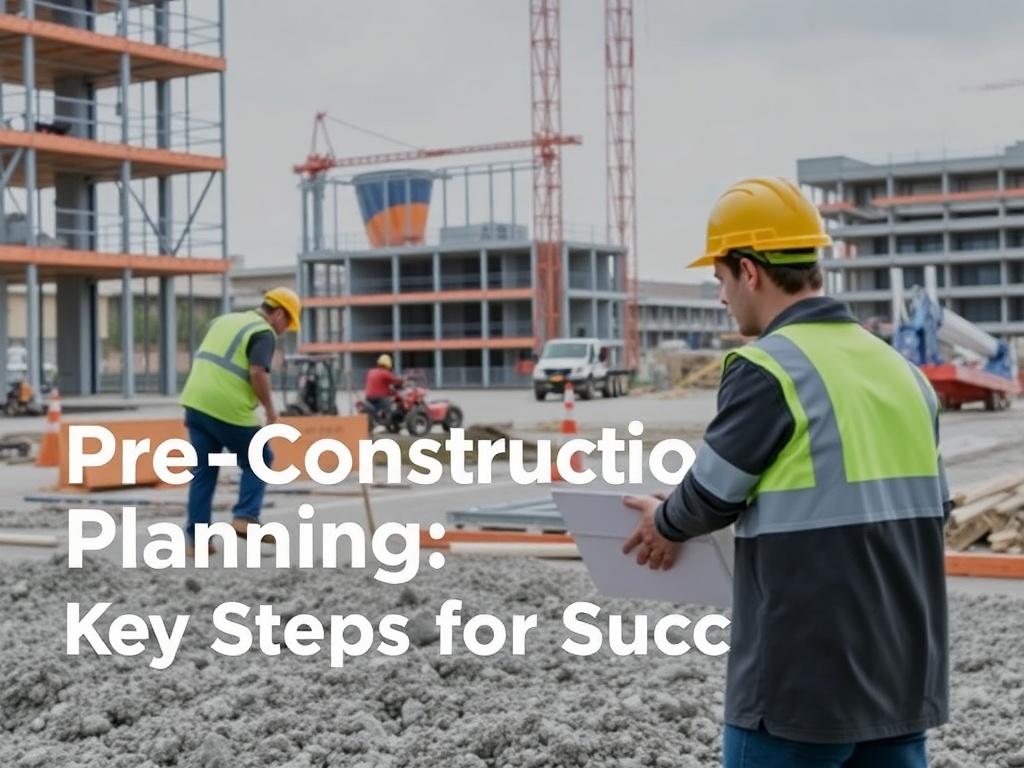
Mobilization is the operationalization of your plan. Confirm site access, temporary utilities, laydown areas, and security measures before first mobilization. A well-executed mobilization avoids costly last-minute adjustments and sets the tone for the project.
Plan for early enabling works such as temporary roads, erosion control, and site dewatering if necessary. These tasks frequently influence critical path and should be sequenced in coordination with long-lead procurement and permitting milestones.
Training, handover planning, and operations prep
Treat the end-user as a primary client during pre-construction. Early handover planning—defining O&M manuals, spare parts, and training requirements—smooths the transition from construction to operations and reduces post-occupancy issues.
Schedule owner training sessions and mock commissioning exercises into the project timeline. When systems are tested with operations staff involved, knowledge transfers happen earlier and the facility performs as intended from day one.
Common pitfalls and how to avoid them
A few recurring issues disrupt pre-construction: underestimating soft costs, ignoring stakeholder feedback, and compressing design and procurement timelines. Identify these traps in your risk register and set explicit controls to mitigate them.
One practical control is to require estimate reconciliation after each design milestone, forcing the team to confront scope changes immediately. Another is to maintain a public decisions log so late design changes have documented justifications and cost implications.
Quick reference checklist for pre-construction
The checklist below summarizes essential actions to take during pre-construction and can serve as a baseline for most projects. Tailor it to project scale, complexity, and client expectations to keep it useful rather than generic.
- Define project objectives, scope, and acceptance criteria
- Assemble core team and assign roles
- Complete site assessments and surveys
- Develop progressive cost estimates and contingencies
- Establish schedule with critical path and buffers
- Select procurement method and draft contracts
- Conduct constructability reviews and VE sessions
- Map permits, approvals, and stakeholder outreach
- Plan safety, logistics, and mobilization
- Set up document control, BIM, and communication plans
Sample procurement comparison table
The table below offers a concise comparison of common procurement approaches to help choose the right fit for your project’s goals and risk profile.
| Procurement method | Primary advantage | Main drawback | Best for |
|---|---|---|---|
| Design-bid-build | Clear roles and competitive pricing | Sequential schedule, potential adversarial bids | Simple, well-defined projects |
| Design-build | Faster delivery, single point of responsibility | Less owner control over design details | Projects needing speed and integrated teams |
| Construction manager at risk (CMAR) | Early contractor input, collaborative approach | Requires trust and clear performance incentives | Complex projects with unknowns |
Real-life case study: navigating a tight downtown renovation
Several years ago I worked on a downtown adaptive reuse project constrained by historic façade limitations, adjacent businesses, and a tight occupancy deadline. The pre-construction phase emphasized stakeholder mapping, early trade involvement, and a phased occupancy strategy to allow partial move-ins.
We performed multiple constructability workshops, created mock-ups for window systems, and preordered critical materials. Because decisions were made deliberately and early, we avoided schedule-destroying surprises and delivered spaces that met code and tenant expectations on an accelerated schedule.
Measuring success and continuous improvement
Define success metrics beyond cost and schedule—consider safety incidents, number of RFIs, change order frequency, and client satisfaction. Track these metrics during and after the project to identify opportunities for process improvement on future work.
After-action reviews and post-occupancy evaluations yield valuable lessons. On projects where we documented lessons and updated template documents, subsequent projects began with stronger contracts, clearer scopes, and predictable outcomes.
Practical tips for smaller projects and startups
Smaller projects don’t need the bureaucracy of large programs, but they still benefit from disciplined planning. Use scaled-down versions of the same essentials: a clear scope, a simple risk register, an achievable schedule, and a budget with a modest contingency.
If resources are limited, prioritize activities that reduce the biggest unknowns: site checks, permitting pathways, and long-lead items. A focused two-week pre-construction sprint can often avoid the most common startup problems and make execution smoother.
Final steps before breaking ground
Before mobilization, confirm that permits are in hand, contracts are signed, procurement for long-lead items is underway, and the team has a mobilization checklist. Revalidate the critical path schedule and ensure funding and insurance align with contract milestones.
Conduct a final pre-construction kickoff with all stakeholders to review safety protocols, communication plans, and escalation paths. When everyone leaves that meeting with a clear sense of roles and expectations, the probability of a smooth start increases dramatically.
Bringing plans to life
Pre-construction planning is where strategy meets execution. It’s not glamorous, but it is where the majority of value is preserved or lost. By investing time to define scope, assemble the right team, identify risks, and align stakeholders, you make sure the construction phase builds on solid ground.
When I look back on successful projects, the common thread is always a strong pre-construction phase—clear decisions, intentional procurement, and early communication. Treat this phase as the project’s compass, and you’ll find it much easier to steer to a successful outcome.