
Every successful building project begins long before the first foundation is poured; it starts with a clear understanding of the land itself. Whether you are planning a suburban subdivision, a commercial complex, or a single-family house, the decisions made during initial surveying and site preparation determine cost, timing, and long-term performance. This article walks through the practical steps, tools, and professional judgments that turn raw acreage into a buildable parcel.
Why surveying matters before you break ground
Surveying establishes the facts: property lines, topography, existing improvements, and legal limitations. Without an accurate survey you risk building across a boundary, violating an easement, or overlooking a physical constraint that could force expensive rework.
Beyond legal boundaries, surveys reveal elevation changes, drainage paths, and features such as rock outcrops or wetlands that directly influence design and earthwork. Early surveying creates a reliable baseline for engineers and contractors to design grading, utilities, and foundations with confidence.
In addition to protecting against costly mistakes, thorough surveying helps secure permits and financing. Local authorities and lenders commonly require certified survey documents as part of plan reviews and title clearances.
The core tools of modern surveying
Surveying today blends traditional instruments with digital technologies to provide speed and precision. The most common tools you will encounter are total stations, GNSS (Global Navigation Satellite Systems) receivers, levels, and increasingly, drones and laser scanners for large or complex sites.
Total stations combine electronic distance measurement and angle measurement to produce precise coordinate data; they remain indispensable for boundary work and detailed topographic surveys. GNSS receivers—often used in RTK (real-time kinematic) mode—are excellent for rapid positioning over wide areas and for establishing control points.
Drones equipped with high-resolution cameras or LiDAR sensors can map large tracts far faster than ground crews, and photogrammetry software converts imagery into 3D models and orthophotos. Laser scanners capture dense point clouds useful for as-built verifications inside structures or across rugged terrain.
Below is a compact table summarizing typical tools and their common uses on site:
| Tool | Primary use |
|---|---|
| Total station | Boundary surveys, topographic control, stakeout |
| GNSS/RTK | Rapid control point establishment, large-area mapping |
| Level / Auto-level | Precise elevation measurements, spot elevations |
| Drone (photogrammetry) | Orthophotos, contours, quick site reconnaissance |
| LiDAR / laser scanner | High-density 3D data, complex as-builts, vegetation-penetrating scans |
Steps in a typical land survey
A dependable survey starts with research: title report review, existing maps, and municipal records. This desktop work informs field crews about previous plats, recorded easements, and potential discrepancies before they set foot on the property.
Fieldwork follows, establishing control points and collecting both horizontal and vertical measurements. Surveyors will locate visible monuments, measure to improvements, and produce a detailed topographic map showing contours, trees, fences, and utilities.
Once data collection is complete, the surveyor prepares deliverables: boundary plats, legal descriptions, topographic drawings, and sometimes digital files for CAD or GIS. These outputs serve as contractual documents and foundational inputs for engineers and architects.
Understanding boundaries, easements, and legal documents
Property lines on the ground do not always match perceptions or previous plans; a survey provides a definitive legal depiction. Surveyors reconcile deeds, historical plats, and physical evidence to establish a boundary that can stand up in court if needed.
Easements and rights-of-way are common constraints that affect where buildings, driveways, and utilities can be placed. Utilities, drainage easements, and conservation restrictions can limit use of portions of the site, so mapping them early prevents costly surprises during construction.
Legal descriptions, certified plats, and recordable documents prepared by licensed surveyors are necessary for subdividing land or obtaining construction permits. When disputes arise, those documents and the methodology used to create them become the authoritative record.
Site investigation: soils, hydrology, and environmental constraints
Survey data tells you what the surface looks like; geotechnical investigations tell you what lies beneath and how it will behave. Engineers use soil borings, standard penetration tests, and lab analyses to determine bearing capacity, compressibility, and groundwater conditions.
Hydrology studies assess surface and subsurface water movement, identifying floodplain limits, seasonal high water tables, and stormwater patterns. Those findings drive foundation design, waterproofing strategies, and placement of stormwater infrastructure.
Environmental constraints such as wetlands, endangered species habitat, or historical sites can significantly affect site layout and permitting. Early delineation of these features often results in better designs and avoids expensive delays down the line.
Clearing, grading, and earthwork essentials
Grading reshapes the landscape to establish proper drainage, create buildable pads, and achieve desired elevations for structures and roads. Successful grading balances cut and fill to minimize import or export of material and reduce cost.
Clearing operations remove vegetation and unwanted structures while preserving protection zones around sensitive trees or habitats when required. Good contractors protect topsoil by stockpiling it separately for later reuse in landscaping and erosion control.
Earthwork also involves compaction, benching for slopes, and rock excavation when bedrock is encountered. Proper compaction testing and adherence to engineered grading plans prevent future settlement and foundation issues.
Drainage and erosion control practices
Water is the primary enemy of a stable site; thoughtful drainage design channels runoff away from foundations and sensitive areas. Designers typically use a combination of surface grading, swales, culverts, and storm sewers to manage flow and reduce ponding.
Erosion control starts at the beginning of construction and continues until vegetation is established. Temporary measures such as silt fences, sediment basins, matting, and phased clearing protect downstream waterways and comply with stormwater permits.
Long-term BMPs (best management practices) like detention basins, infiltration trenches, rain gardens, and vegetated swales reduce peak flows and help recharge groundwater. Choosing the right combination depends on soil permeability, site slope, and local regulations.
Utilities, access, and staging the site

Before major earthwork begins, utility locations must be confirmed and coordinated. Call-before-you-dig services (811 in the U.S.) and subsurface investigations such as GPR help avoid damaging existing buried lines.
Access design affects cost and safety: temporary haul roads, entrance stabilization pads, and staging areas reduce mud tracking and equipment wear. Thoughtful staging keeps materials, deliveries, and equipment organized and minimizes re-handling.
Utility planning also considers long-term maintenance: burying lines to avoid conflicts, providing adequate easements, and planning service routings that reduce future excavation near foundations and paved surfaces.
Safety, permits, and regulatory compliance
Site preparation touches multiple regulatory regimes: building permits, grading permits, stormwater permits, wetlands approvals, and sometimes endangered species consultations. Each jurisdiction has specific submission requirements, and skipping steps can halt work.
Safety is non-negotiable on a construction site. OSHA standards for trenching, fall protection, and heavy equipment operation must be enforced, and a Site-Specific Safety Plan helps ensure everyone understands hazards and responsibilities.
Periodic inspections by municipal authorities and third-party engineers often accompany permit conditions. Keeping accurate records, erosion control logs, and inspection reports can prevent fines and protect against liability claims.
Working with surveyors, engineers, and contractors
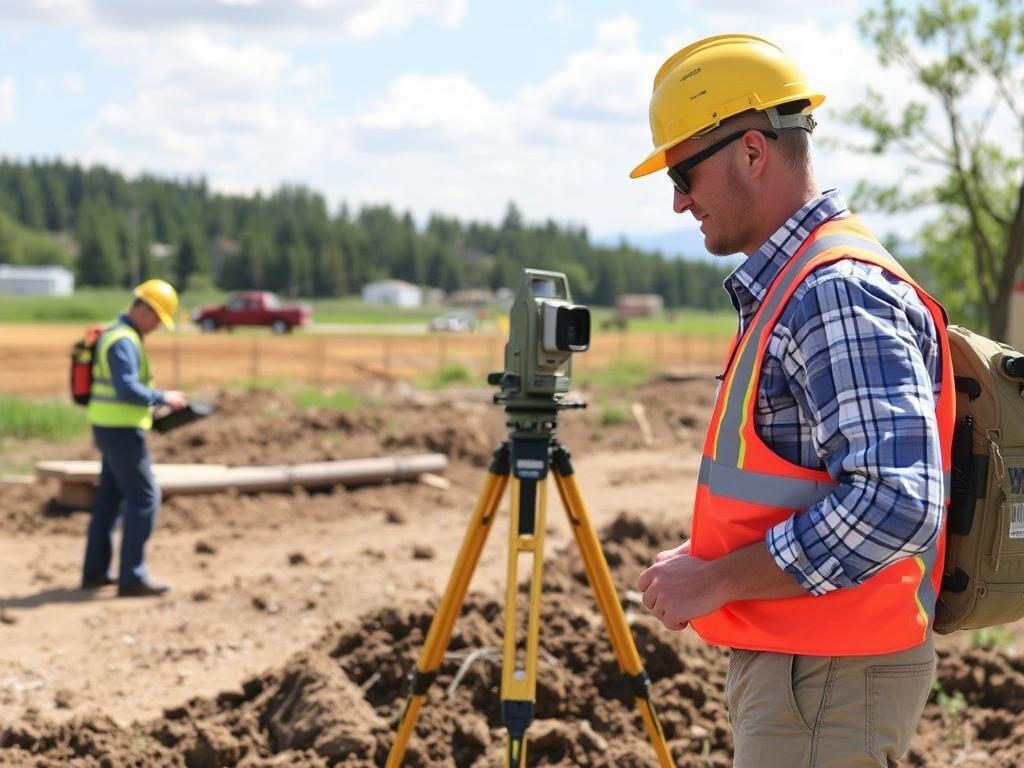
Successful projects depend on clear roles and communication among the surveyor, civil engineer, and contractor. The surveyor provides the spatial framework, the engineer translates that framework into a buildable design, and the contractor executes the physical work.
Writing a detailed scope of work and defining deliverables—such as CAD drawings, as-built surveys, or encroachment certificates—reduces misunderstandings. Regular coordination meetings and shared digital models help align expectations.
When disputes arise, documented surveys and as-built records clarify what was intended versus what was constructed. Investing in accurate record-keeping early often saves time and legal expense later.
Common mistakes and how to avoid them
Rushing into clearing without a current survey is a frequent and costly error; moving trees or structures that fall within an easement can trigger legal action. Always secure an up-to-date boundary and utility locate prior to heavy work.
Another common mistake is underestimating drainage impacts. Poorly designed grading can concentrate runoff toward neighboring properties, leading to claims and required remediation. Engaging a civil engineer during site planning reduces that risk.
Finally, ignoring seasonal conditions during planning—such as a high water table in wet months—can lead to failed foundations or the need for expensive dewatering. Plan investigations and scheduling to reflect seasonal realities.
Real-life example: how early surveying saved a project
On a mixed-use project I worked on, an early topographic and boundary survey revealed a century-old drainage easement crossing the center of a proposed building pad. The record to the easement was ambiguous, and the owner assumed the strip was included with the property.
Because the survey uncovered the easement before grading and foundation work began, the design team relocated the building footprint and redesigned parking to leave the easement clear. The client avoided an expensive legal fight and redesign that would have cost months of delay and significant expense.
This experience reinforced my view that investing in thorough surveying and site analysis is not an optional line item, but rather a risk-management strategy that pays for itself many times over.
Phased approach to site preparation
A phased approach breaks the work into logical steps: initial survey and investigation, permit acquisition, clearing and rough grading, utilities and stormwater infrastructure, and final grading and landscaping. Each phase produces deliverables that inform the next.
Phasing allows for contingency planning and staged financing, and it reduces the area exposed to erosion by limiting active disturbance. For complex sites, phasing also enables incremental testing of soils and hydrologic behavior as work progresses.
Contractors often prefer phased mobilizations because they can plan equipment and labor more efficiently, and owners benefit from clearer milestones and cost control throughout the build process.
Checklist for pre-construction surveying and site prep
Use a focused checklist to ensure nothing essential is overlooked during pre-construction. Below is a practical list that teams can adapt to project scale and local requirements.
- Obtain a current boundary and topographic survey from a licensed surveyor.
- Request utility locates (811) and conduct subsurface investigations as needed.
- Complete geotechnical borings and lab testing for foundation and pavement design.
- Delineate wetland, floodplain, and other environmental constraints.
- Prepare a grading plan and stormwater management design consistent with local codes.
- Secure necessary permits: building, grading, stormwater, and environmental.
- Develop a site-specific safety plan and erosion control plan (SWPPP if required).
- Design access routes, staging areas, and utility corridors before mobilization.
- Plan for topsoil preservation and erosion control during clearing.
- Coordinate schedule and deliverables with surveyor, engineer, and contractor.
Checking these items off early reduces surprises and positions the project for a smoother execution phase.
Cost considerations and timeline impacts
Surveying and site preparation costs vary with site size, complexity, accessibility, and regulatory requirements. A small residential lot will be relatively inexpensive, while contaminated or heavily wooded parcels with topographic challenges will require more time and budget.
Timelines are affected by permitting processes, seasonal access, and the need for specialized investigations such as archaeological studies or endangered species surveys. Weather can also play a major role; wet seasons slow earthwork, while frozen ground can limit utility installations.
Budgeting realistic contingencies—typically 10 to 25 percent depending on site risk—helps absorb unforeseen conditions like undocumented fill, buried obstructions, or the need for additional stabilization measures.
Permitting: what to expect and how to streamline the process
Permit requirements vary widely by jurisdiction but often include grading permits, stormwater permits, environmental approvals, and building permits. Local planning and engineering departments will require detailed plans and sometimes construction management documents to approve work.
Proactive engagement with permitting agencies early in design shortens review cycles. Pre-application meetings, early submission of conceptual plans, and clear responses to agency comments demonstrate good faith and can prevent multiple re-submissions.
Using experienced local consultants who understand municipal expectations often expedites approval and reduces the back-and-forth that comes from unfamiliar or incomplete submissions.
Handling wetlands, floodplains, and sensitive areas
Wetlands and floodplains present special constraints that can significantly reduce usable site area. Wetland delineation, usually by qualified environmental specialists, identifies regulated areas and potential mitigation needs.
When development near sensitive areas is unavoidable, mitigation strategies may include creating replacement wetlands, establishing buffer zones, or redesigning stormwater systems to mimic natural hydrology. Each of these approaches requires coordination with environmental regulators and clear documentation.
Sometimes avoiding sensitive areas altogether is the most cost-effective option, but that decision depends on project goals, site value, and regulatory flexibility.
Quality control and verification during construction
Surveyors often return to the site for stakeout and to verify that construction matches design intent. Regular as-built surveys document elevations, utilities, and features as they are constructed, providing invaluable records for later maintenance and for final acceptance by authorities.
Engineers typically require compaction testing, concrete strength testing, and inspection of drainage structures during construction. Ensuring these quality-control activities are scheduled into the work prevents late discoveries of noncompliance.
Maintaining open lines of communication between field staff and design teams allows issues to be addressed promptly, sometimes with minor adjustments rather than full redesigns.
Machine control and automation in grading
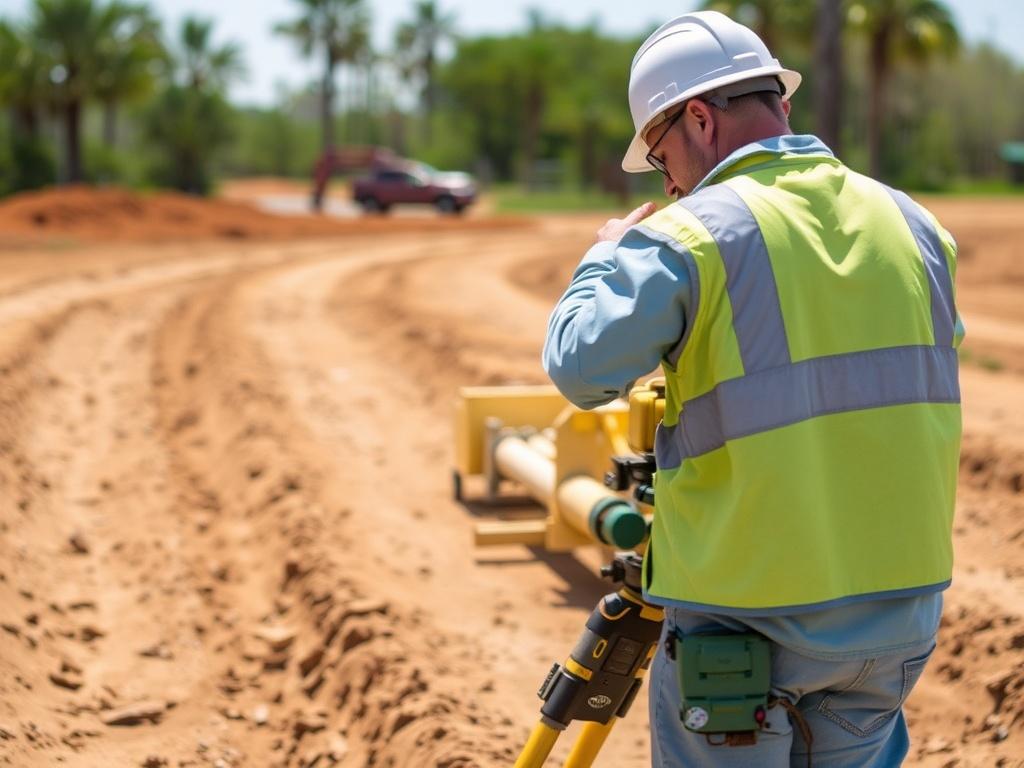
Machine control systems mounted on graders, bulldozers, and excavators use GPS and 3D models to guide operators to precise elevation and slope targets. This technology reduces the need for manual staking and increases accuracy for finish grades.
Automated grading can speed up work, reduce rework, and decrease material quantities by ensuring cut and fill targets are met precisely. For large earthwork projects, machine control often pays for itself through improved productivity and reduced material movement.
To use machine control effectively, accurate base models from surveyors are essential, as are periodic verification checks to confirm equipment calibration and field conditions.
Digital collaboration and as-built deliverables
Cloud-based platforms allow surveyors, engineers, contractors, and owners to share the latest drawings, point clouds, and models in real time. This transparency reduces version control issues and makes coordinated changes easier to implement.
As-built deliverables—both traditional paper plats and digital models—are valuable for future maintenance, property transfers, and expansions. Investing in digital as-builts compatible with GIS or BIM tools increases long-term value to property owners.
Standardizing file formats and coordinate systems at the project outset prevents costly conversion errors and ensures interoperability between different teams and software platforms.
Negotiating contracts and scopes of work
Clear contracts establish responsibilities for surveys, grading tolerances, erosion control, and utility installations. Include specific deliverables, acceptance criteria, and dispute resolution mechanisms to protect all parties.
For survey work, specify the required stamp or certification, datum and coordinate system, and expected accuracy. For contractors, reference the engineered grading plan and provide defined inspection procedures and testing requirements.
Payment terms tied to milestones and verification—such as successful completion of control points, submission of as-built data, or permit sign-offs—align incentives and reduce conflict.
Environmental stewardship and sustainable practices
Sustainable site preparation minimizes disturbance, preserves native vegetation where practical, and uses low-impact construction techniques. Incorporating permeable pavements, green roofs, and native landscaping reduces long-term runoff and maintenance costs.
Reusing on-site soils, preserving topsoil, and limiting heavy equipment to designated routes reduce compaction and support faster revegetation. These practices also lower hauling costs and carbon emissions associated with transporting materials off-site.
Owners increasingly value sustainable certifications and outcomes; aligning site-prep decisions with environmental goals can increase project appeal and community acceptance.
Technology trends shaping the future of site prep
Emerging technologies continue to reshape how we survey and prepare sites. Advances in drone imaging, LiDAR point clouds, and AI-driven change detection speed up site assessments and increase accuracy.
Digital twins—high-fidelity, continuously updated models of the site and infrastructure—help owners manage assets through construction and into operation. Integration with IoT sensors can provide live feedback on erosion, groundwater levels, and equipment productivity.
Machine learning tools analyze historical site data to predict issues like settlement or drainage failures, enabling designers to apply preventive measures rather than reactive fixes.
When to call in specialty consultants
Certain sites require expertise beyond that of a typical civil or geotechnical team. Contaminated land, karst terrain, archaeological sensitivity, and protected species habitats demand specialists to assess risk and design appropriate mitigation.
Bringing these consultants in early—during the initial survey and feasibility phase—avoids later surprises and integrates their findings into the overall site concept. Their recommendations may affect layout, foundation design, and permitting paths.
Experienced project managers coordinate these specialists and integrate their deliverables into the central project documentation to maintain clarity and continuity.
Common questions owners ask—and clear answers
Owners often ask how much surveying will cost and how long it will take. Costs depend on scale, complexity, and location, but a reputable surveyor will provide a scoped proposal tied to deliverables and anticipated timelines.
Another frequent question concerns the difference between a boundary survey and a topographic survey. A boundary survey defines legal lines and monuments, while a topographic survey maps surface features and elevations; many projects require both.
Finally, owners want to know who bears responsibility if discrepancies arise. Contracts and certifications determine liability, but clear documentation and proactive communication typically prevent disputes.
Putting plans into practice: final remarks
Good surveying and careful site preparation transform uncertainty into manageable risk and tangible progress. They provide the spatial and geotechnical foundation upon which architects, engineers, and builders can confidently create durable structures.
Starting with thorough investigations, engaging the right specialists, and using modern tools for mapping and control reduces surprises and keeps projects on schedule. Real-world experience repeatedly shows that the modest upfront investment in high-quality surveying and thoughtful site preparation returns far more in saved time, reduced change orders, and long-term performance.
As you plan your next project, prioritize accurate information, clear communication among professionals, and a phased approach that respects both site conditions and regulatory requirements. The ground you prepare today will support the buildings and communities of tomorrow, so approach it with care and intent.