
Deciding between updating the house you love and starting fresh with new construction is one of the biggest, most personal choices a homeowner can make. The right answer depends on money, time, emotional attachment, future plans, and countless practical details that often don’t show up on a budget sheet. This article walks through the questions that actually matter, lays out trade-offs clearly, and offers practical steps to help you choose with confidence.
Why this decision matters more than you think
At first glance the choice seems simple: renovate to save money or build new to get everything you want. But beneath that surface are ripple effects that shape your daily life for years—energy bills, maintenance demands, neighborhood fit, and resale prospects. A choice made in haste can cost decades in inconveniences or lost value.
Your home is also a financial anchor. Whether you’re increasing equity through strategic improvements or investing in a brand-new structure, the decision ties into taxes, insurance, and long-term wealth planning. Taking the time to compare scenarios can protect both your wallet and your peace of mind.
Clarifying goals: what do you really need?
Start by separating wants from needs. Do you require more square footage, more bedrooms, or accessibility modifications? Or is your priority a modern kitchen, better storage, or improved curb appeal? Defining must-haves versus wish-list items makes cost-benefit comparisons much clearer.
Ask how long you plan to stay. If this house will be your home for a decade or more, larger investments make more sense. Short-term owners should focus on projects that offer strong market appeal and fast return on investment rather than expensive personalization.
Emotional and historical value
Some homes have character you can’t recreate: mature landscaping, a neighborhood fabric, or architectural details with sentimental value. Renovation preserves that intangible quality, which often matters more than square footage or layout. Recognize when emotional value tips the scale.
Conversely, if a property’s bones are poor or it’s functionally obsolete—unstable foundation, pervasive mold, or severe layout problems—emotion may not be enough to justify continual repairs. Be honest about whether nostalgia is masking practicality.
Cost comparison: what numbers to focus on
Costs rarely line up neatly. Renovations can look cheaper up front but incur hidden expenses like structural surprises, code upgrades, and temporary housing. New construction demands a larger initial investment and longer financing arrangements but can avoid many retrofit costs.
Focus on total project cost, not just headline figures. Include permits, design fees, utility tie-ins, landscaping, contingencies, and inflation. Lenders and builders often provide estimates that don’t capture real-world overruns—plan a realistic contingency of 10–25% depending on scope.
Quick cost comparison table
| Factor | Renovation | New construction |
|---|---|---|
| Typical initial cost (relative) | Lower to moderate | Higher |
| Risk of surprises | High (hidden damage) | Moderate (site conditions) |
| Timeframe | Weeks to months | Months to a year+ |
| Design flexibility | Limited by existing structure | High |
| Energy efficiency potential | Moderate with upgrades | High (new systems) |
Understanding timeline and disruption
Time matters in ways beyond project length. Renovations can be phased, but often involve living among dust, noise, and tradespeople for weeks or months. Some homeowners move out for major remodels to speed work and preserve sanity.
New construction requires a longer commitment up front—land preparation, foundation, framing, and finishing—but often creates less cumulative household disruption if you build elsewhere or vacate the site entirely. Evaluate how much upheaval you and your family can tolerate.
Practical limitations of each route
Renovating means working within existing footings, load-bearing walls, and rooflines. You can alter rooms and systems, but major changes—like moving a staircase or expanding a footprint—become exponentially more expensive. On the other hand, construction on a tight lot can be constrained by setbacks, soil conditions, and access.
New builds allow you to shape spatial flow, orientation, and performance from the ground up. However, the freedom comes with choices: finishes, appliances, and landscaping decisions add cost. Too many additions without restraint can balloon the budget quickly.
Zoning, permits, and code compliance
Permitting can be the silent project killer. Renovations in older homes often trigger code upgrades, particularly for electrical, plumbing, and insulation. These upgrades protect safety but add cost. Check with local building departments early to understand likely requirements.
New construction typically follows modern code but requires its own suite of permits—from site development to final inspections. If your property sits in a historic district or has restrictive covenants, both renovation and new construction can face additional hurdles.
Energy efficiency and long-term operating costs
Building new gives you the cleanest slate to optimize insulation, orientation, HVAC efficiency, and water systems. Modern windows, continuous insulation, and high-performance mechanicals can dramatically reduce operating costs over decades.
Renovations can deliver significant efficiency gains too, but success depends on scope and integration. Insulating walls, replacing windows, and updating HVAC are effective, but plumbing and electrical upgrades may be invasive. Assess expected energy savings against the retrofit price tag.
Resale value and market considerations
Real estate markets are local. In some neighborhoods, adding a second bathroom or modernizing a kitchen returns a high percentage of the investment. In others, oversized spec homes can underperform because local buyers prefer traditional styles or smaller footprints.
New build homes often command a premium for modern layout and systems, but that premium must be balanced against comparable sales. Work with a local realtor early in the process to understand buyer expectations and price ceilings for both renovated and newly built homes.
Design freedom: what matters to you
If you crave an open plan, specific ceiling heights, or an integrated smart home system, new construction makes execution straightforward. You get to design systems and junction points for seamless integration without retrofitting around old framing.
Renovation requires creativity. Skilled architects and contractors can transform awkward layouts into practical spaces, but sometimes the best solution is a surgical addition instead of a full gut. Decide which compromises you can accept before committing financially.
Hidden risks in renovation projects
I’ve seen kitchens balloon in cost because rotten joists needed replacement once cabinets came out. Crawlspace problems, asbestos, or knob-and-tube wiring are common surprises. These discoveries shift scope and require immediate remediation for safety and resale.
To mitigate hidden risk, budget for thorough inspections—foundation, structural, pest, lead, and mold—before signing contracts. Even then, set aside a contingency and contractually define how unexpected conditions will be handled and priced.
Hidden risks in new construction
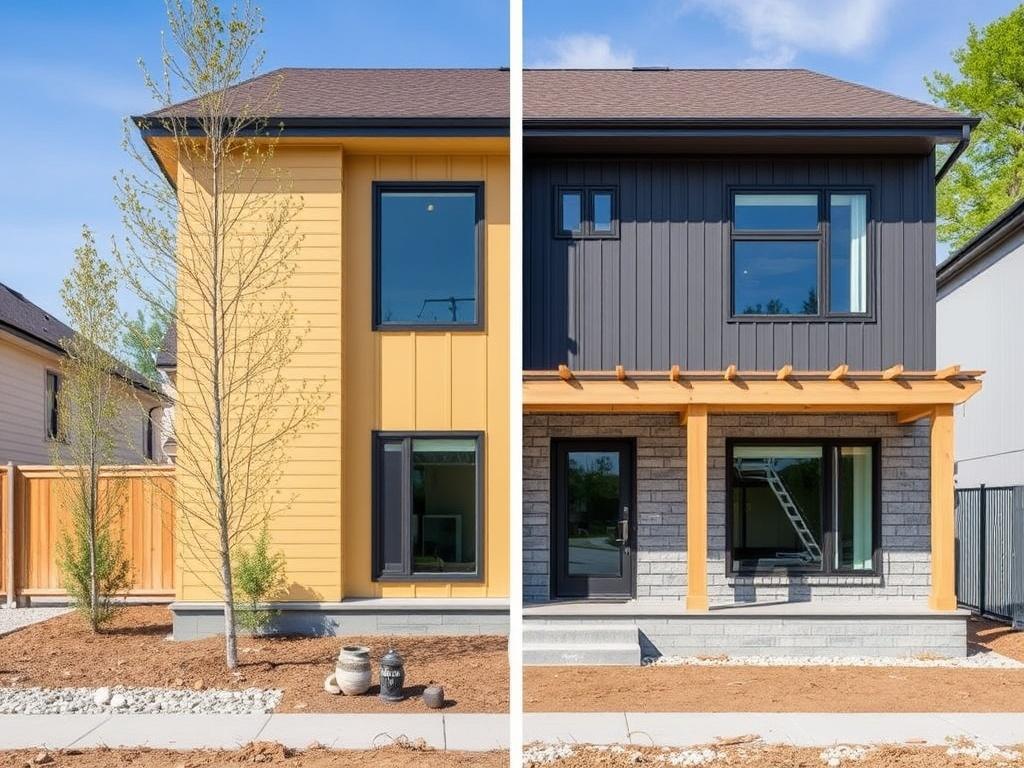
New construction isn’t risk-free. Bad site surveys, unexpected utility easements, or poor soil conditions can delay work and add costs. Supply-chain disruptions and labor shortages can extend timelines and increase material costs unexpectedly.
Choose contractors with strong reputations for project management and transparent change-order policies. Plan for weather-related delays and include buffer time and budget to absorb the inevitable hiccups.
When renovation makes the most sense
Renovation often wins when your home has solid structure, desirable location, and character you want to preserve. Cosmetic and systems upgrades—kitchen, bathrooms, windows—deliver outsized benefits in these cases. A targeted renovation can modernize with less cost and environmental impact than building anew.
My own family renovated an older bungalow to add a bathroom and open the kitchen. We kept the original porch and maple floors, and the result felt true to the home while solving daily inconveniences. The project taught me the value of clear priorities: we only upgraded what mattered most to our lifestyle.
When new construction is the smarter route
Start fresh when the existing house is functionally obsolete, the lot supports a larger footprint, or you need a layout that a retrofit can’t provide economically. Building new also suits buyers who value long-term performance and the latest building science without compromise.
A client I worked with demolished a small ranch to build a two-story home that matched their multigenerational needs. The upfront cost was higher, but their annual energy bills and maintenance demands dropped dramatically, and the house fit their lifestyle in ways a renovation never could.
Hybrid solutions: additions, partial rebuilds, and gut rehabs
Often the best answer sits between extremes: keep what’s good and replace what’s bad. Additions let you gain space while preserving character. Partial gut rehabs allow you to rebuild problematic areas while minimizing cost elsewhere.
Consider strategic interventions like adding a master suite or enlarging the kitchen, paired with incremental system upgrades. Hybrids can balance budget and customization while avoiding the full disruption of a new build.
Financing options and how they influence the choice
Financing shapes what’s feasible. Renovations can be funded with a cash-out refinance, home equity line of credit (HELOC), or renovation loan like an FHA 203(k). New construction commonly requires construction loans that convert to permanent mortgages once the structure is complete.
Construction loans carry draws and inspections that add administrative complexity, and interest-only draw periods can impact monthly payments early on. Talk to lenders about total cost including interest during construction, conversion terms, and whether your project qualifies for energy-efficiency incentives.
Practical decision checklist
Use a clear checklist to turn subjective feelings into objective criteria. Start by listing non-negotiable needs, then map constraints: budget ceiling, timeline, neighborhood compatibility, and financing options. Quantify as much as possible to make comparisons easier.
- Define must-haves vs. nice-to-haves.
- Get preliminary estimates for both renovation and new construction.
- Inspect the existing property thoroughly for hidden issues.
- Consult a local realtor about resale and neighborhood norms.
- Speak with lenders about realistic financing scenarios.
- Factor in contingency and decide an acceptable overrun percentage.
- Choose a project manager or contractor and ask for references.
Working with professionals: who you need and when
Early collaboration with an architect or designer yields clarity: they translate desires into drawings and costed options. For small remodels you might work directly with a contractor, but for major changes an architect helps maximize layout and value.
Hire an experienced general contractor for project coordination, or consider a project manager if you want to be more hands-on. Don’t skip third-party inspections—structural, mechanical, and final—to catch issues early and ensure code compliance.
How to get realistic estimates
Quotes can vary wildly. Ask for itemized bids and compare apples to apples. A low bid might use cheaper materials or omit necessary work. Request references and visit recent projects if possible to verify quality.
Break the project into clear scopes—demolition, structural, systems, finishes—and assign allowances where exact choices aren’t yet made. This method helps you see where savings can be realized and where costs are fixed.
Permits, insurance, and inspections
Never skip permits to save time. Illegal work can complicate future sales, nullify insurance coverage, and create safety hazards. Your contractor should pull all necessary permits and schedule inspections on time.
Review insurance: ensure the contractor carries general liability and worker’s comp. For new builds, verify builder’s risk coverage during construction. For renovations, check that your homeowner’s policy covers the scope or purchase temporary riders if needed.
Sustainability and materials choice
Sustainability can be a guiding principle whether you renovate or build new. Reusing materials reduces embodied carbon, while selecting high-efficiency systems reduces operational emissions. Each approach has trade-offs: sometimes replacing an old system yields bigger lifetime savings than incremental retrofits.
Consider durable materials that age gracefully and are easy to maintain. Energy-efficient windows, airtight envelopes, and heat-recovery ventilators pay dividends over time. For many homeowners, green upgrades increase comfort and resale appeal.
Timing your project with the market
Market timing matters. Renovating during a seller’s market can add value quickly, but costs for labor and materials may spike. Conversely, sluggish markets might give you bargaining power but lower resale gains. New construction faces similar forces but with a longer exposure to market cycles.
Work with a realtor and contractor to develop timing strategies. If resale is likely within a few years, prioritize projects with strong market alignment rather than personal flourishes that may not appeal broadly.
Accessibility and aging-in-place considerations
If you plan to age in place, accessibility features like single-level living, wider doorways, and zero-step entries are crucial. These changes can be simpler to implement in new construction but can also be integrated thoughtfully into renovations.
Design decisions that support long-term independence—lever-handle faucets, curbless showers, and lower light switches—often add only a modest premium if you plan them early, regardless of renovation or new build choice.
Maintaining neighborhood character
Neighborhood fit matters for both community cohesion and resale. Dramatically altering a home’s scale or style can face neighborhood opposition or restrictive design review boards. Preserve elements that contribute positively to the street, especially in established areas.
If your plan diverges from neighborhood norms, expect extra scrutiny and perhaps additional costs for design adjustments. Sometimes building a brand-new home that respects scale and proportion is the kinder route to both neighbors and future buyers.
Real-life example: a small urban infill case
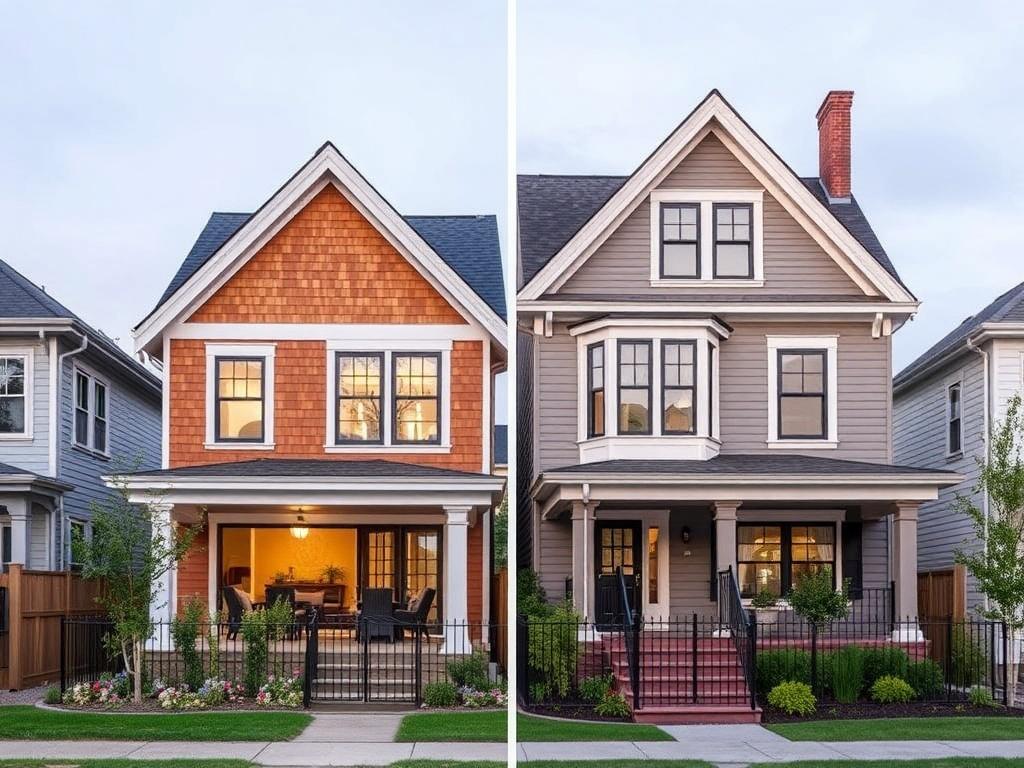
A friend owned a compact city lot with a sagging bungalow and wanted more space without leaving the neighborhood. The neighborhood’s lot coverage rules limited expansion, so a second-floor addition with a careful structural reinvestment proved the best compromise.
The renovation preserved the street-facing character, added two bedrooms and a modern kitchen, and cost roughly two-thirds of a complete teardown and rebuild. Their lifestyle needs were met and the project improved long-term value while maintaining neighborhood continuity.
Real-life example: suburban teardown and build
A couple in the suburbs purchased an older split-level on a generous lot. The house’s layout and foundation were incompatible with their multigenerational plans. After a market analysis, they chose to demolish and build a modern two-story home designed for separate living zones.
Though the upfront cost was higher, the new house delivered energy savings, lower maintenance, and a layout perfectly aligned with their family’s needs—benefits that made sense for their long-term horizon.
Common pitfalls and how to avoid them
Common errors include underestimating contingency, choosing aesthetics over function, and failing to check references. Avoid scope creep by finalizing major decisions before construction. Change orders are expensive and slow projects.
Prioritize good contracts with clear payment schedules and warranty terms. Regular communication with your project team reduces surprises and keeps expectations aligned throughout the build or renovation.
Negotiating with contractors
Get multiple bids and compare not just price but timelines, quality of materials, and payment structures. Beware of unusually low bids and insist on written warranties and clear dispute resolution clauses. A trustworthy contractor will welcome references and provide transparent cost breakdowns.
Build a relationship of mutual respect. Regular site meetings, documented change orders, and a single point of contact streamline projects and reduce friction when problems inevitably arise.
How to evaluate returns on investment
ROI depends on local market realities and the exact scope of work. Kitchens, bathrooms, and energy upgrades typically offer good returns. Major additions can also pay off if they align with neighborhood norms and buyer demand.
Calculate ROI by comparing total invested dollars against the projected increase in market value, not just cosmetic improvements. Speak with a realtor to estimate realistic resale premiums for the features you plan to add.
Preparing mentally and logistically for the project
Renovation and construction demand patience. Create a living plan: where will you stay during heavy work, how will deliveries be staged, and who handles pets and children? Thoughtful logistics reduce stress and protect the schedule.
Document decisions in writing and keep a centralized binder or digital folder with plans, permits, and warranties. Clear documentation becomes invaluable if disputes arise or when selling the home later.
Final thought: making the choice that fits your life
There’s no universal verdict on Renovation vs. New Construction: Which is Right for You? The right decision balances practical constraints with personal priorities—budget, time horizon, emotional attachment, and long-term goals. Use objective data, local market insight, and honest self-reflection to guide your choice.
Whether you preserve an old porch and modernize a kitchen, or clear the lot to create a bespoke home, thoughtful planning and skilled professionals will make the difference between a stressful ordeal and a project that enhances daily life. Start with clear priorities, gather reliable estimates, and proceed with a contingency plan—then build or renovate something you’ll genuinely enjoy for years to come.