
Stairs do more than connect floors; they shape how you move through a home, influence light and sightlines, and can anchor an entire interior palette. This article walks through practical principles of staircase design and construction basics, from human-scale geometry to materials, code essentials, and real-world building techniques. Whether you’re planning a remodel, designing a new build, or just curious, you’ll get a clear roadmap for making stairs that work and last.
Why good stair design matters
Stairs are inherently functional—people rely on them thousands of times a year—so ergonomics and safety must come first. A poorly proportioned staircase makes simple tasks awkward and increases the risk of trips and falls, while a well-designed one becomes intuitive to use, even when carrying groceries or a sleeping child.
Beyond function, stairs contribute a house’s personality. A simple straight run can feel efficient and calm; a curved or floating stair introduces drama and lightness. Thoughtful choices about scale, material, and rail design can elevate a stair from invisible connector to a focal point.
Finally, stairs are expensive and permanent once built; mistakes are costly. Investing time up front to understand geometry, structure, and codes saves money and frustration later. This article gives practical, build-focused insight so you avoid common pitfalls.
Fundamental geometry and ergonomics
Stair geometry determines comfort and safety. The primary measurements are riser height and tread depth; together they set the slope and affect how natural the stride feels. A stair that is too steep or too shallow forces awkward motions and invites missteps.
Good stair design harmonizes with human anatomy. Builders often use the “rule of thumb” that relates two risers plus one tread to an average step length, but modern codes refine that with maximum riser limits and minimum tread depths. Respecting these guidelines produces a staircase that feels predictable underfoot.
Keep in mind that ergonomics shift with context. A secondary basement stair can be steeper than a main staircase, and a public stair requires gentler proportions than a private stair. Always match geometry to expected use, circulation patterns, and the people who will use the stair most frequently.
Rise, run, and slope explained
The rise is the vertical distance between consecutive treads; the run (or tread depth) is the horizontal depth you step on. Together they define the stair’s slope and determine stride length. Changing either dimension alters how the stair feels and how many steps you need to span a given floor-to-floor height.
Certain building codes set maximum riser heights—commonly around 7 3/4 inches—and minimum tread depths—often about 10 inches—but local codes can vary. Aim for consistency: identical risers throughout a flight make stair use predictable, and variations as small as a quarter-inch can cause trips.
Nosing, nosing projection, and tread overhang
Nosing is the front edge of a tread that often extends beyond the riser below. It helps with foot placement and increases usable tread depth without lengthening a stair. The width of the nosing affects comfort when walking and the visual rhythm of the stair.
Consider slip resistance when selecting nosing materials and edge profiles. Rounded nosing can be comfortable but may wear faster; square nosing can look crisp yet feel harsher. Integrating a slight nosing with a slip-resistant finish tends to strike a good balance for most interiors.
Headroom and landings
Headroom—the clear vertical space above a stair—must allow unobstructed passage. Building codes set minimum headroom, commonly around 6 feet 8 inches in many jurisdictions, but providing more space improves comfort and reduces the sense of confinement. Always measure for the tallest expected features, such as pendant lights or a finished ceiling.
Landings are required at changes of direction and between long flights, offering rest points and safer transitions. A landing should be at least as wide as the stair and deep enough to allow comfortable turning, especially where stairs change direction by 90 degrees or 180 degrees.
Building codes and safety essentials
Building codes exist to protect occupants and to standardize expectations for stair performance. Before sketching dimensions or choosing materials, review local code requirements for rise, run, headroom, handrails, and guardrails. Codes address not just measurements but also structural capacity and loading.
Handrails and guards are critical safety components. Handrails provide a grip to steady movement; guards prevent falls from open sides. Codes set heights, graspability, and openings limits for these elements, often specifying that openings be small enough to prevent a four-inch sphere from passing through.
Remember that residential and commercial requirements differ. Public or high-occupancy spaces often require more robust dimensions and additional safety measures, such as continuous handrails on both sides. When in doubt, consult a local building official early in the design process.
Handrail design and placement
Good handrail design balances comfort, strength, and code compliance. A typical residential handrail height sits between 34 and 38 inches above the nosing, with a round or shaped profile that fits a human hand. Continuous rails without gaps are easier to use while ascending or descending.
End conditions matter: returns into posts or the wall reduce snags on clothing and impede objects from catching, while sturdy newel posts anchor the rail system. If children or elderly occupants are present, consider dual-height rails or additional assistive features to increase accessibility.
Guardrails and balustrades
Guards protect against vertical drops alongside a stair or landing. Code typically mandates a minimum height—often 36 inches for residential guards—and limits the size of the openings to prevent small children from slipping through. Materials and patterns should meet both aesthetic goals and safety rules.
Beyond code, think about sightlines and light. Open balusters let daylight pass and maintain visual connection between floors, while glass panels create an uninterrupted view but require careful detailing to avoid glare and maintenance headaches. Choose a solution that matches the household’s lifestyle and maintenance tolerance.
Structural components and how they work
Understanding primary stair components clarifies where load paths run and where attention is required during construction. The main structural elements are stringers, treads, risers, landings, and support framing. Each plays a distinct role in carrying people and resisting forces.
Stringers are the backbone of many stairs; they support treads and risers and transfer loads to framing. You can use cut stringers (notched), housed stringers (treads sit within a slot), or box stringers (enclosed), depending on finish desires and structural needs. Choosing the right type affects labor and material handling.
Connections—how stringers meet floor framing or attach to posts—are frequent trouble spots. Properly anchored connections with metal brackets, wood blocking, and through-bolts prevent movement and squeaks. During construction, temporary bracing keeps elements square until final fastening is completed.
Stringers: types and sizing
Cut stringers are common in residential work because they are straightforward to lay out and cut with a circular saw and a template. They require careful measurement to match riser and tread dimensions precisely, and deep notches can weaken the member, so thicker or multiple stringers may be necessary for long spans.
Box stringers conceal treads and risers within a closed box, offering a clean look and sometimes greater rigidity. Housed stringers, where the treads fit into a routed slot, provide neat edges and are favored for fine carpentry. Structural steel stringers are used for longer spans or modern aesthetics and demand welding or bolted connections.
Treads, risers, and nosing details
Treads and risers form the walking surface and visible face of each step. Solid hardwood treads offer durability and warmth; engineered wood provides stability with similar aesthetics. Concrete treads are used where fire resistance and mass are priorities, while metal or stone treads suit industrial and high-traffic settings.
Where treads meet risers, tight joints prevent dirt build-up and prolong the life of the stair. Use adhesives and mechanical fasteners appropriate to the materials, and allow for differential movement in mixed-material stairs. Proper finishing of edges reduces wear and increases safety underfoot.
Materials and finishes: choosing what fits
Material choice affects structure, cost, maintenance, and character. Wood, steel, concrete, glass, and combinations of these are typical. Match materials to the intended aesthetic, load demands, and environmental conditions such as humidity or exposure to salt air.
Wood feels warm and is easily refinished, but it can dent or scratch in heavy use areas. Steel is strong and slim, allowing sleeker profiles, but it can sound hollow underfoot unless isolated. Concrete is durable and fire-resistant but requires heavy support and skilled finishing for good looks.
Combining materials often yields the best balance: a steel stringer with hardwood treads can minimize bulk while keeping a tactile surface. When mixing materials, design details where they meet carefully to avoid corrosion, staining, or differential movement that creates gaps or stress.
Finish options and maintenance
Surface finishes both protect materials and define the look. Clear polyurethane or oil enhances grain on wood, while painted risers can brighten a stair and conceal wear. Metal elements might receive powder-coating for long-lasting color and corrosion resistance, while concrete can be polished or stained to complement interior tones.
Maintenance considerations should shape finish selection. High-gloss surfaces show scuffs quickly; textured finishes hide wear but may be harder to clean. Consider who will live in the space and choose finishes that balance durability with the desired aesthetic.
Non-slip options and safety surfaces
Slip resistance is paramount, especially in moisture-prone areas or for households with young children or older residents. Adhesive non-slip strips, textured nosing inserts, and slip-resistant surface treatments can be applied to many tread materials without changing the overall design.
For exterior stairs, use materials and finishes rated for outdoor exposure and incorporate drainage and overhangs to minimize ice accumulation. Properly designed nosing and color contrast at the tread edge can improve visibility and reduce missteps.
Types of staircases and when to use them
Staircase forms range from the simple straight run to elaborate spiral or helical stairs. Each type has spatial, structural, and cost implications. Choose a type based on available plan footprint, desired visual effect, budget, and code constraints.
Straight stairs are the most economical and simplest to build. L-shaped or U-shaped stairs with landings save plan depth and can fit into corner spaces. Spiral and circular stairs save floor area but are more difficult to navigate and often require tighter tread geometry, which can limit accessibility.
Floating stairs, where treads appear to cantilever from a wall or a slim stringer, offer dramatic lightness but demand precise engineering and quality materials. Use them when you want a modern, airy feel and can commit to the structural detailing they require.
Straight, L-shaped, and U-shaped stairs
Straight stairs are linear and efficient; they suit long corridors or open front-to-back circulation. L-shaped and U-shaped stairs include landings that change direction, which helps where the plan doesn’t allow a long straight run and provides pause points for users. They also create natural opportunities for storage beneath.
From a construction standpoint, turning stairs require careful connection details at the landing. Structural support for landings should be planned with framing in mind, and the landing surface must be flush and well-finished to avoid tripping hazards.
Spiral and helical stairs: compact but demanding
Spiral stairs fit into tight footprints and can be visually striking, but they trade tread width for compactness. The inner part of the tread becomes narrow, which reduces usable step area and can be uncomfortable or unsafe for frequent use. Codes often restrict spiral stairs to secondary applications.
Helical stairs, with a wider and more even tread layout, solve some comfort issues but complicate fabrication. They typically require custom metalwork or carefully curved carpentry and precise installation to ensure even rises and consistent handrail geometry.
Floating and cantilevered designs
Floating stairs create a dramatic sense of lightness by minimizing visible supports. Achieving that effect typically involves concealed steel beams or very stiff structural connections into a load-bearing wall. This approach is visually appealing but requires engineering attention to verify deflection limits and vibration control.
In retrofit situations, converting a conventional stair to a floating look may require reinforcing existing walls or adding steel plates and anchors. I’ve worked on projects where a floating stair transformed an entry hall, but we spent nearly as much on hidden steel as on visible finishes—budget accordingly.
Practical construction steps
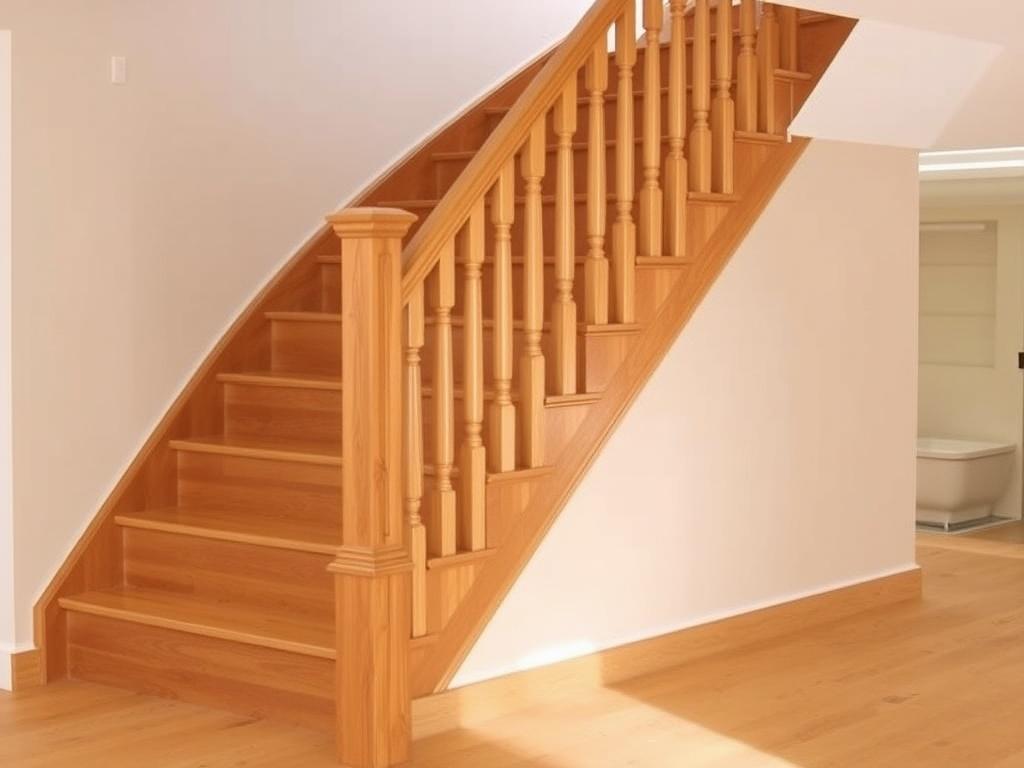
Building a stair follows a logical sequence: measure and plan, set stringers, install treads and risers, fit handrails and guards, then finish. Taking time to lay out accurately and to mock up key junctions reduces errors later. Temporary templates and full-size layouts in plywood help verify geometry before cutting expensive materials.
Start by confirming floor-to-floor height and location. Transfer those measurements to establish the number of rises and the exact riser height. Calculate tread depth to comply with code while keeping a comfortable slope and then create a full-scale stringer template to guide cuts.
Cutting, fitting, and fastening stringers comes next, often with blocking or brackets at connection points. Treads and risers can be pre-finished or finished in place depending on access and staining needs. Finally, install railings and guards, ensuring each fastening point supports the required load.
Step-by-step: a basic build checklist
Here’s a practical ordered list of core tasks for a typical residential stair build. Use it as a guide, not an exhaustive plan—local conditions and codes will affect details.
- Survey floor-to-floor height and check headroom; verify code requirements.
- Lay out riser count and tread depth; create full-scale stringer template.
- Cut stringers and dry-fit them in place with temporary bracing.
- Install landing framing and anchor stringers to floor framing.
- Fit and fasten treads and risers; verify levels and squareness.
- Install handrails, newels, and guards; check heights and graspability.
- Apply finishes and final trims; test for squeaks and tighten connections.
Tools, fasteners, and materials list
Basic hand and power tools cover most stair work: a circular saw, jigsaw, router, plunge saw, drill, and levels are essential. For finish carpentry, chisels, planes, and a good assortment of clamps make precision easier. For metal or concrete work, welding gear or concrete forming tools are required.
Fasteners matter: use structural screws or carriage bolts where code requires mechanical anchorage and stainless or galvanized fasteners for exterior or moist environments. Adhesives, particularly construction-grade polyurethane or epoxy in certain connections, can reduce squeaks and increase stiffness when used properly.
- Circular saw and straightedge or track saw
- Drill/driver and impact driver
- Router (for housed treads and nosing details)
- Levels, squares, and framing measuring tools
- Clamps, chisels, mallet, and hand planes
- Structural screws, bolts, and appropriate adhesives
Common mistakes and how to avoid them
One frequent mistake is inconsistent riser heights. Even small variations create a subconscious stumble risk. Lock measurements on paper, make a template, and verify at multiple points before making final cuts to avoid this issue.
Another error is under-engineering supports for heavy materials like stone or thick treads. The visible tread material may be decorative, but the supporting stringer and anchorage must carry the load safely. Err on the side of stronger supports when in doubt.
Squeaks and movement often originate from inadequate fastening or lack of blocking at joints. Use mechanical fasteners in addition to adhesive, and incorporate blocking where the stair meets framing to distribute load and reduce flexing over time.
Dealing with awkward site conditions
Renovation projects often present surprises—uneven floors, limited headroom, or obstructive mechanical systems. In these cases, creative solutions like regrading floors, designing an L-shaped layout to fit around ducts, or building a custom landing can reconcile constraints without sacrificing safety.
Document the existing conditions with photos and measurements before demolition. I once inherited a stairwell with concealed plumbing; relocating a few inches of ductwork and adding engineered blocking allowed a safer, code-compliant stair without a full structural reframe.
Cost considerations and budgeting
Stair costs vary widely based on material choice, complexity, and finish level. A simple straight stair with painted risers and stock treads is one of the more affordable elements in a renovation, while a spiral glass-and-steel stair can be a substantial investment. Get multiple estimates for custom work to compare labor and materials.
Budget for hidden costs: structural reinforcement, permits, temporary protections for surrounding finishes during construction, and final finishes. Contingency is important—unforeseen conditions in older homes often arise once demolition starts. I recommend a contingency of 10–20% for most stair projects.
Consider lifecycle costs too. A more durable material with a higher upfront price can cost less over time if it requires less maintenance or replacement. Factor in finish durability and the potential need for refinishing in busy households.
Accessibility and universal design
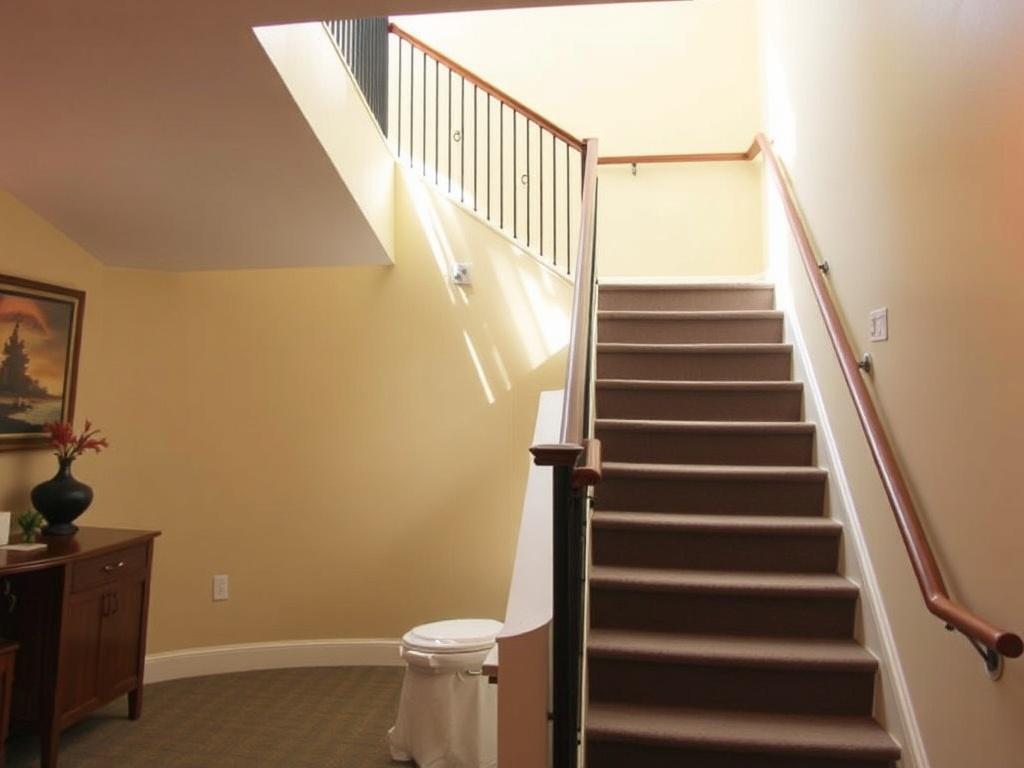
Designing stairs with inclusive principles extends usability and safety. While ramps or lifts provide alternatives for those with mobility limitations, stair design choices—gentler rise, wider treads, sturdy continuous handrails—can make stairs more manageable for older adults and people with limited balance.
In new construction, consider the path of travel and whether incorporating an elevator or stair lift is appropriate. Even in homes without accessibility features, adding a second handrail or choosing high-contrast nosing improves safety for users with visual or mobility impairments.
Designing for aging in place
Small changes have a big impact: non-slip treads, consistent lighting, and handrails on both sides can dramatically improve safety for aging occupants. Avoid open risers, which can provoke anxiety for those with balance issues, and prefer closed risers when stability is a concern.
When renovation budgets allow, provide a stair that accommodates future installation of a lift by leaving continuous wall space or installing blocking for anchor points. Planning ahead reduces costly retrofits later.
Inspection, maintenance, and longevity
Regular inspection extends the life of a staircase and identifies issues before they become hazardous. Check fasteners, rail connections, and tread tightness annually, and address squeaks, loose balusters, or soft treads promptly. Small repairs are easier and cheaper than large-scale replacements.
Finish maintenance matters: recoat wood stairs when wear becomes visible, and touch up metal coatings to prevent rust. For outdoor stairs, keep drainage clear and replace deteriorated treads quickly to prevent accidents. Consistent care preserves both safety and appearance.
When to call a professional
If your stair requires structural changes, spans a long distance, or includes engineered or metal components, hire a licensed professional. Structural calculations, welding, and anchoring to primary framing are best handled by experienced contractors or engineers to ensure safety and code compliance.
Permits are more than red tape; they involve inspections that catch errors before they become hazards. Make sure contractors pull the required permits and provide documentation of inspections and approvals for future resale and liability protection.
Real-life examples and lessons learned
On one renovation, the owner wanted a wide, floating stair to open a dark entry. We designed a concealed steel spine and used thick hardwood treads. The result looked effortless, but during bids we discovered the steel fabrication and installation added nearly 40% to the original budget estimate. The client chose a simplified stringer profile instead, which retained a light feeling at a manageable cost.
In another case, a homeowner opted for a spiral stair to save space in a loft conversion. The spiral fit perfectly in the plan but proved awkward for moving furniture and for family members with mobility concerns. The lesson: match the stair type to daily life needs, not just the aesthetic goal.
Quick reference: common stair dimension table
The table below summarizes typical ranges found in many residential codes and common practice. Always check local regulations first and adjust dimensions to your specific project.
| Dimension | Typical residential range | Notes |
|---|---|---|
| Riser height | 4 in – 7 3/4 in (commonly 7 in) | Keep uniform through flight; lower risers for accessibility |
| Tread depth (nosing to nosing) | 10 in – 11 in (minimum 10 in common) | Deeper treads feel more comfortable for long runs |
| Headroom | 6 ft 8 in minimum | Provide extra if possible for comfort |
| Handrail height | 34 in – 38 in above nosing | Continuous and graspable profile preferred |
| Guard height | 36 in residential | Openings limited to prevent 4 in sphere pass-through |
Final practical tips
Start with a full-scale layout on plywood or floor paper. Walking a life-size mockup reveals comfort issues and headroom problems that drawings can’t. This low-cost step prevents expensive rework and clarifies finishes and handrail positioning.
Document decisions and maintain an organized package of drawings, permit approvals, and product warranties. Good documentation helps with maintenance decades later and simplifies any future changes to the stair or adjacent spaces.
Work with contractors who specialize in stairs when possible. Stairs combine finish carpentry, structural framing, and often metalwork—specialized experience reduces surprises and yields a better final outcome. A well-built stair becomes an asset you notice for its comfort, not for its problems.
Stairs are deceptively simple but demand careful attention to geometry, structure, and human use. With a clear plan, respect for code, and an eye for materials and finish, you can create a stair that performs reliably and enhances your space. Use the principles and checklists here as a foundation, adapt them to your local codes and needs, and build with care so your staircase serves its users well for decades.