
Architectural design is often spoken about as if it lives on a drawing board or inside a computer model, but its true life emerges on the construction site. When design and construction talk to each other early and clearly, buildings take on depth: they solve problems, delight senses, and endure. This article explores how design becomes practical reality, and how that translation shapes the ways we inhabit the built world.
Throughout these pages I’ll mix practical frameworks, technical touchpoints, and a handful of stories from real projects I’ve been part of. Expect concrete examples, snippets of process, and an invitation to think of architecture as an ongoing negotiation—between art and craft, cost and quality, code and invention. The goal is to give readers a layered view that’s useful whether you’re an architect, a contractor, a client, or simply curious about how buildings come to be.
Because this subject spans many professions and dozens of decisions, I’ll break it into focused sections that move from conception through construction and out toward future trends. Each section aims to be actionable: you’ll find ideas for improving collaboration, avoiding costly rework, and keeping beauty alive while responding to practical constraints.
Design as synthesis: balancing creativity and pragmatism
Great architectural design starts as a synthesis rather than a surreal brainstorm. It gathers programmatic needs, budget limits, site realities, and technical constraints into a single proposition. That proposition must be expressive—able to carry a clear idea about space, light, and movement—while remaining buildable and financially honest.
Architects who succeed at this synthesis treat the constraints as productive rather than punitive. A tight lot can force sharper spatial organization. A constrained budget can concentrate quality where it matters most: tactile materials in the handrail, natural light in primary rooms, and durable surfaces in high-traffic paths. The design becomes a set of prioritized decisions, each defending its reason for being.
At heart, this is a craft discipline. Lines on a page are only valuable when they communicate to a contractor’s crew. That means drawings must be clear, details must unambiguously explain assembly, and tolerances must be realistic. The most elegant conceptual move in a design becomes hollow if it cannot be built with the available workforce and materials.
Phases of design and their relationship to construction
Architectural design unfolds in phases, each with different objectives and outputs, and each offering opportunities to reduce waste and errors during construction. These phases—concept, schematic design, design development, construction documents, and construction administration—should be thought of as information funnels. Early phases explore options. Later phases freeze aspects and convert intent into executable instructions.
When teams align deadlines and deliverables between design and construction, those information funnels sharpen rather than leak. Early contractor involvement, progressive detailing, and staged submittals can all reduce the cost of change. It’s common to see rework spike when design expectations shift late in the construction documents phase, which is why clear milestone definitions are essential.
Below is a compact table to clarify typical outputs and who benefits most at each phase. Use it as a conversation starter in project kickoff meetings to ensure everyone understands what decisions are expected and when.
| Phase | Primary outputs | Key decisions |
|---|---|---|
| Concept | Sketches, massing, program diagrams | Overall form, site orientation, rough budget alignment |
| Schematic design | Floor plans, sections, preliminary elevations | Spatial relationships, basic systems, material direction |
| Design development | Refined plans, initial details, system selections | Structure, MEP coordination, envelope strategy |
| Construction documents | Detailed drawings and specifications | Fabrication details, tolerances, legal documents |
| Construction administration | Shop drawing review, RFI responses, site observations | Quality control, adaptations, final adjustments |
Information richness vs. flexibility
Early phases require flexibility; later phases demand clarity. Too much fidelity too early stifles exploration, while too little information too late invites costly change orders. The trick is managing the level of information so decisions are made at the right time and with the right detail.
One practical technique is to establish “lock points” for key decisions that materially affect cost—structure, envelope, and core systems. Lock points are dates after which altering the decision triggers a documented change process. This simple device reduces ad hoc late changes and provides accountability for tradeoffs.
Site, context, and environmental responsiveness
A building cannot be divorced from its setting. Topography, microclimate, adjacent buildings, views, and zoning controls all inform successful architecture. A design that respects context can extract value from seemingly difficult sites: a sloped lot becomes stepped terraces; a tight urban parcel becomes a light-well solution.
Context also shapes performance. Passive strategies—orientation for solar gain, natural ventilation paths, and daylighting—reduce energy needs and often improve occupant comfort. Paying attention to these elements early costs little and can save both money and headaches during construction and operations.
When I worked on a mixed-use block in a dense neighborhood, preconstruction visits and solar studies were pivotal. We repositioned the building form slightly and gained late-afternoon light in retail spaces without increasing facade costs. The contractor appreciated that fewer facade adjustments were needed during erection, and tenants loved the brighter shops.
Reading the site: practical steps
Practical site analysis combines quantitative data and on-the-ground observation. Start with topo surveys, soil reports, and utility maps, but then walk the site multiple times at different hours. Note prevailing winds, noise sources, and where shadows fall through the day. These observations often spark design moves that formal analysis does not reveal.
Also, engage neighbors and local officials early. Informal conversations can uncover hidden constraints or opportunities—easements, historical covenants, or informal pedestrian paths. Incorporating these social realities into design prevents later friction and unexpected requirements that delay construction.
Materials, structure, and detailing
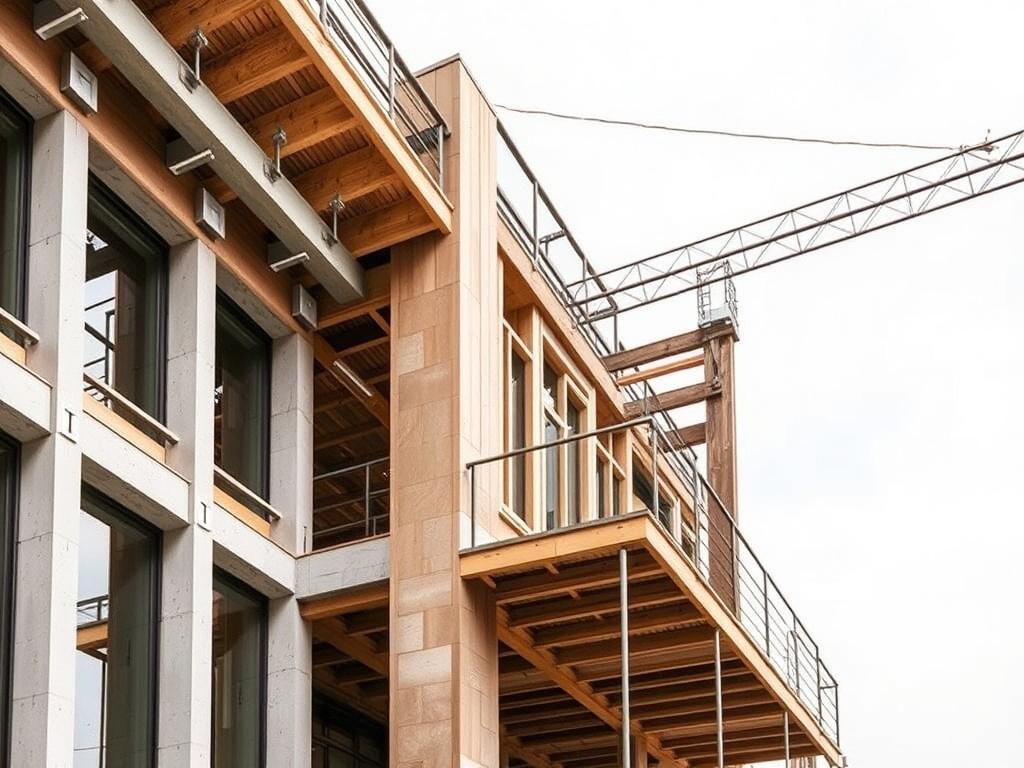
Material choices and structural logic are where conceptual design meets physical assembly. The selection of primary structure—wood, steel, concrete, or hybrid—carries implications for cost, speed, sustainability, and detailing. Each choice requires a supporting set of details that translate intent into sequences of work.
Detailing is where architecture proves itself. Good details reconcile tolerances between trades, handle thermal and moisture control, and create elegant transitions between materials. Poor detailing forces contractors into improvisation, which often results in compromised aesthetics and performance.
On one project I designed, a simple idea—exposed cast-in-place concrete walls with a thin wood battens system—became difficult because we had not reconciled the thermal break between concrete and wood. Early mockups and a short prototype panel resolved the assembly and saved weeks of on-site alternations during the shell work.
Principles for robust detailing
Three practical principles improve the odds of successful details: prioritize water control over aesthetics, make layers accessible for maintenance, and design for clear responsibility between trades. If a detail’s performance depends on three different subcontractors executing tolerances within millimeters, it will likely fail. Simplicity and clarity win on site.
A minor but revealing habit: define which trade is responsible for finishing visible interfaces. This prevents the “not my scope” disputes that stall progress and drive up costs. Clarify this in documents and in pre-bid meetings so all parties know who owns each exposed condition.
Codes, budgets, and risk management
Regulatory frameworks and budgets shape design in profound ways. Building codes are not just hurdles; they are systems for safety, accessibility, and health. Understanding the spirit of those codes allows designers to meet requirements creatively rather than being hemmed in by them.
Budget discipline is equally critical. Early cost models tied to building area, facade complexity, and systems choices prevent runaway ambition. When budgets are tight, prioritize permanence in high-use areas and flexibility in spaces likely to change programmatically. This triage keeps long-term value high.
Risk management stitches these elements together. Use contingency planning, contract language that allocates risk fairly, and phased permitting when appropriate. These measures protect design intent and the project schedule when unforeseen issues arise during excavation or procurement.
Cost control techniques
Value engineering should be a conversation, not a cut list. Establishing a list of “sacred” elements—areas where quality must be maintained—helps teams make sensible substitutions elsewhere. Also, setting aside an early contingency of 5–10% for design-driven unknowns reduces adversarial decision-making later on.
Finally, think in terms of life-cycle costs rather than first cost alone. Durable materials and accessible systems may have higher upfront cost but pay dividends in reduced maintenance and longer replacement cycles. Presenting these tradeoffs clearly to clients makes it easier to defend strategic investments.
Collaboration: architects, engineers, contractors, and clients
Construction is a team sport. A project’s success often depends more on how well participants communicate than on any single technical advance. Rituals like regular coordination meetings, shared model repositories, and walk-throughs during the crucial framing stage keep misunderstandings from calcifying into expensive errors.
Early involvement of constructors and fabricators helps ground design ideas in reality. For example, involving a precast supplier during design development can influence panel joint patterns, lifting insert placement, and even the concrete mix for better surface behavior. Those insights reduce change orders during fabrication and erection.
Clients play a central role as the arbiter of value. Transparent decision logs and prioritized program lists help architects and contractors give clients tradeoffs in an orderly fashion. Clients who understand consequences and signed-off priorities reduce late changes and support better-quality outcomes.
Practical collaboration tools
- Shared BIM environments with defined model ownership and clash detection schedules.
- RFI and submittal trackers visible to all parties, with clear turnaround times.
- Site mockups and prototype assemblies before mass procurement.
These tools are effective only if paired with culture: respectful, prompt responses and a bias toward solving problems instead of assigning blame. I’ve seen teams with modest tools but excellent culture outperform projects with the most sophisticated software and poor communication habits.
Tools and workflows: from sketches to BIM
The digital toolbox has transformed architectural practice, but tools are only as useful as the workflows that surround them. Early hand sketching still excels at rapid exploration, while BIM provides the shared, data-rich model essential for complex coordination. Good practice combines both worlds.
Scripting and computational design let architects explore forms and environmental responses at speed, but these techniques must be constrained by building processes. A generative facade pattern that looks brilliant in a render may be impossible or prohibitively expensive without early engagement from facade fabricators.
Adopt a layered workflow: concept and massing in fast, forgiving media; performance testing and optimization in targeted computational workflows; and detailed coordination in a shared BIM environment. This progression minimizes rework and ensures each tool is used where it adds the most value.
Practical digital habits
Maintain a single source of truth for project data, and version-control important documents. Establish naming conventions for files and model elements early, because small confusions—like two different geometry versions or ambiguous wall types—become large, costly problems on site. Train the team on these conventions so they are habits, not headaches.
Use the model to drive procurement and prefabrication wherever possible. When you can hand a detailed shop-ready model to a fabricator, you reduce interpretation and speed manufacture. Prefab success, however, depends on tight tolerances and clear interface definitions between elements.
Sustainability and resilience as design drivers
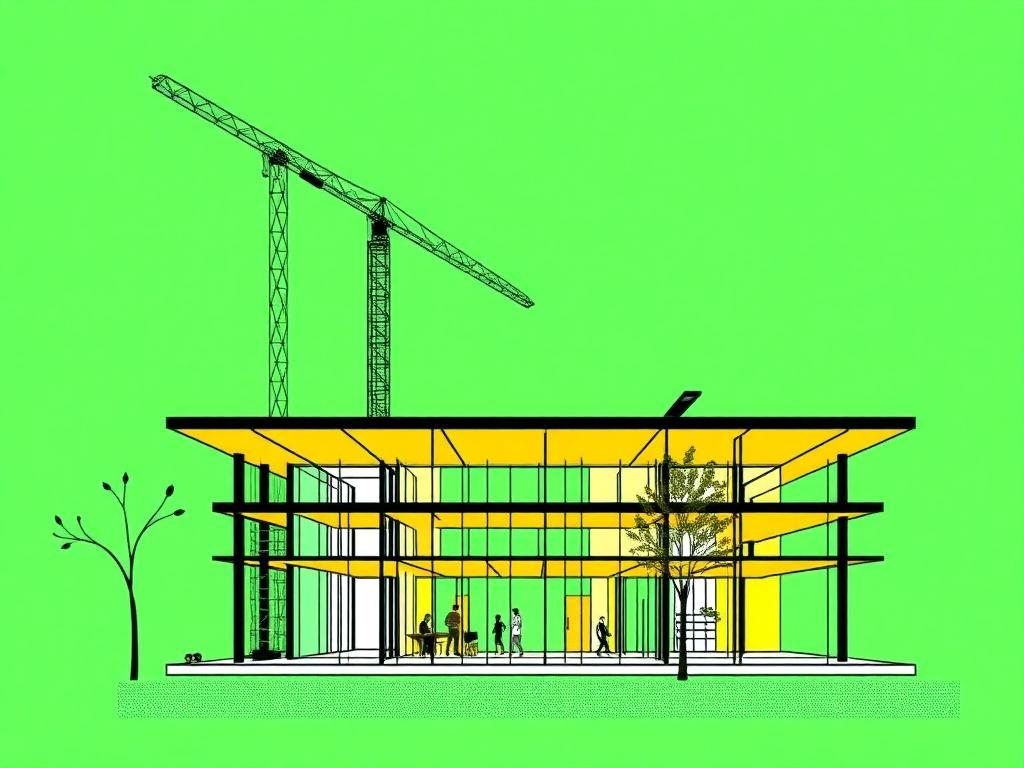
Sustainability is no longer an optional overlay; it is an integral design priority that shapes everything from orientation to materials to mechanical systems. But sustainability should be pragmatic: measured outcomes in reduced operational energy, embodied carbon, water use, and enhanced occupant wellbeing matter more than symbolic gestures.
Resilience is the twin concern: designing to cope with extreme weather, changing climates, and rapid shifts in use promotes longevity. Simple resilient moves—elevating critical equipment, designing redundant systems, and using robust envelope details—pay off in reduced downtime and lower recovery costs after shocks.
When I led a retrofit of an older office building, we prioritized upgrading the envelope and glazing before replacing HVAC equipment. That sequence reduced peak loads significantly, enabling a smaller mechanical system and lower lifecycle emissions. The contractor valued the reduced coordination complexity, and the client saw lower long-term energy bills.
Measurable strategies for performance
Start with a performance brief that includes quantifiable targets: kBtu/sf/yr goals, daylighting percentages, and target embodied carbon ranges. Use energy modeling early to compare envelope strategies, glazing ratios, and shading systems. Align incentives—such as performance-based contracts—so that design decisions are rewarded for measurable outcomes.
Consider material circularity: design for disassembly, favor reused or responsibly sourced materials, and minimize mixed material assemblies that hinder recycling. Simple strategies, like bolted rather than welded connections in secondary framing, make future deconstruction and reuse easier.
Aesthetics, program, and human experience
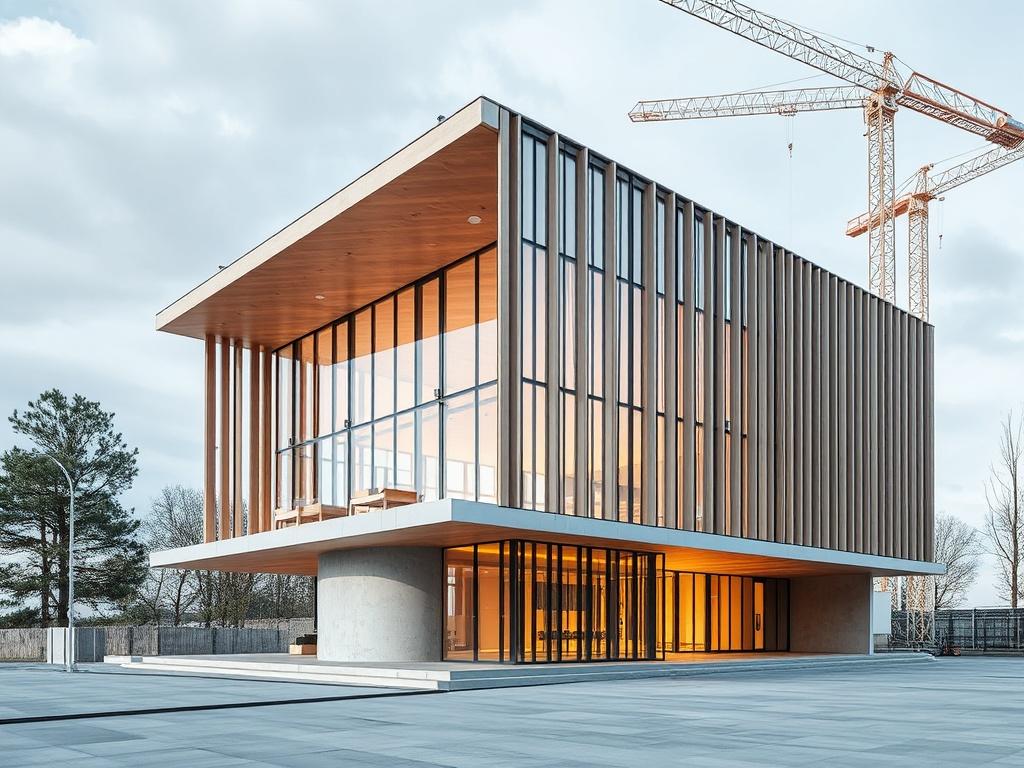
Beauty in architecture isn’t merely decoration; it results from integrity in proportion, material honesty, and attention to human scale. A well-crafted vestibule, a consistently detailed handrail, or a thoughtfully positioned window can dramatically change how a space feels without exorbitant cost. These are the moments where design intent touches daily life.
Programmatic clarity matters too. Spaces that anticipate user needs—acoustic considerations for meeting rooms, daylight for study spaces, and thermal comfort for high-occupancy zones—deliver higher satisfaction and fewer post-occupancy fixes. Observational research and post-occupancy evaluations are invaluable tools for refining future work.
On a small cultural center I helped design, we paid particular attention to entrances and thresholds. Simple adjustments—sweeping roof eaves, a raised stone step, and a clear line of sight from entry to gathering hall—created legible arrival sequences that made users feel oriented and welcomed. The contractor’s careful execution of the eaves and stone helped translate our sketches into a tactile reality.
Designing for adaptability
Flexible buildings age better. Designing floor plates with clear spans, easily reconfigurable partitions, and accessible service distribution means a space can adapt without major renovation. This adaptability reduces embodied carbon over time because buildings are less likely to be demolished due to obsolescence.
Consider non-structural partition systems, raised floors for service flexibility, and accessible ceiling spaces for future rewiring. These strategies often require modest up-front investment and pay off by lowering the lifecycle cost of programmatic change.
Case studies and lessons from practice
Concrete examples sharpen theory. I’ll summarize three short case studies that highlight different tensions between design and construction: a tight urban infill, a rural community center, and an adaptive reuse project. Each offers lessons about collaboration, detailing, and sequencing.
The urban infill demanded a narrow building envelope with complex code requirements and limited staging area. Early contractor involvement yielded a modular facade approach and a just-in-time delivery schedule that prevented site congestion. The lesson: logistics are a design problem, not just a construction one.
The rural community project prioritized natural ventilation and locally sourced materials. We developed a simplified timber framing system that local carpenters could build without specialized equipment. Investing in training sessions and a small mockup saved time and supported local employment, enhancing social value in addition to building performance.
The adaptive reuse project involved converting an old industrial hall into offices. Where the original steel structure remained sound, we kept it visible, celebrating the building’s history. Where the concrete slab had issues, we introduced a raised floor system to avoid a full slab replacement. The pragmatic respect for existing fabric kept costs manageable while preserving character.
Common pitfalls and how to avoid them
Across projects, certain mistakes recur: late design freezes, inadequate detailing, and underestimation of site logistics. Avoid these by setting clear decision schedules, building prototype details early, and running logistics workshops before demolition or early civils. Anticipation beats reaction every time.
Also beware scope drift. Keep a running scope log and require written approvals for changes that affect cost or schedule. Change is natural, but uncontrolled change erodes quality and morale on site, and it rarely results in better architecture.
Craft, workmanship, and the human touch
No amount of computation or prefabrication replaces the judgment and dexterity of skilled workers. Craftsmanship manifests in fine tolerances, clean mortar joints, and well-fitted windows. Respect for craft matters in tender documents and in the way architects treat trades: clear details, timely responses, and recognition of expertise build goodwill on site.
Workmanship also benefits from intentional design decisions. Choose assemblies that suit available skills, and allow tolerances that acknowledge on-site realities. For example, specifying plaster over drywall in a market without skilled plasterers is likely to produce disappointment; specifying a gypsum-based system with a fine finish and training helps align expectations and reality.
I once collaborated with a joiner known for impeccable millwork. By involving her early, we adjusted panel sizes to standard timber widths and avoided complicated miters. The result was a richer expression at lower cost and a facade detail that read as intentional rather than improvised.
Emerging trends: computation, prefabrication, and circularity
Architecture is changing faster than at any point in recent memory. Computational design has become a practical tool for performance optimization, not just formal expression. Prefabrication is shifting more work off site, improving quality control but requiring tighter tolerances and better early coordination.
Circular economy thinking is gaining traction: designing for disassembly, using reclaimed materials, and documenting material passports. These trends demand different procurement models and new partnerships with manufacturers, but they also open pathways to reduce embodied carbon and foster material stewardship.
Robotics, advanced manufacturing, and new composite materials will further alter the relationship between design and construction. The essential human skills, however—judgment, collaboration, and the ability to read place—remain irreplaceable. Technology expands options; it does not substitute for good decisions.
How to prepare teams for the future
Invest in cross-disciplinary learning: teach architects about procurement, contractors about digital models, and clients about lifecycle thinking. Encourage pilot projects that test new methods at small scale before committing them to large budgets. These experiments pay off by creating institutional knowledge and reducing risk in larger deployments.
Finally, preserve time for craft and reflection. Rapid iteration is valuable, but projects also need pauses for testing and refinement. The habit of prototyping—whether a simple wall mock-up or a full-scale facade bay—bridges the gap between digital precision and on-site reality.
Design in construction is a continual negotiation between aspiration and constraint. When architects, builders, and clients embrace that reality together, buildings become more than shelter—they become enduring, useful, and beautiful parts of civic life. The work requires curiosity, humility, and an appetite for detail, and it rewards those qualities with structures that perform and delight over decades.