
Hiring a general contractor is one of the most important decisions you’ll make during a construction or major renovation project. The right contractor smooths the chaos; the wrong one amplifies every problem into a full-blown crisis. This article lays out what a general contractor actually does, how they interact with owners and trades, and what to look for so your project finishes on time and on budget.
What a general contractor is and why they matter
A general contractor (GC) is the central manager of a construction project, responsible for coordinating the many moving parts that turn plans into built reality. They’re the hub between architects, engineers, subcontractors, suppliers, and the client. Without that central coordination, timelines slip, costs balloon, and quality suffers.
Think of a GC as a professional conductor: they do not play every instrument, but they keep the orchestra in sync. That analogy matters because a harmonious project depends on timing, sequencing, and the ability to anticipate what will go wrong before it does.
Typical services a general contractor provides
General contractors often handle a wide range of tasks from start to finish: reading plans, assembling subcontractors, scheduling inspections, procuring materials, and managing change orders. Many also provide pre-construction advice like cost estimating, value engineering, and phasing strategies. The exact scope is defined in the contract, so clarity up front prevents surprises later.
On small projects a GC might perform hands-on work; on larger ones they act purely as manager and coordinator. Regardless of size, they are the person your architect, subcontractors, and building department will call when they need decisions or clarifications.
Pre-construction: the planning stage where success begins
Pre-construction is where your project’s fate is decided more than any day on the job site. During this phase the GC reviews drawings, provides cost feedback, suggests schedule changes, and develops procurement plans. A good general contractor uses this time to identify risks and propose risk-mitigation strategies.
Expect the GC to prepare a preliminary schedule and budget, often with contingencies for unknown conditions. If your contractor rushes this phase or gives vague estimates, that’s a red flag—early diligence saves money and time later.
Estimating and budgeting: realistic numbers matter
Accurate estimating is one of the GC’s most valuable skills. They translate plans into labor, material, and subcontractor costs and present an overall project budget. Estimates should detail major line items and include allowances for items that aren’t fully specified yet.
Beware lowball estimates. They might win the bid, but they often lead to numerous change orders and upset owners. I once worked with a homeowner who chose the cheapest bid and ended up with months of delays and double the original contingency in change orders.
Contracts and the scope of work
The contract defines responsibility and risk allocation: scope, schedule, payment terms, warranty, and dispute resolution. Common formats include lump sum (fixed price), cost-plus, guaranteed maximum price (GMP), and time-and-materials. Each has advantages depending on project certainty and owner preferences.
Read contracts carefully and insist on a clear scope of work. Vague language leads to disagreements. I always recommend owners—and their architects—review the contract line by line to catch assumptions before signing.
Hiring and coordinating subcontractors
General contractors seldom do specialized trade work themselves; they hire subcontractors for plumbing, electrical, HVAC, framing, and so on. The GC prequalifies subs, negotiates scopes, and sequences their work to avoid conflicts. Quality of subcontractors largely determines final results.
Good GCs maintain long-term relationships with reliable subs and can call on the right trade at the right time. When you see a GC with a stable pool of trades, you’re looking at someone who can manage continuity and craftsmanship effectively.
Scheduling and sequencing the work
Scheduling is more complex than listing dates—it’s coordinating dependencies so that trades don’t crowd each other or wait idly. A GC builds a critical-path schedule showing tasks that determine the project’s completion date. They adjust that schedule as issues arise, balancing productivity and logistics.
On-site sequencing also includes deliveries, temporary facilities, and inspection windows. A contractor who plans deliveries poorly creates cluttered sites and increases the chance of damage or theft. Good sequencing, conversely, keeps the site productive and safe.
Procurement and material management
Procurement is another GC responsibility—ordering, tracking, and ensuring materials arrive when needed. Contractors leverage supplier relationships to obtain better lead times and pricing. They also manage warranties, returns, and storage on-site.
Materials mismanagement shows up as delays or inferior products being installed because specified items weren’t available. I’ve seen projects stall for weeks awaiting a custom fixture; the contractor’s procurement planning could have avoided that by ordering earlier or proposing alternatives.
Site management and daily supervision
On the job site the GC supervises daily activities, enforces safety rules, and confirms work matches the plans and specifications. They host regular site meetings and maintain daily logs documenting progress, weather, workforce, and deliveries. These records become vital if disputes arise.
Expect a dedicated superintendent on larger projects who is present most days. On smaller jobs the GC might split time between administrative duties and on-site supervision. Either way, visible and consistent supervision prevents small issues from becoming expensive problems.
Permits, inspections, and code compliance
General contractors typically handle permits and schedule inspections required by the local building department. They ensure work follows code and that trade work passes inspections at the correct stages. Delays in approvals can halt work, so timely permit acquisition is critical.
Knowledge of local code nuances is a practical advantage. I once worked with a contractor who preemptively addressed a small code interpretation that inspectors used to reject several nearby projects; that prevented multiple rework cycles and kept our schedule intact.
Communication: the glue that holds a project together
Clear communication is a hallmark of competent contractors. They keep owners, architects, and subs informed through weekly meetings, progress reports, and accessible channels for urgent decisions. Transparency builds trust and reduces surprises.
When communication breaks down, the project pays for it in delays and misaligned expectations. Insist on an agreed communication plan at the start: meeting cadence, reporting formats, and primary points of contact. That simple step pays dividends.
Managing change orders and unforeseen conditions
Change orders are inevitable. Whether driven by owner requests, design clarifications, or hidden site conditions, these changes must be documented and priced fairly. The GC should present options, cost impacts, and schedule effects before work proceeds.
A fair contractor separates needed extras from owner-driven upgrades and avoids pressuring clients into unnecessary work. In my experience, the best GCs explain tradeoffs candidly and offer staged solutions to keep the budget under control.
Quality control and inspections
Quality control is a continuous process involving checklists, mock-ups, and staged inspections. The GC implements internal reviews before external inspections to catch issues early. This reduces rework and preserves relationships with the owner and architect.
Request that your GC provide a quality-control plan for critical elements like waterproofing, structural connections, and finishes. A written approach demonstrates commitment and gives you a basis to measure their performance.
Safety on the job site
Site safety is both a moral and legal obligation. The GC establishes safety protocols, provides training, and enforces them across all trades. They maintain insurance, post required notices, and respond to incidents with documented corrective actions.
A safe site is more productive and less likely to experience costly stoppages or litigation. If a contractor dismisses safety concerns or resists documenting practices, consider that a major red flag for long-term risk.
Insurance, bonding, and licenses

Verify that the GC carries general liability, worker’s compensation, and, when appropriate, builders’ risk insurance. For public projects or larger commercial work, performance and payment bonds may also be required. Licensing ensures the contractor meets local legal standards for practice.
Ask for certificates of insurance and confirmation of bonding capacity before work starts. A contractor who hesitates to provide documentation may be hiding financial or regulatory problems that will later affect your project.
Financial management and payment schedules
Payment terms should be clear and tied to measurable milestones. Common approaches include monthly draw schedules or milestone-based payments. Avoid very large upfront payments; reasonable retainage protects the owner until punch-list completion.
A trustworthy contractor provides transparent invoicing that aligns with progress and delivers backup documentation for subcontractor payments and material receipts. That transparency reduces the risk of liens or disputes down the line.
Handling disputes and claims
Despite best efforts, disputes occur. A skilled GC prefers to resolve issues through negotiation and mediation rather than litigation. Contracts should include dispute resolution mechanisms to avoid prolonged court battles. Documentation gathered during the project is often decisive in these conversations.
Owners can reduce friction by staying engaged, approving decisions promptly, and not encouraging ambiguous scopes. When a dispute arises, approach it with the project’s completion as the goal rather than “winning” an argument.
Closeout, warranties, and punch lists
At the end of the job the GC prepares closeout documents: as-built drawings, warranties, maintenance instructions, and operation manuals. They compile punch lists and correct deficiencies promptly. A thorough closeout ensures you can operate and maintain what was built.
Make sure warranties are written and transferred properly. Also confirm who will respond to warranty issues and within what time frame. A contractor who avoids formal warranties should not be trusted for significant work.
Typical timeline responsibilities by project phase
Timelines vary by project type, but responsibilities cluster around design, procurement, construction, and closeout. During design the GC advises on constructability; during procurement they secure materials; in construction they manage trades; and in closeout they finalize documentation.
Below is a compact table showing common GC duties by phase to help visualize their involvement and when key owner decisions are required.
| Phase | GC primary duties | Owner involvement |
|---|---|---|
| Pre-construction | Estimate, schedule, value engineering, permit prep | Set budget, approve scope |
| Procurement | Order materials, secure subs, logistics | Approve major selections |
| Construction | Supervise work, schedule trades, inspections | Review progress, make timely decisions |
| Closeout | Punch list, warranties, documentation | Final walkthrough, acceptance |
How general contractor fees are structured
GC fees can be a fixed percentage of construction cost, a markup on subcontractor quotes, or a negotiated flat fee. Typical ranges vary by region and project complexity but expect something between 10%–20% for many residential and light commercial projects. Large or highly specialized work may require different arrangements.
Understand exactly what the fee covers—some contractors include project management and general conditions, while others charge separately for on-site supervision, permits, and temporary facilities. Getting this spelled out reduces surprises when invoices arrive.
Questions to ask when interviewing a general contractor
When vetting contractors, ask about recent similar projects, references you can call, safety record, typical subcontractors used, and how they resolve changes. Also ask to see sample contracts and insurance certificates. The answers reveal competence, transparency, and culture.
Request a walk-through of a current job site if possible. Seeing how they manage people, cleanliness, deliveries, and safety in real life often tells you more than any presentation or checklist.
Red flags to watch for
Beware contractors who avoid written contracts, demand large cash payments, have no verifiable references, or have a history of liens and lawsuits. Also be cautious of dramatically low bids, which often hide omissions or aggressive contingency assumptions. These signs usually precede problems.
If a contractor pressures you to make fast decisions or resists communicating in writing, consider that a warning. Good contractors want informed owners who participate in decisions and approvals rather than being rushed into choices they might regret later.
How to create a productive owner–contractor relationship
Clear expectations, regular communication, and mutual respect form the foundation of a healthy relationship. Establish meeting schedules, decision response times, and change-order processes up front. When both parties keep commitments, projects run smoother and morale stays high.
Trust is earned by consistent performance. Celebrate milestones and recognize good work. That positive reinforcement encourages subcontractors and crews to maintain pride in their work, benefiting the final result.
Design-build versus design-bid-build: contractor roles differ
Under design-bid-build the owner hires an architect and later bids to contractors; the GC executes pre-designed plans. In design-build the GC and design team work together, offering single-source responsibility. Each model shifts risk and responsibility in different ways.
Design-build can speed schedules and align costs early because the contractor advises during design, but it may reduce independent checks on design decisions. Choose the delivery method that fits your appetite for involvement, risk, and control.
When you need a construction manager instead of a general contractor
A construction manager (CM) is typically an owner’s representative who oversees the project for a fee rather than acting as the prime contractor. This arrangement is common for large or phased projects where the owner needs direct control of subcontractor selection and procurement.
If you want more transparency and direct contracts with major trades, a CM approach may suit you better. However, it requires a more active owner role and greater involvement in daily decisions and risk management.
Technology and tools modern contractors use
Modern GCs increasingly use project management software, scheduling apps, and field-reporting tools to improve communication and documentation. Digital tools allow instant sharing of RFIs, submittals, and updated drawings—a real advantage on complex projects.
BIM (Building Information Modeling) and mobile photo documentation are becoming standard on larger jobs. Ask potential contractors what tools they use and how you’ll receive progress updates; digital capability often correlates with organizational maturity.
Green building and sustainability responsibilities
If your project includes sustainability goals, the GC plays a crucial role in sourcing materials, coordinating green trade expertise, and ensuring installation meets certification standards (for example, LEED). They may also manage energy modeling and commissioning tasks. Early GC involvement improves green outcomes.
Effective sustainable construction requires coordination across design, procurement, and operations. A GC familiar with green practices can suggest alternatives that reduce cost and environmental impact without sacrificing performance.
Managing subcontractor performance and disputes
Subcontractor relationships sometimes generate friction—missed schedules, workmanship disagreements, and payment disputes. The GC mediates these issues and enforces contract terms. Their ability to manage these relationships often determines project momentum.
Performance bonds and clear subcontract agreements protect the owner indirectly by ensuring the GC has leverage with subs. Ask how the GC handles underperforming trades and what remedies are available to keep the work on track.
Permits and inspections: practical tips for owners
Although the GC commonly secures permits, owners should confirm who holds permits and how inspections are scheduled. Sometimes owners must sign permits or be present for final approvals, depending on local rules. Clarify these responsibilities at the start.
Keep copies of all permits, inspection reports, and approvals in your project file. These records simplify resale, warranty claims, and future renovations. Organized documentation reflects well on the contractor and protects your investment.
Real-life example: renovating an older home
When I renovated a 1930s house, the general contractor’s early inspections uncovered hidden structural rot behind plaster walls and outdated electrical systems that didn’t meet code. Because the GC flagged these during pre-construction, we adjusted the budget and schedule before demolition began. That early transparency prevented mid-project shock and a much larger cost overrun.
The contractor’s local trade network was invaluable; they brought a historic restoration plumber who preserved original fixtures while upgrading systems. That blend of preservation and modern standards is exactly the kind of expertise a skilled GC brings to complex renovations.
Value engineering: reducing cost without losing quality
Value engineering is the process of evaluating alternatives that deliver similar function at lower cost. A good GC proposes materials or methods that preserve design intent while improving budget or schedule. Done honestly, it enhances value rather than cutting corners.
Ask your contractor to present options with clear pros and cons, not just the cheapest choice. The best value solutions consider durability, maintenance, and long-term owner satisfaction—not merely immediate savings.
How to evaluate a GC’s references and past work
Visit completed projects and speak with past clients about communication, adherence to schedule, and how change orders were handled. Ask about warranty responsiveness and cleanup. Seeing finished work is the most reliable indicator of what you can expect.
Also request contact information for architects and subcontractors who have worked with the GC. Those professionals can give candid perspectives on the contractor’s reliability, problem-solving, and fairness during disputes.
What to expect during weekly progress meetings
Weekly meetings typically cover schedule updates, outstanding RFIs (requests for information), open change orders, safety issues, and upcoming deliveries. The GC should distribute meeting minutes with action items and responsible parties identified. This keeps everyone accountable.
Use these meetings as your primary check-in point. If your contractor doesn’t produce clear meeting notes or fails to follow up on actions, demand improvement or reconsider the relationship before small issues grow into big ones.
Managing expectations about timelines and seasonality
Weather, holidays, and local labor availability can all affect timelines. A realistic GC accounts for seasonality when setting schedules and procurement dates. Owners should expect some flexibility, but not constant shifting without explanation.
Ask how the GC buffers the schedule for known risks and how they’ll handle acceleration if you need an earlier completion. Clear trade-offs—cost for speed, for example—allow you to make informed choices without pressure.
Common myths about general contractors
One myth is that the lowest bid is always the best starting point. Another is that the owner can remain hands-off if they hire a GC. In reality, cost, communication, and trust all factor into success, and owners who stay engaged help projects finish better and faster.
Dispelling myths starts with asking detailed questions and reviewing prior work. A good GC welcomes scrutiny and demonstrates competence through organization, records, and references rather than broad promises.
When to involve the contractor during design
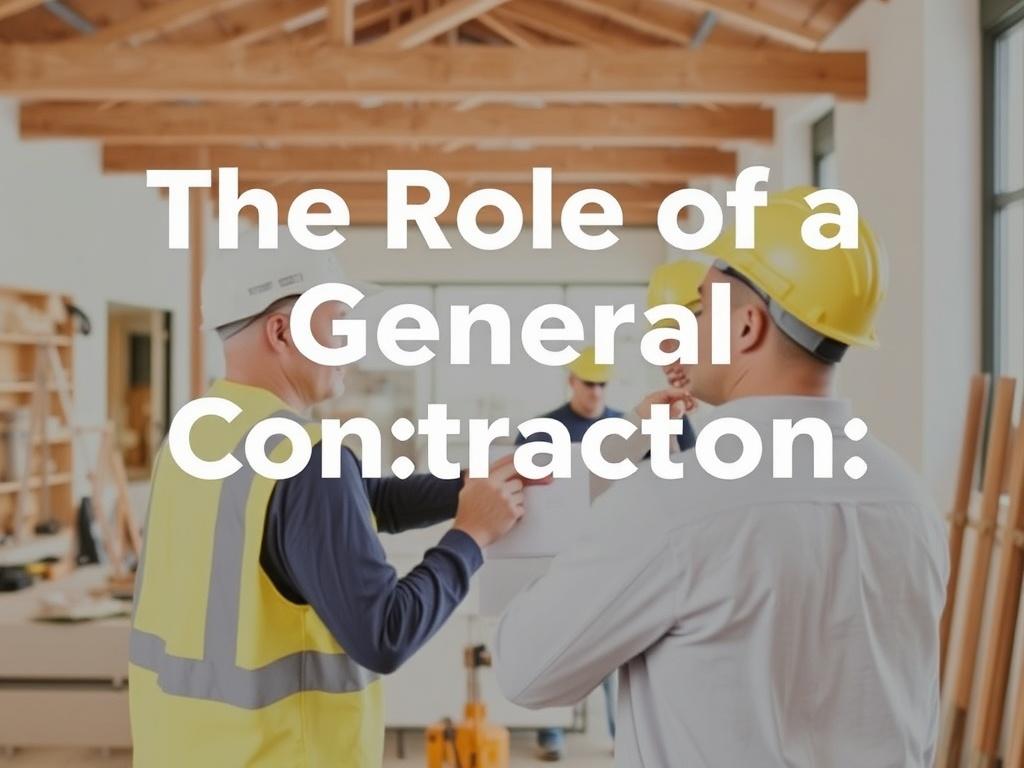
Bring the GC into the process during design development whenever possible. Early involvement reduces costly revisions by ensuring design decisions are buildable and priced realistically. This collaboration also helps phase orders and align lead times with the schedule.
Design-phase input is especially important when the project includes custom elements, complex systems, or strict budgets. Early contractor advice can be the difference between a vision that’s affordable and one that’s aspirational but unattainable.
Preparing the site: what the GC will set up
Before construction starts, the GC sets up temporary fencing, site access, utilities, protection for existing structures, and site trailers if needed. They also coordinate staging areas for materials and ensure erosion and dust control measures are in place. These preparations minimize disruption and protect the property.
Ensuring neighbors are informed about major access or noise impacts is also part of good site preparation. A contractor who manages neighbor relations well keeps community friction low and reduces the chance of complaints that can slow work.
How much involvement do you need as an owner?
Your level of involvement depends on your comfort with decision-making and the project’s complexity. Some owners act as daily decision-makers; others delegate and receive only weekly updates. Regardless, prompt decisions from the owner reduce delays and keep costs down.
Set decision thresholds in the contract—what decisions you will make versus what the GC can approve. That clarity prevents frustration and empowers the contractor to keep moving forward within agreed limits.
Green flags during the contractor selection process
Look for contractors who provide organized proposals, clear warranties, documented safety programs, and references you can verify. They should be open about subcontractor selection and willing to provide insurance and financial paperwork promptly. That transparency signals professionalism.
Also notice how responsive they are during interviews: do they follow up, provide samples, and listen carefully? Contractors who listen and adapt to your concerns typically make better partners than those who push their own agenda unresponsively.
Small projects versus large projects: differences in GC approach
Small projects often involve more hands-on work by the GC and less formal documentation, while large projects require more administrative rigor, detailed schedules, and formal subcontracts. The skill set for managing each can overlap, but scale demands different systems and processes.
If you’re doing a small remodel, a contractor who knows local trades and prioritizes cleanliness and timelines will serve you well. For larger projects, ask to see their project controls, software, and examples of similar-scale work.
How to protect yourself legally and financially
Require a written contract, proof of insurance, clear payment schedules, and a lien waiver process. Keep a contingency fund for unforeseen conditions, and do not pay the full amount until the work is accepted and all subcontractors are paid. These steps protect you from financial exposure and liens.
Keep all communications documented—emails, meeting minutes, and change-order approvals. In the event of disputes, documentation is your strongest defense and often resolves issues much faster than relying on memories or verbal agreements.
Final project handover and living with the finished product
During handover the GC should walk you through systems, demonstrate equipment, deliver manuals, and provide warranty information. They should also resolve punch-list items and leave the site clean and safe. A smooth handover sets the tone for the warranty period and your long-term satisfaction.
Expect a few minor issues after occupancy; well-run contractors address those promptly and honor warranties. If follow-up is slow or evasive, keep records and escalate to the contractual remedies you agreed upon.
Making the most of your contractor relationship
Stay engaged, be reasonable with changes, and communicate clearly and promptly. Treat the contractor as a partner rather than an adversary; this encourages cooperation and better outcomes. Projects are rarely perfect, but collaborative relationships make them far more manageable.
When a GC delivers a finished product that meets your goals, reflect on what worked: timely decisions, clear expectations, and transparent communication. Replicate those practices in future projects, and you’ll consistently get better results from contractors you hire.
Next steps: hiring your general contractor
Start by defining your priorities—budget, schedule, quality, and desired communication style. Solicit three qualified bids, check references, and verify insurance and licensing. Negotiate contract terms and set up a communication plan before work begins. These steps turn uncertainty into a controlled process.
Finally, remember that the general contractor’s role is both technical and relational: they manage materials and trades, and they manage people and expectations. Choose someone who combines competence with integrity, and you’ll increase the odds that your project becomes a story you enjoy telling.